Corinth – Epidaurus
Greece – Peloponnese | Anno 2018
Corinth
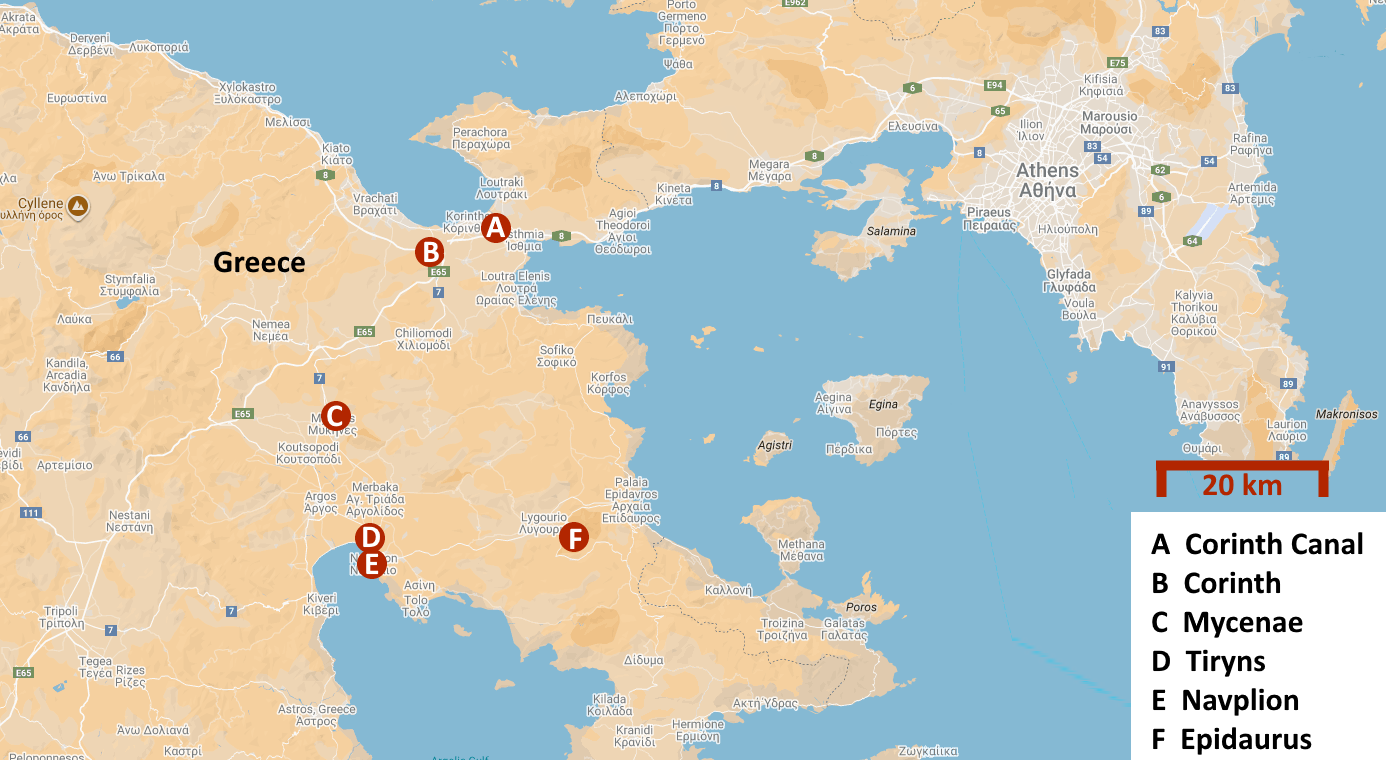
The map shows the locations of ancient sites, not the modern cities that share the same names
Corinth
|
|
|
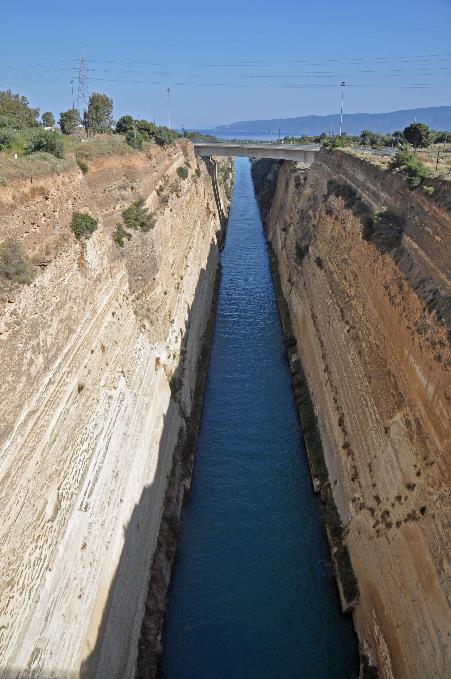
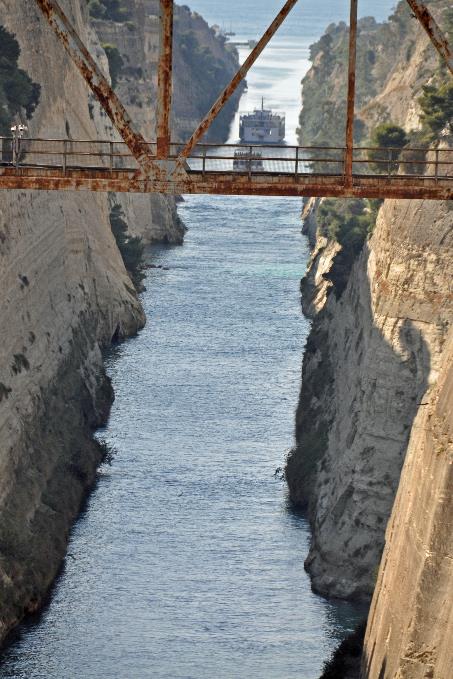
The Corinth Canal cuts straight through the narrow Isthmus of Corinth, separating the Peloponnese peninsula from mainland Greece. It was inaugurated in 1893 in the presence of Austrian Emperor Franz Joseph I. The canal is 6.4 kilometres long and 24.6 metres wide, making it inaccessible to many modern ships
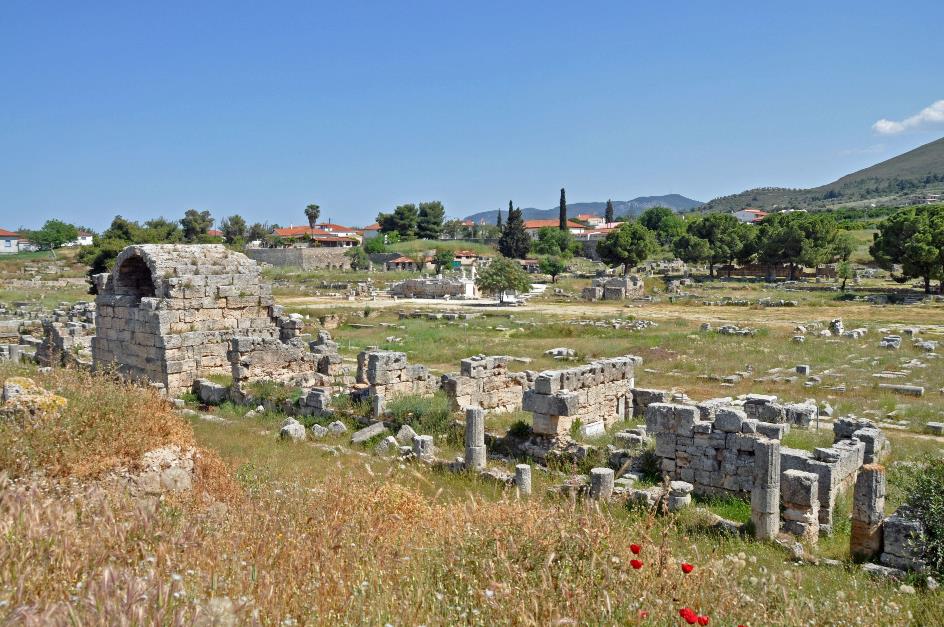
After ancient Corinth was rebuilt on the orders of Julius Caesar, it grew into the most prosperous city in southern Greece due in part to its strategic location. In the first century CE, the city is believed to have had a population of around 60,000 to 80,000 inhabitants, roughly three times that of Athens at the time
|
|
|
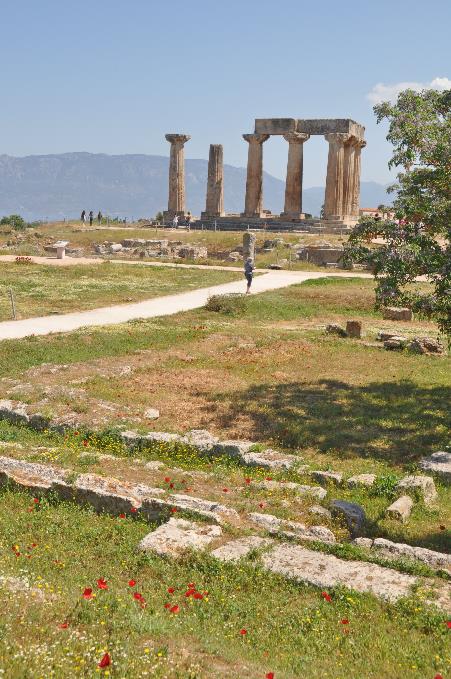
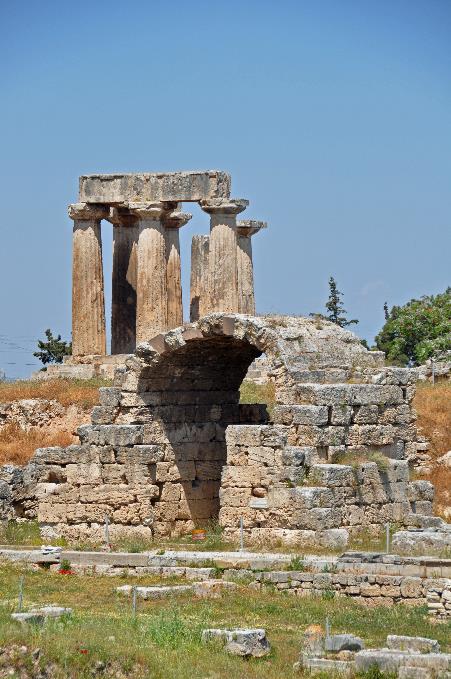
From around 50 CE onwards, an important Christian community developed there, known primarily from the two Epistles of Paul to the Corinthians. Paul stayed in the city for about a year and a half
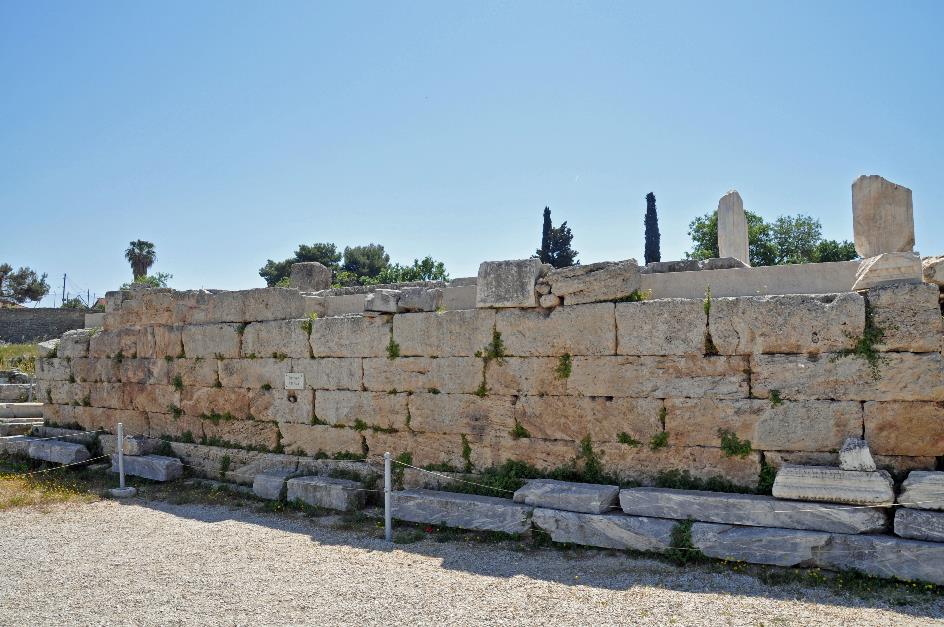
Paul was accused of spreading illegal teachings and brought before a judge. However, the judge considered it an internal Jewish matter and refused to pass judgment. This trial is said to have taken place on this raised platform, the so-called bema in the centre of the city, from where municipal officials traditionally made public announcements
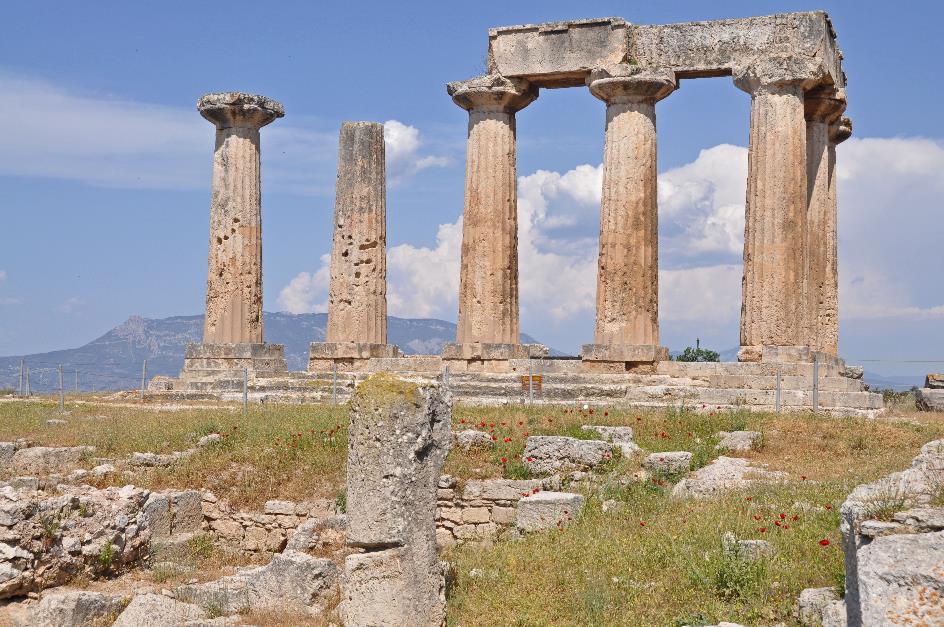
Of the Temple of Apollo (c. 550 BCE), only seven monolithic Doric columns remain
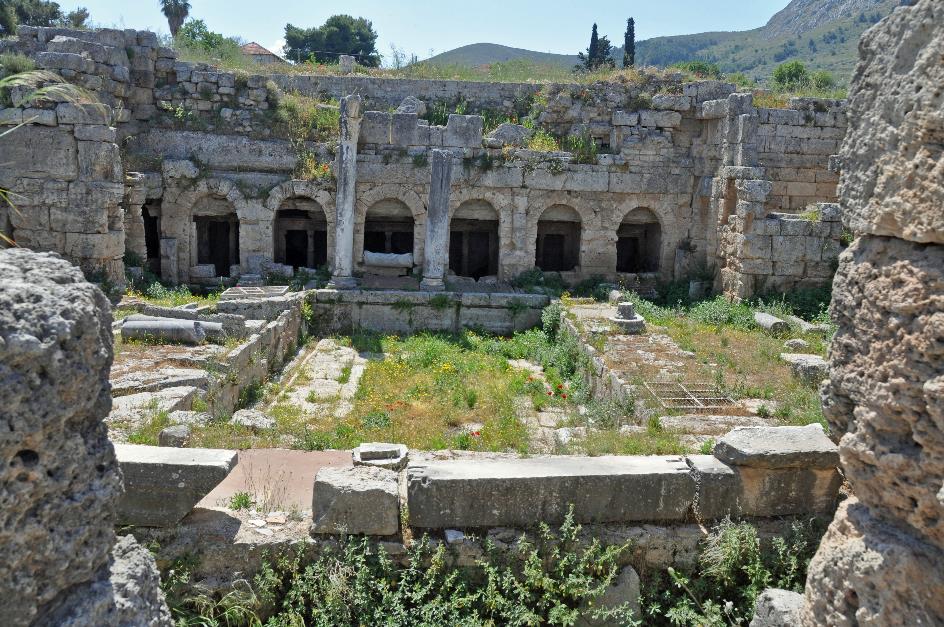
“The spring is decorated with white marble and chambers have been made like caves, from which the water flows into an open-air basin,” writes Pausanias in the second century CE. According to myth, the spring was fed by the tears of the nymph Pirene after her son was accidentally killed by Artemis, the goddess of the hunt
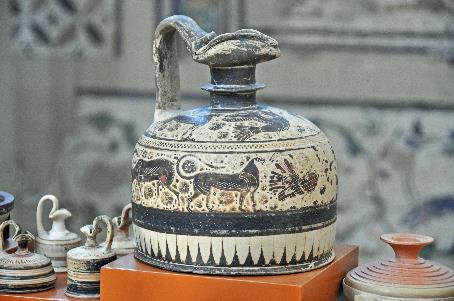
Oenochoe (wine jug, 6th century BCE) |
|
|
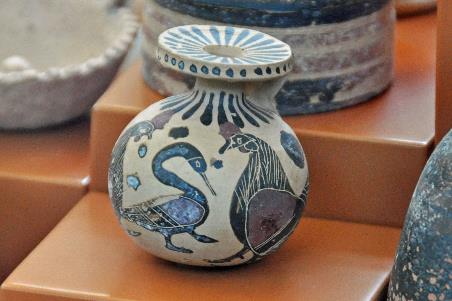
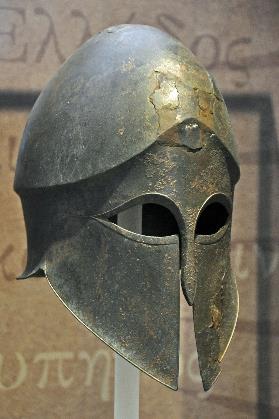
Corinthian helmet (5th century BCE) |
|
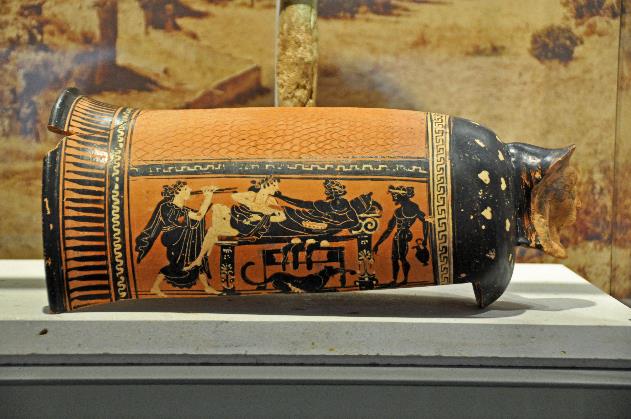
An epinetron was a half-cylindrical vessel placed on a woman’s thigh, also covering the knee, used for combing already spun wool. Ceramic examples were often used as grave goods (5th century BCE) |
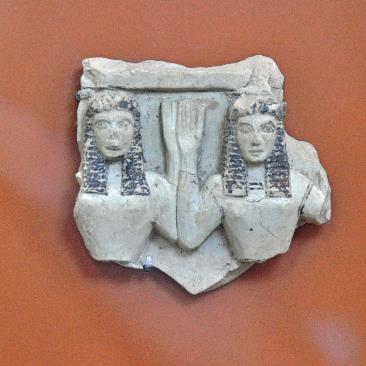
Two female figurines in the Daedalic style, characterised by influences from the Near East (terracotta, third quarter of the 7th century BCE) |
|
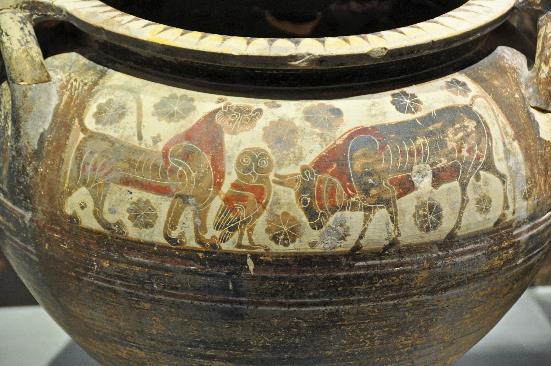
Vessel depicting a lion, an owl and a bull (6th century BCE) |
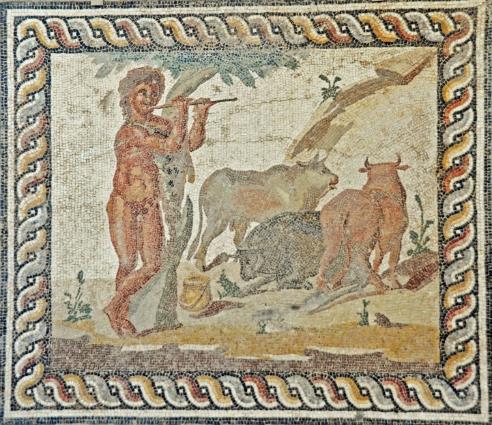
Part of a mosaic floor from a Roman villa showing a flute player guarding three oxen (150 – 200 CE) |
|
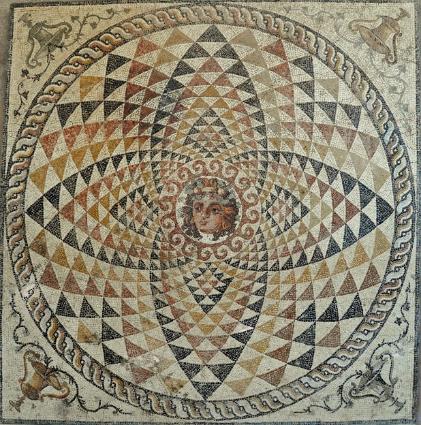
Fragment of a mosaic floor depicting the head of Medusa |
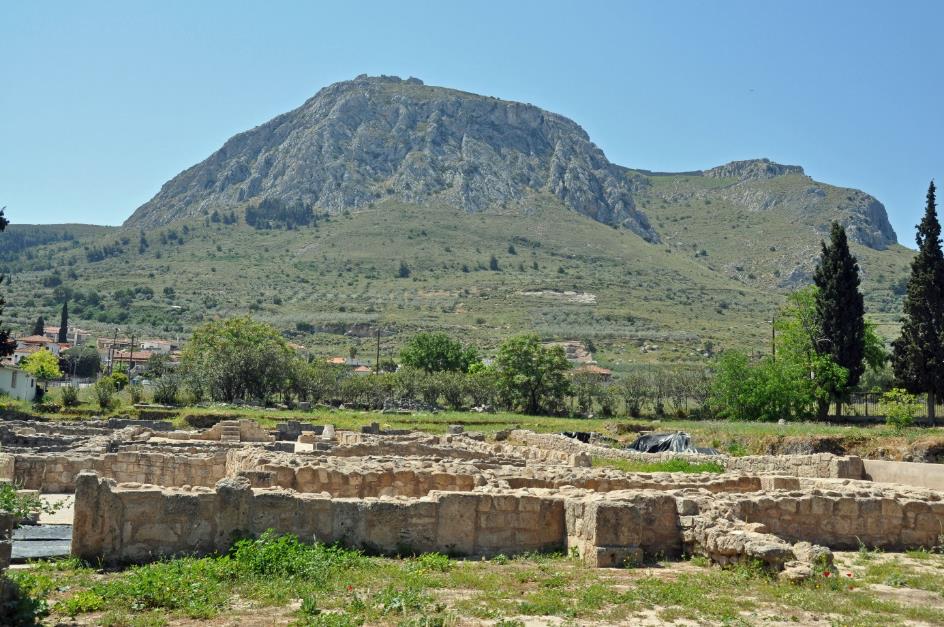
Above ancient Corinth rises the imposing Acrocorinth. This 575-metre-high rocky hill dominates the surrounding area and controls the narrow passage to the Peloponnese. As early as the 7th century BCE, a fortified citadel developed at the summit of the hill
Acrocorinth
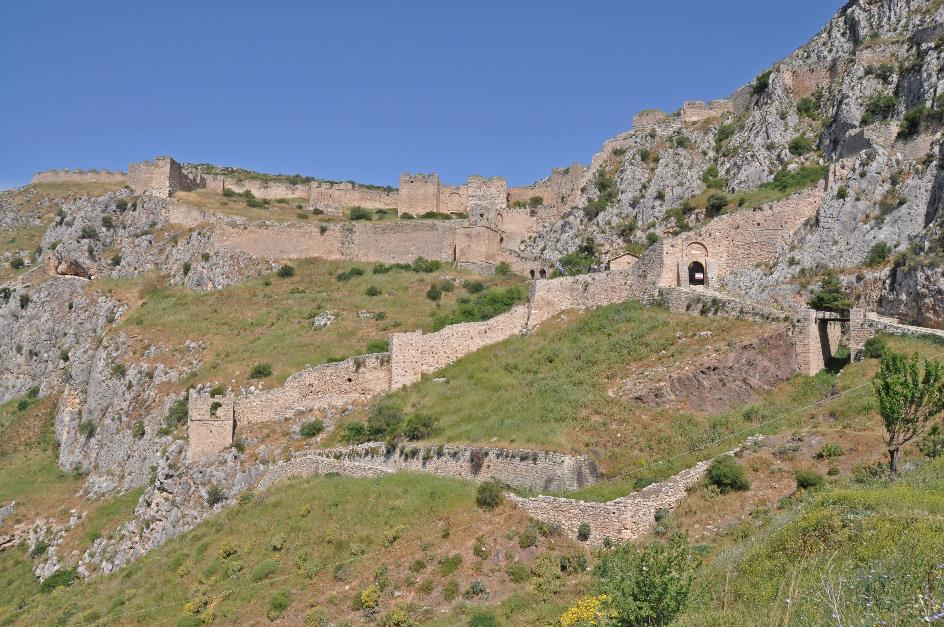
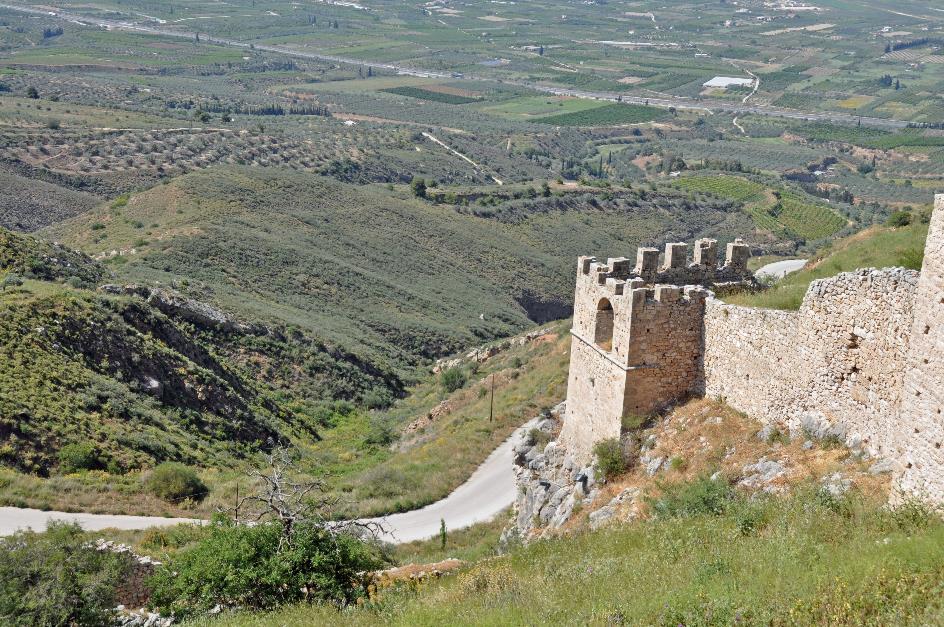
Acrocorinth is the most impressive acropolis in Greece. Given its strategic position, the fortress was progressively strengthened by successive occupiers. The access road passes through three gates: the Turkish, the Frankish, and the Byzantine, in that order
|
|
|
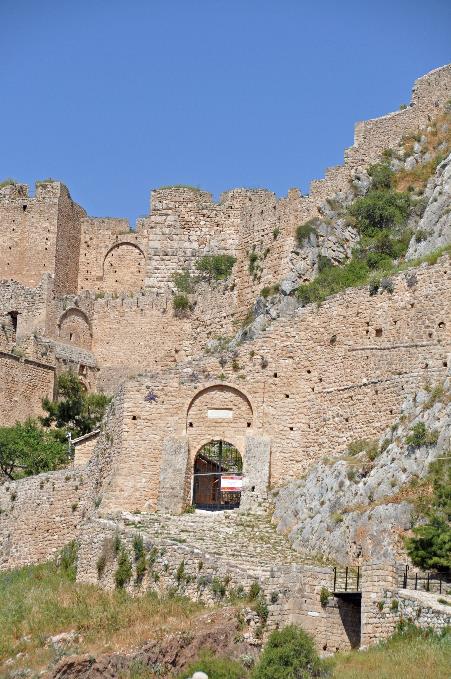
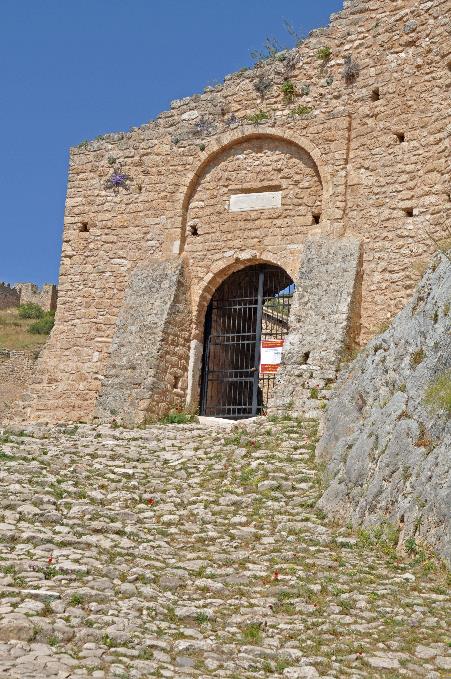
The first gate is also the most recent. It was added by the Turks in the 15th century
|
|
|
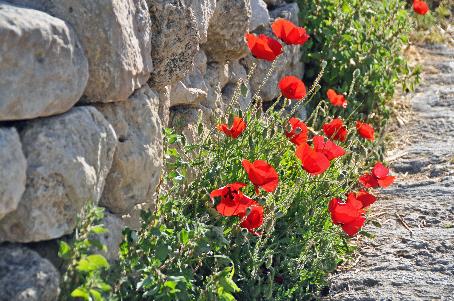
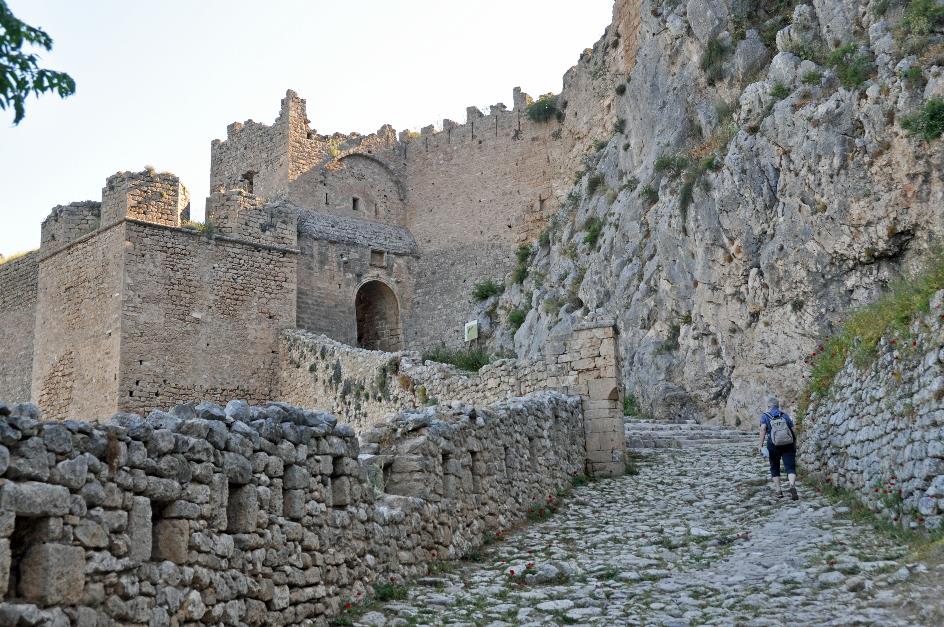
The second gate, the Frankish Gate, was built in the 13th century by the Crusaders
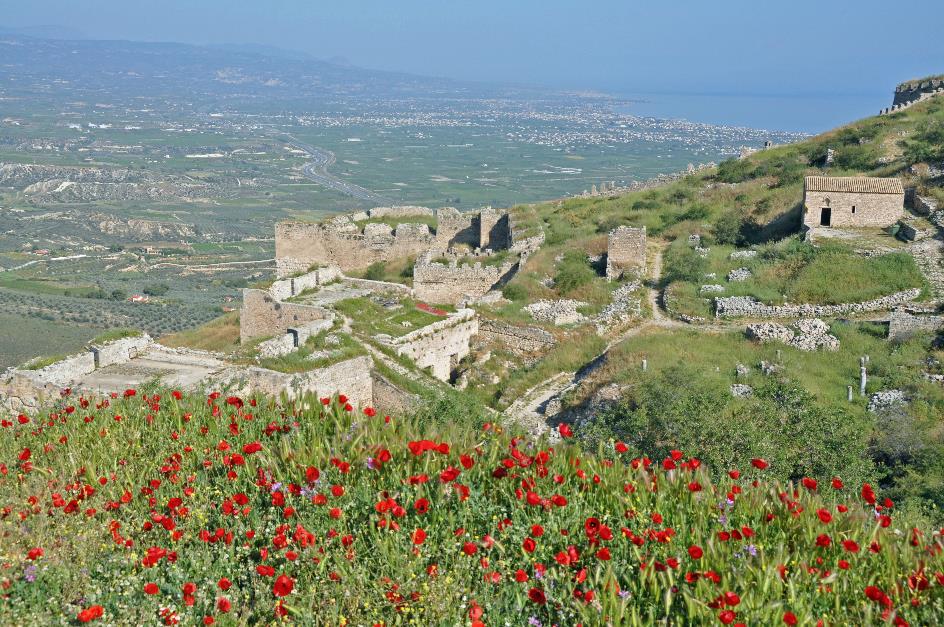
The Frankish gate building (interior). In the background on the right is an Orthodox chapel
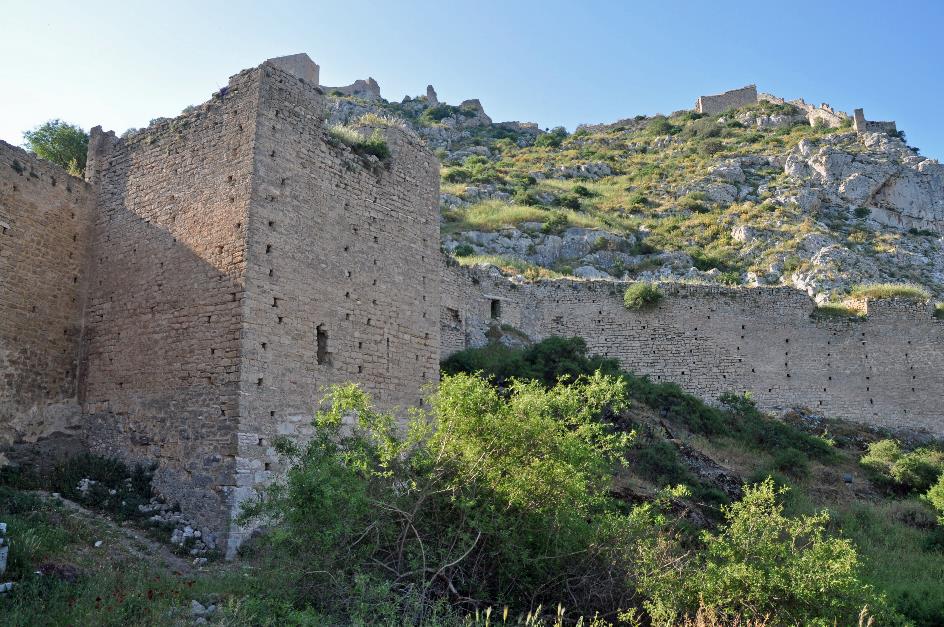
A section of the Byzantine wall
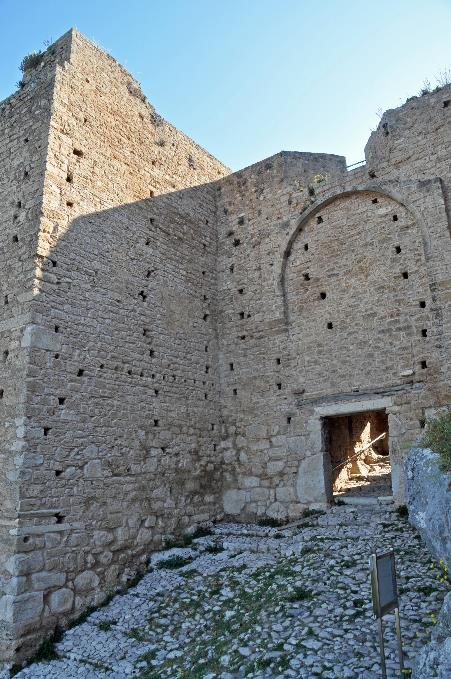
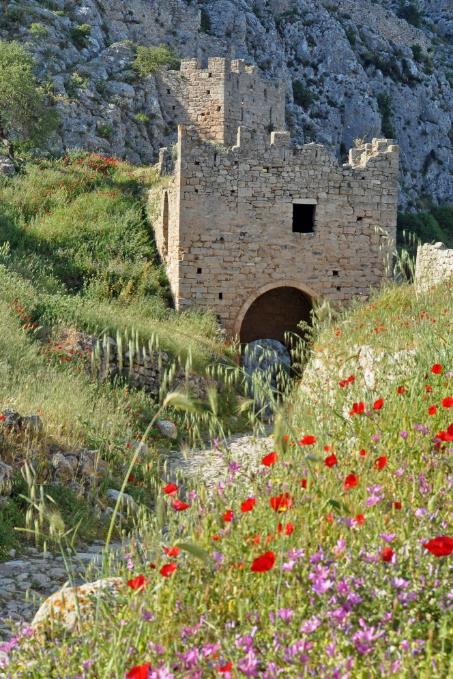
The Byzantine gate, flanked by two imposing towers, is the oldest of the three. It dates from the early 15th century |
|
Bastion tower |
|
|
Turkish mosque with mihrab |
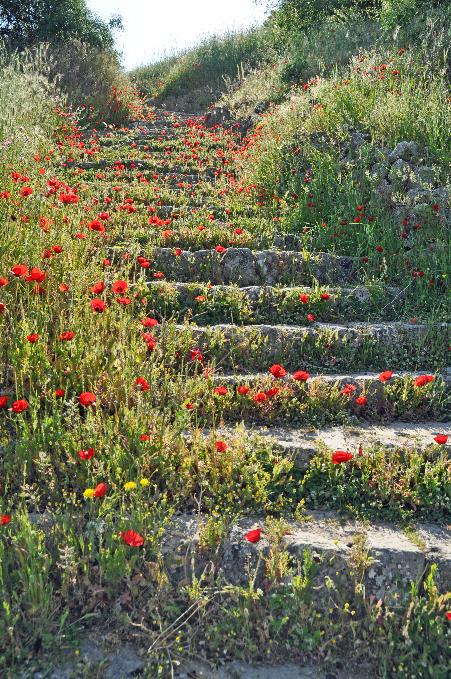
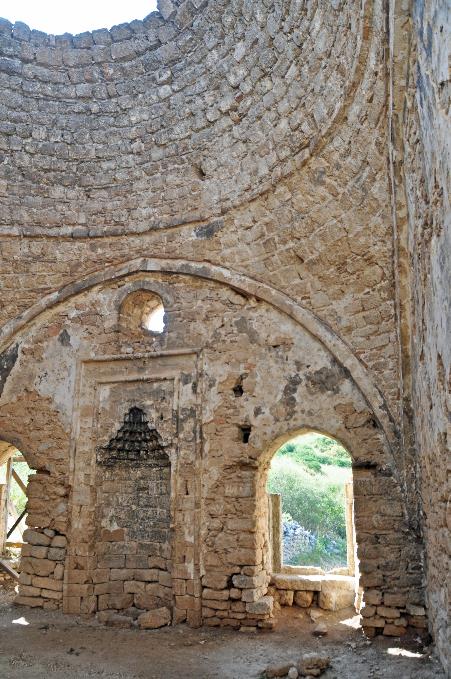
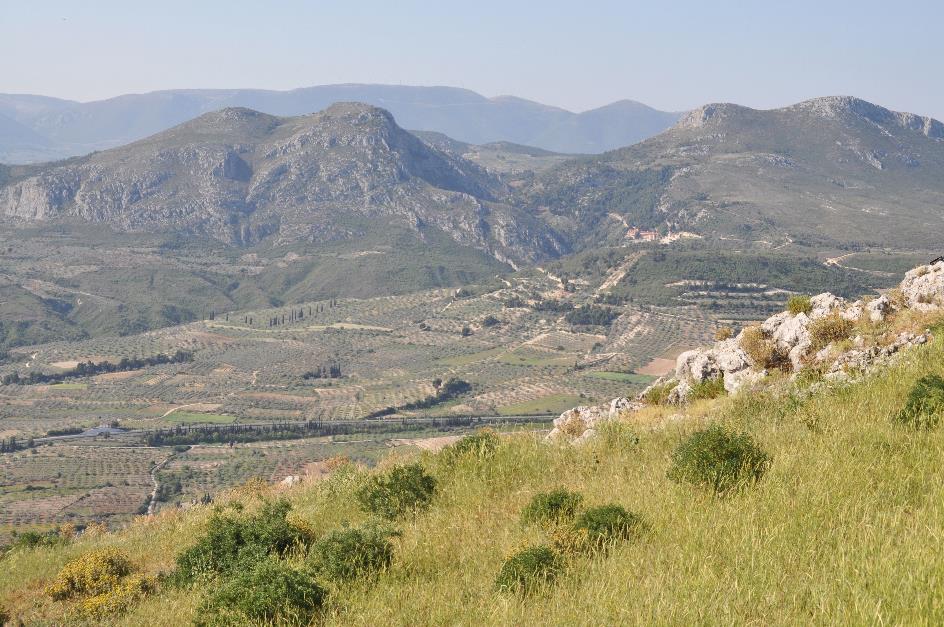
The fortress dominated the surrounding area
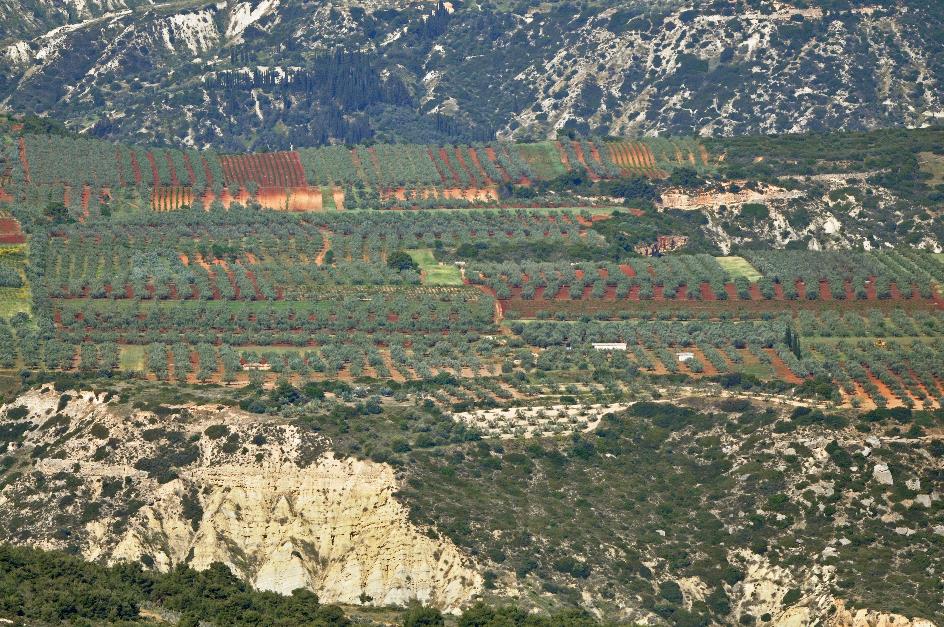
Olive groves in the plain
|
|
|
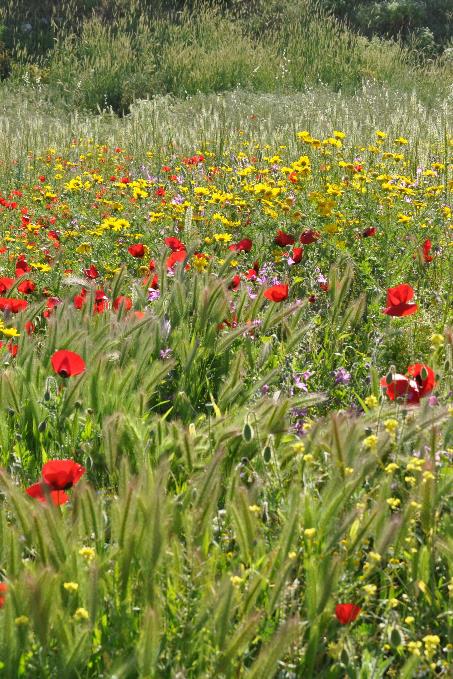
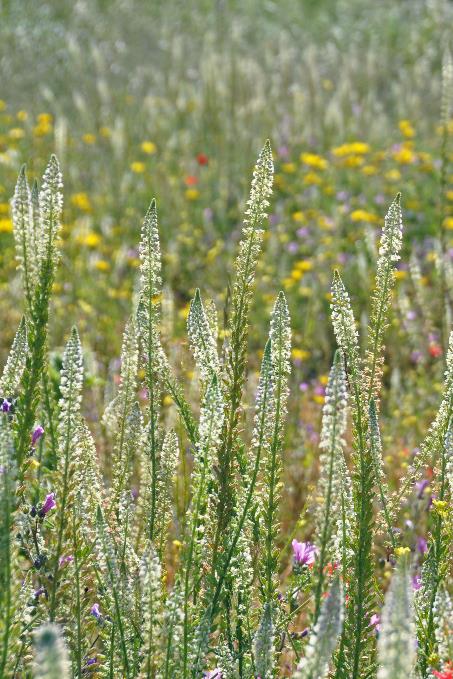
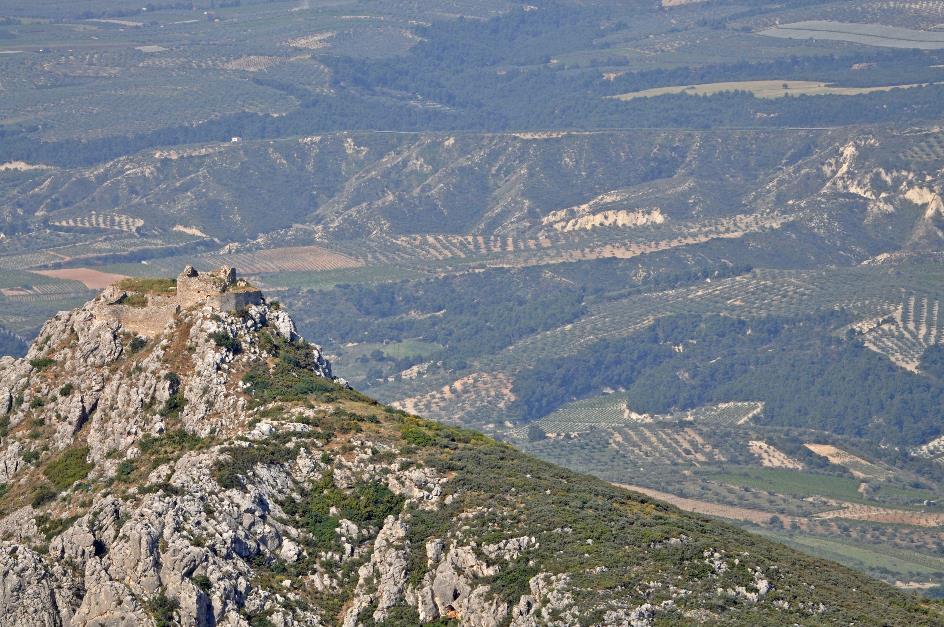
Frankish watchtower
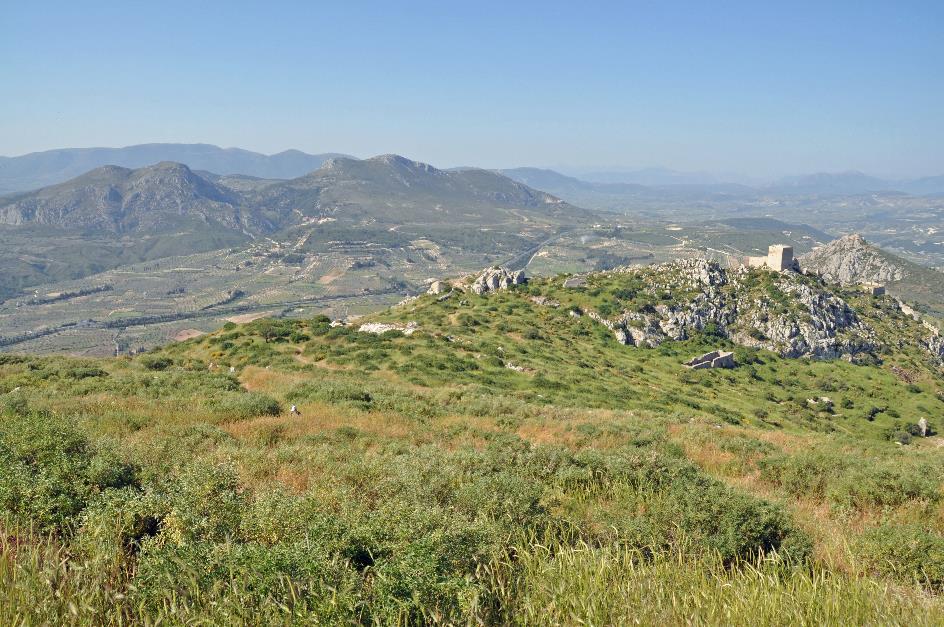
A five-kilometre-long defensive wall surrounded the citadel. In the event of a siege, water supply was not a problem, thanks to the presence of the Pirene spring, which provided a constant flow of water that was stored in cisterns
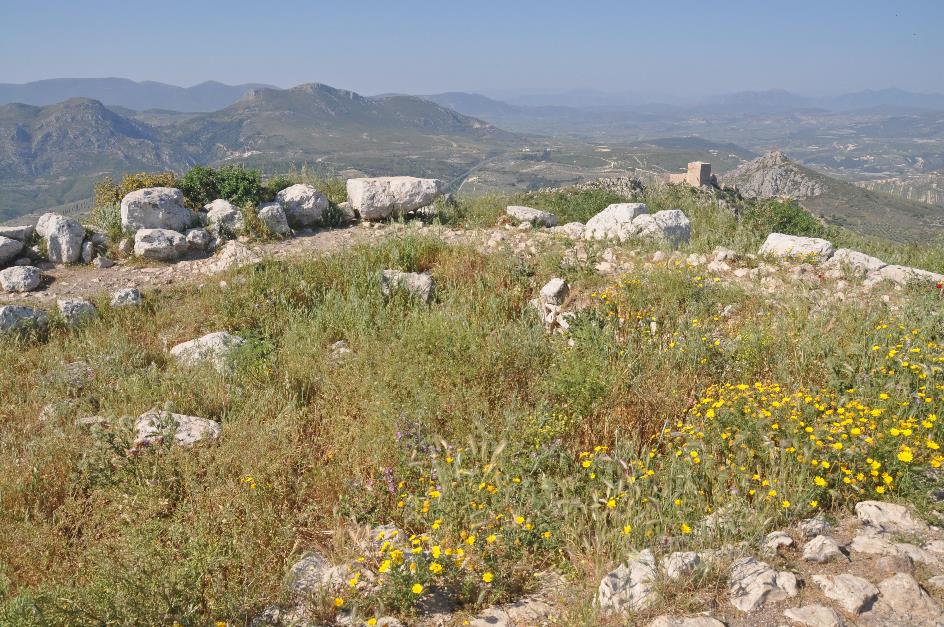
On the highest summit stood a temple of Aphrodite (5th – 4th century BCE). It is said to have been a centre of temple prostitution, against which the Apostle Paul strongly denounced
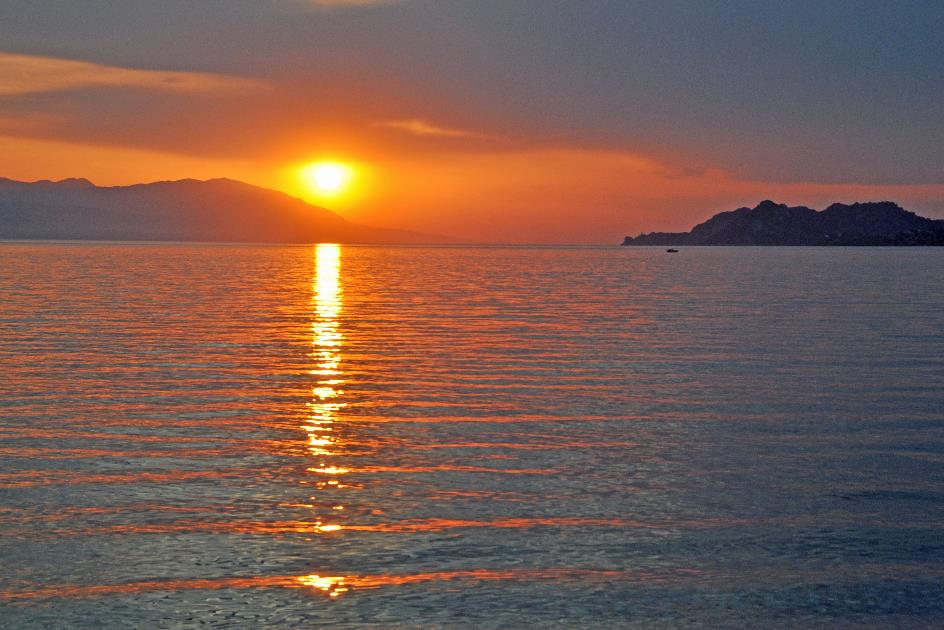
Gulf of Corinth
Mycenae
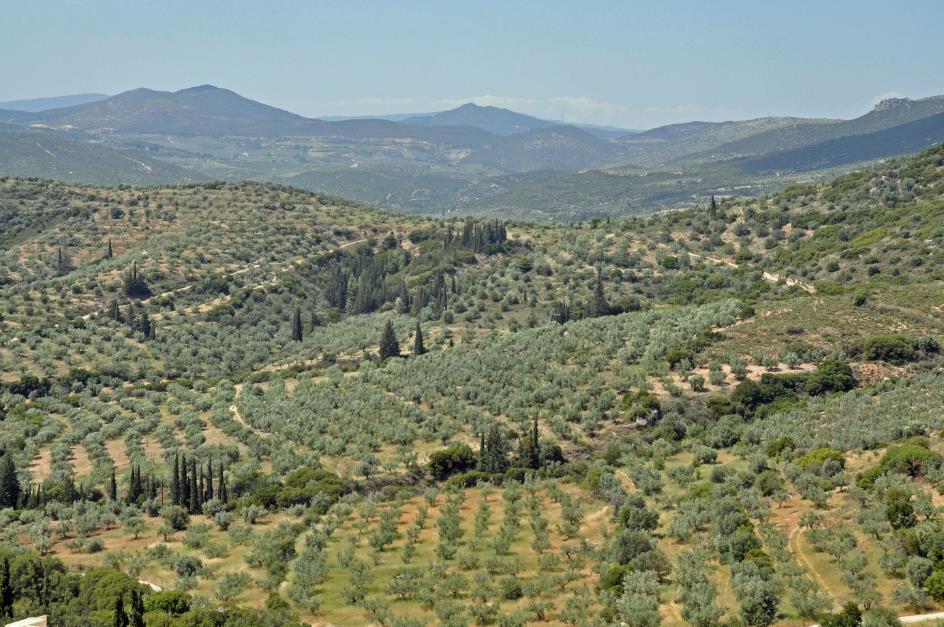
Greek olive oil is mainly produced in the Peloponnese and on Crete
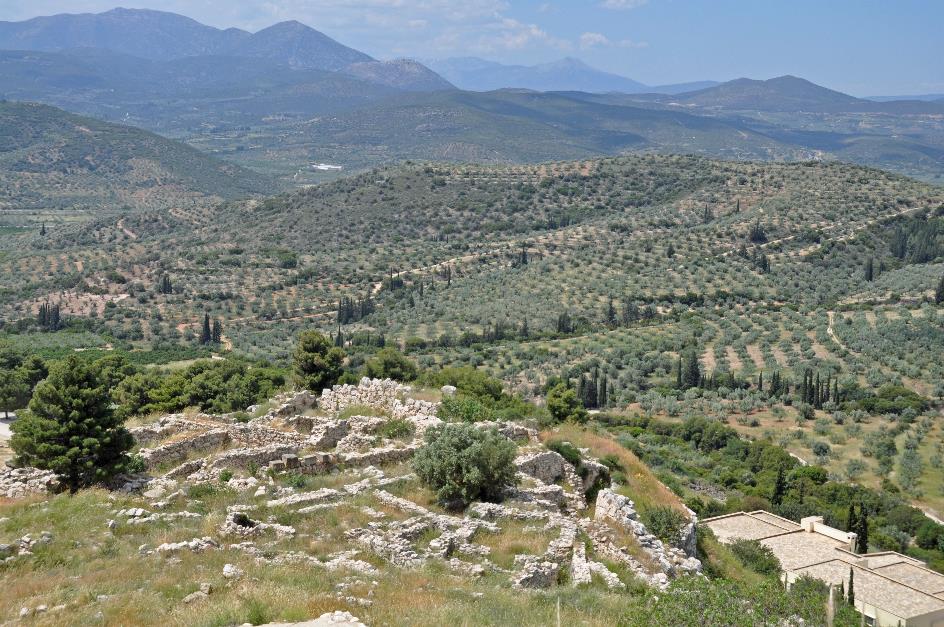
From around 1600 to 1100 BCE, Mycenae was one of the most important centres of Greek civilisation. The city was situated on a strategic hill and had around 30,000 inhabitants by approximately 1350 BCE
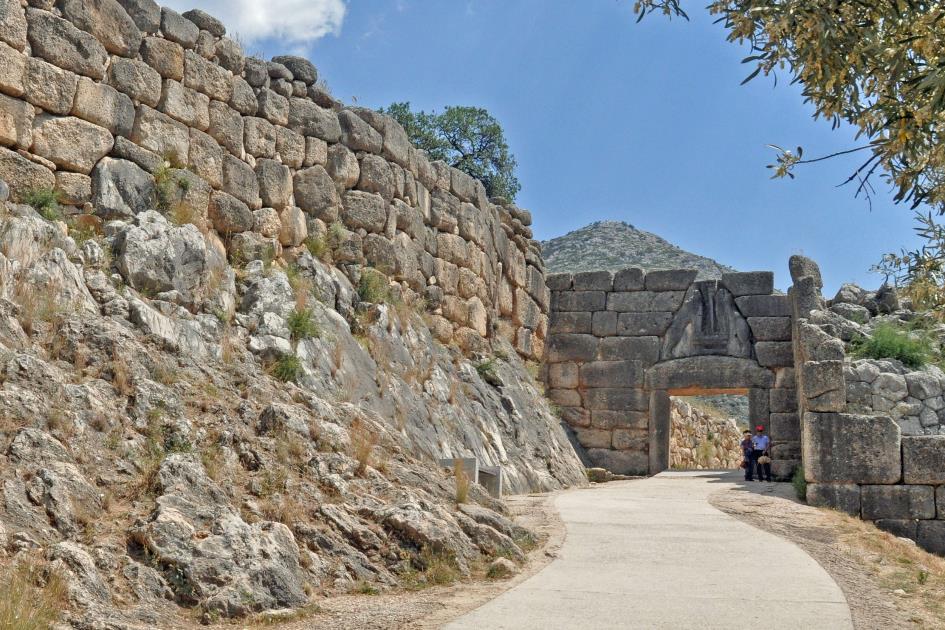
The acropolis was surrounded by a wall made of enormous, stacked boulders without mortar. It was 900 metres long and had an average thickness of six metres. Because it was believed to have been built by giants, it became known as the Cyclopean wall
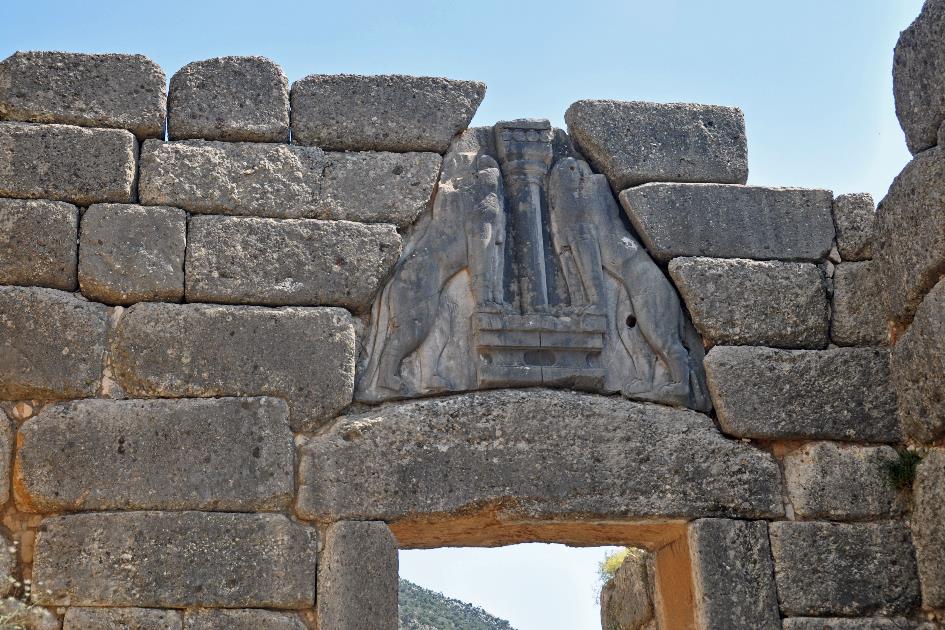
The world-famous Lion Gate formed the main entrance to the citadel. It dates from around 1250 BCE. Possibly to impress visitors, the enormous stones here were neatly cut into rectangular blocks, even though the Mycenaeans did not use iron tools
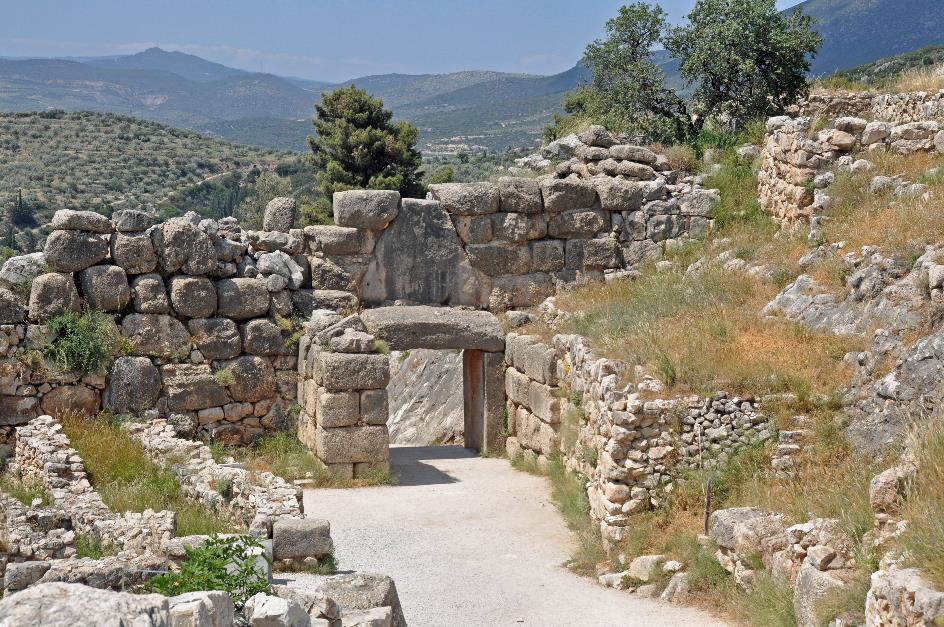
Lion Gate (interior). The acropolis was reserved for the upper classes and the priests. Craftsmen and soldiers lived outside the walls
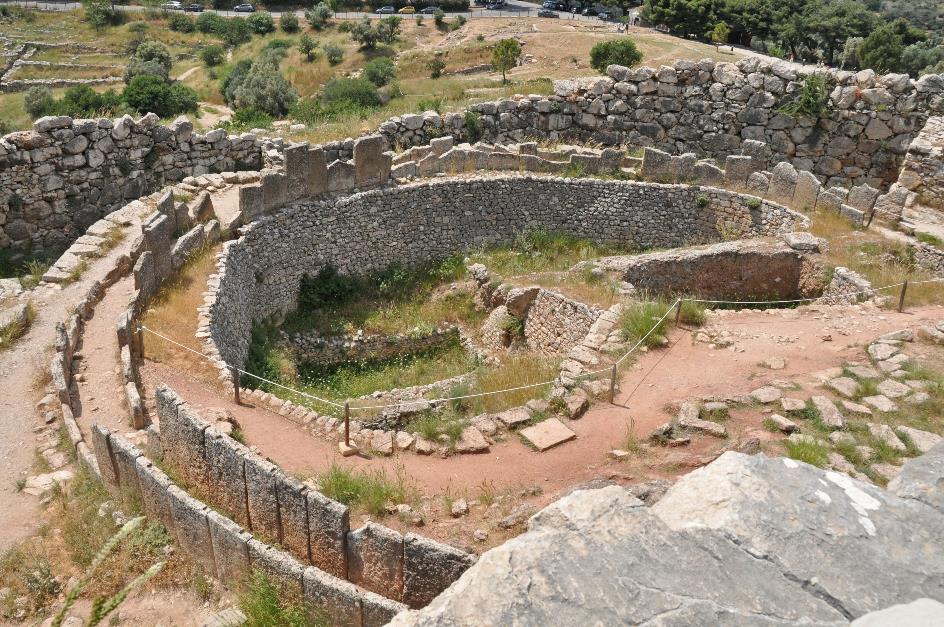
Grave Circle A is a royal burial ground from the 16th century BCE, located within the city walls. It contains six shaft graves, each holding two to five bodies – nineteen in total. Valuable grave goods were discovered here, including the so-called gold mask of Agamemnon
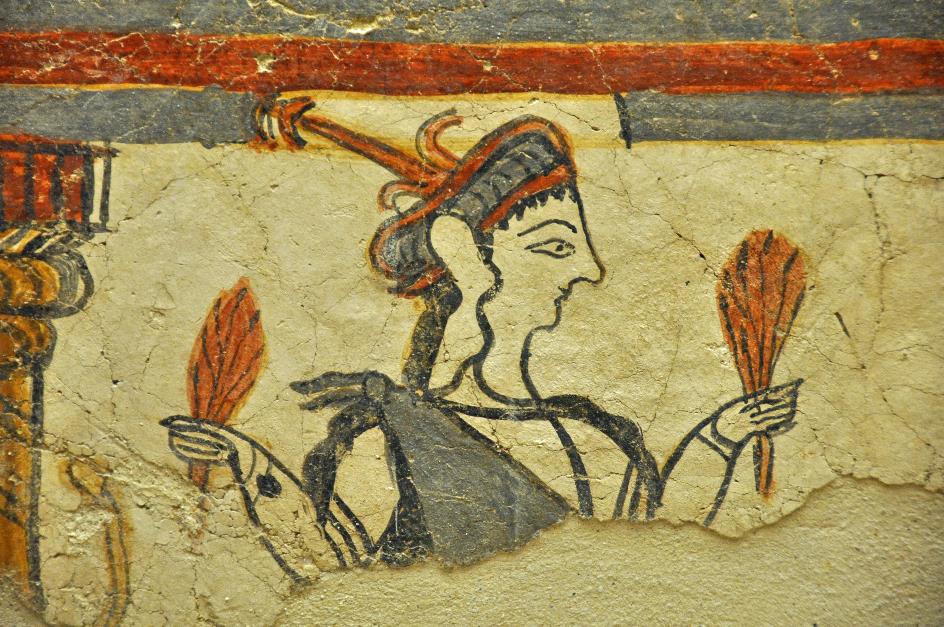
Fresco of the goddess with ears of grain (1250 – 1180 BCE). She wears an animal skin draped diagonally across her body and a headdress with a crest
|
|
|
|
|
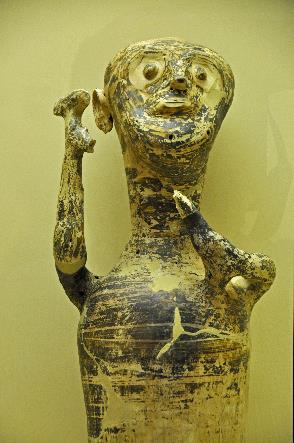
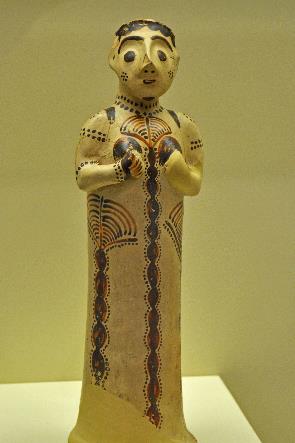
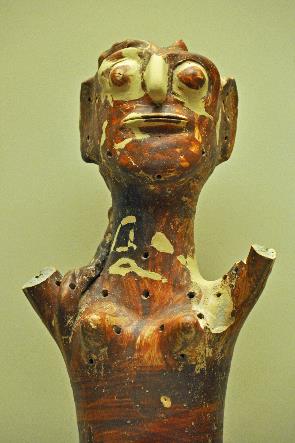
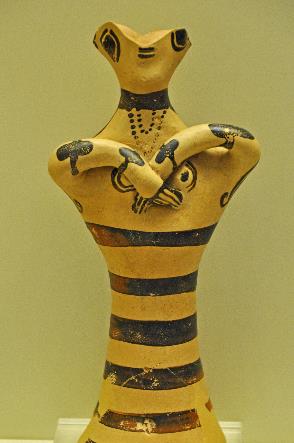
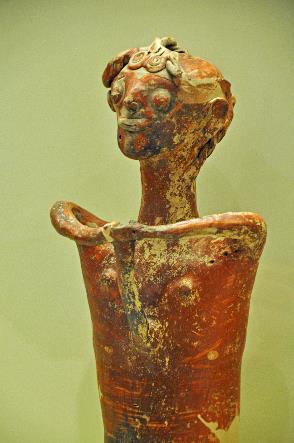
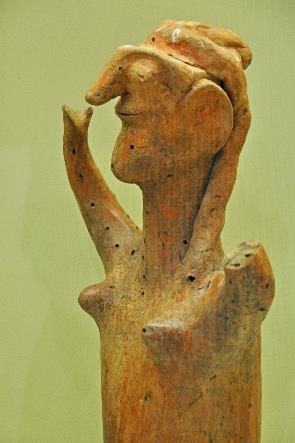
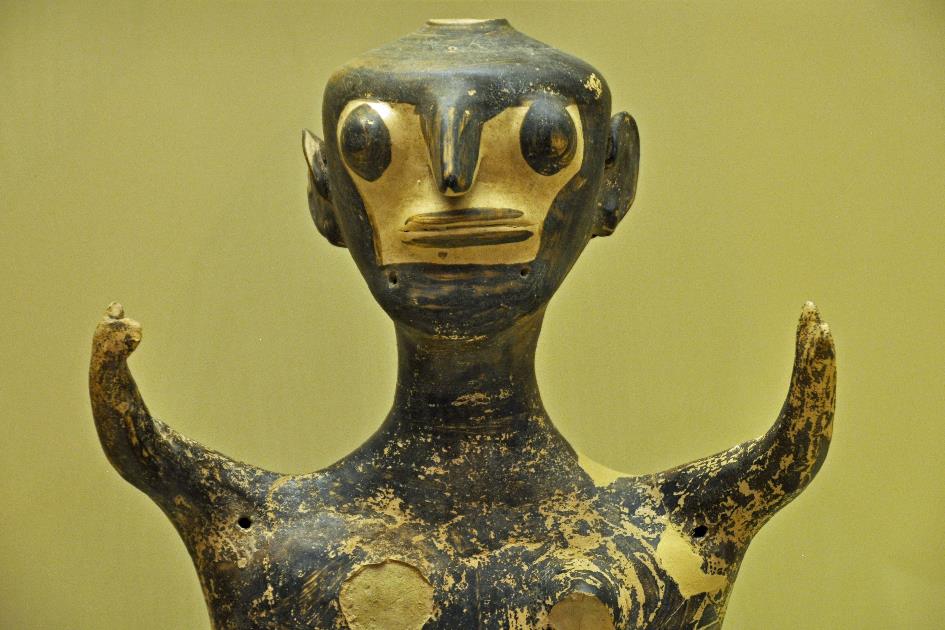
Anthropomorphic figures (1250 – 1180 BCE)
|
|
|
|
|
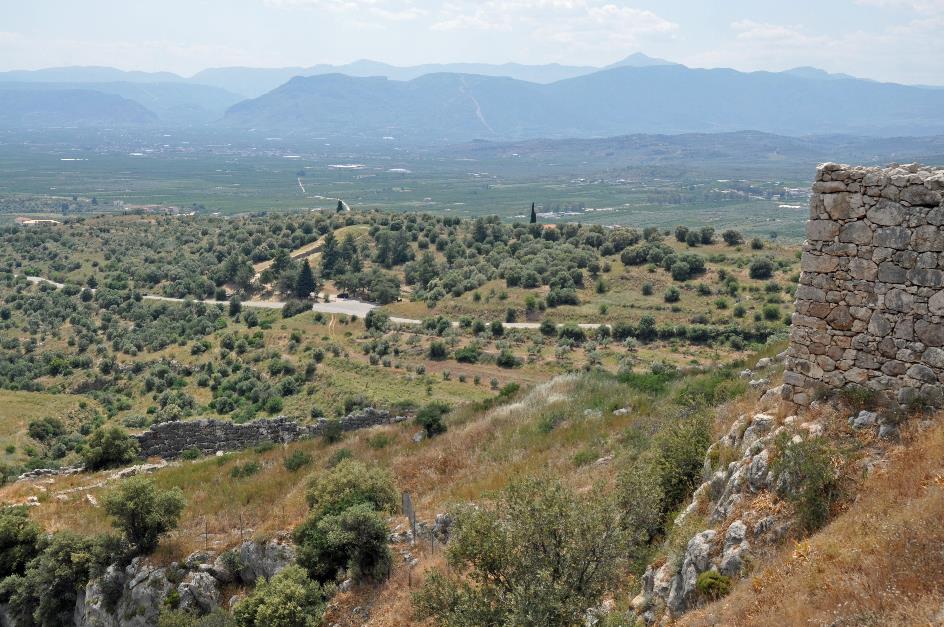
The Treasury of Atreus (centre-left in the image) lies some distance outside the walls. Its name comes from the many grave goods found there, although it is actually a tholos tomb, a beehive-shaped burial structure
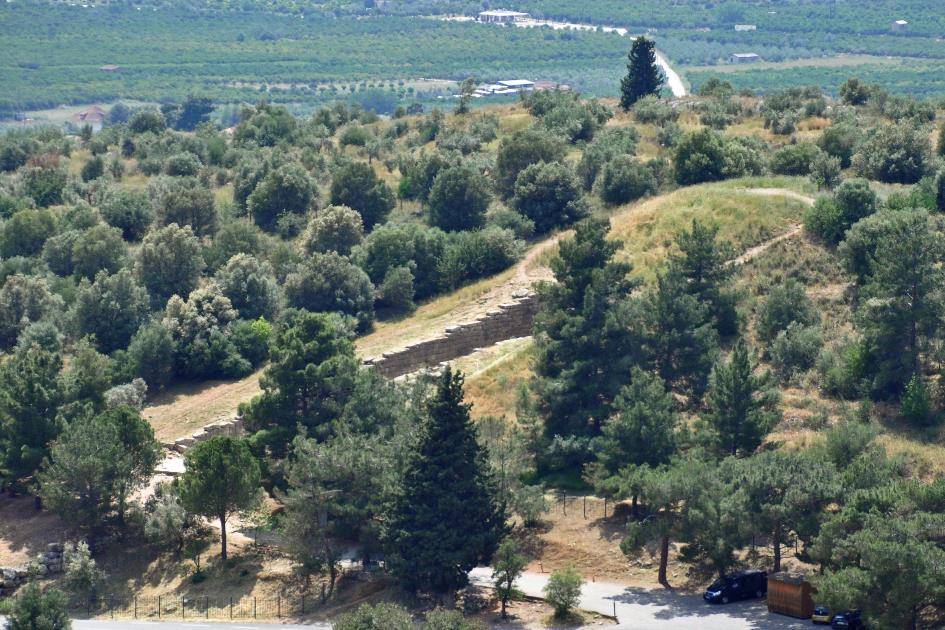
The Treasury of Atreus is the largest of the Mycenaean tholos tombs. Such tombs consist of a long, open passage leading to a domed, earth-covered burial chamber
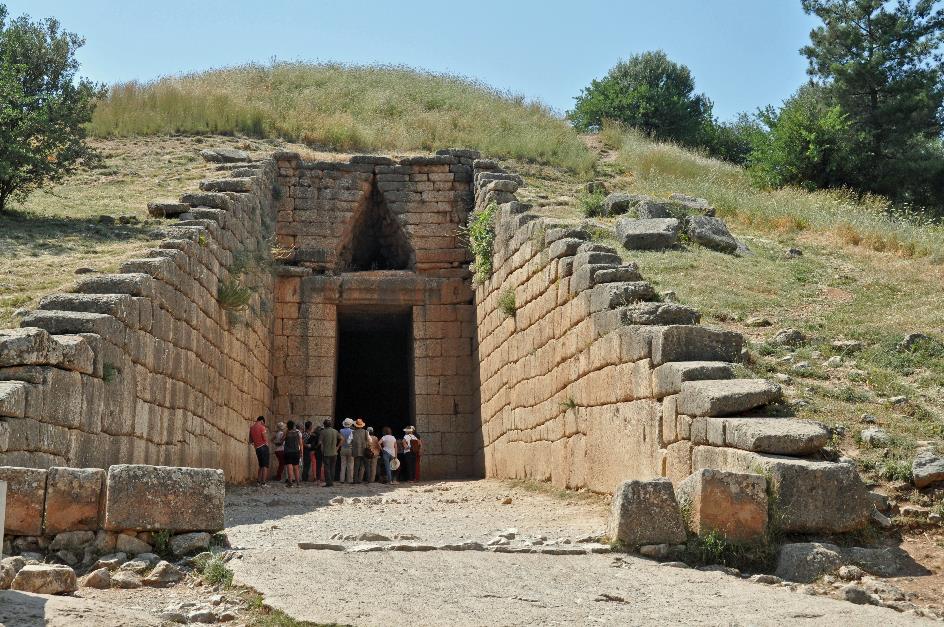
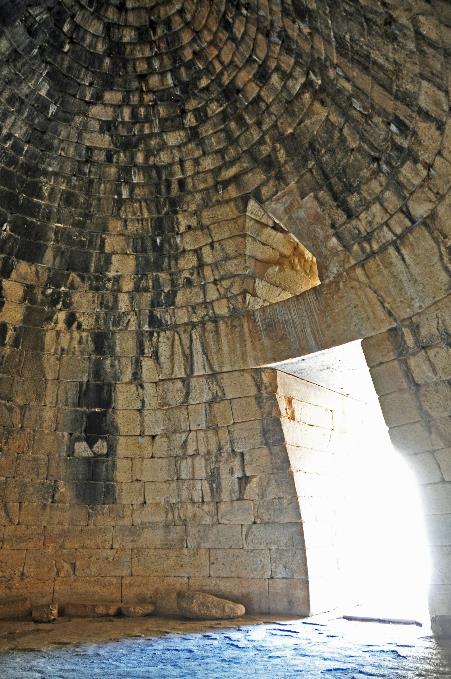
Through the 36-metre-long passage, one reaches the burial chamber
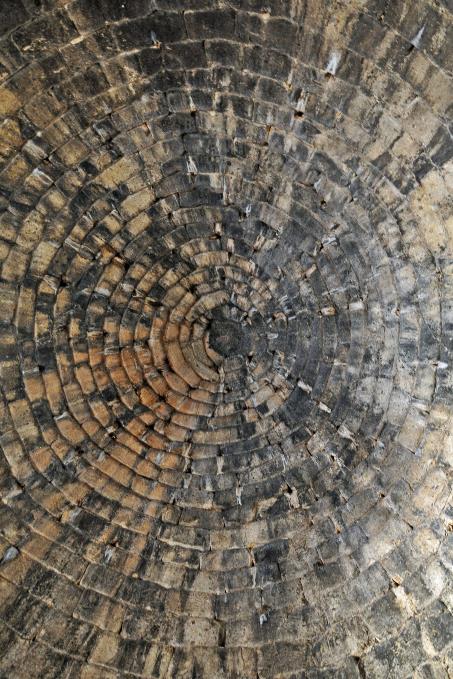
The corbel dome is formed by layers of stone that project inward, held in place by the pressure of the surrounding earth |
|
The chamber is 13.2 metres high and has a base diameter of 14.5 metres. The eight-metre-long lintel above the entrance weighs 120 tonnes |
Tiryns
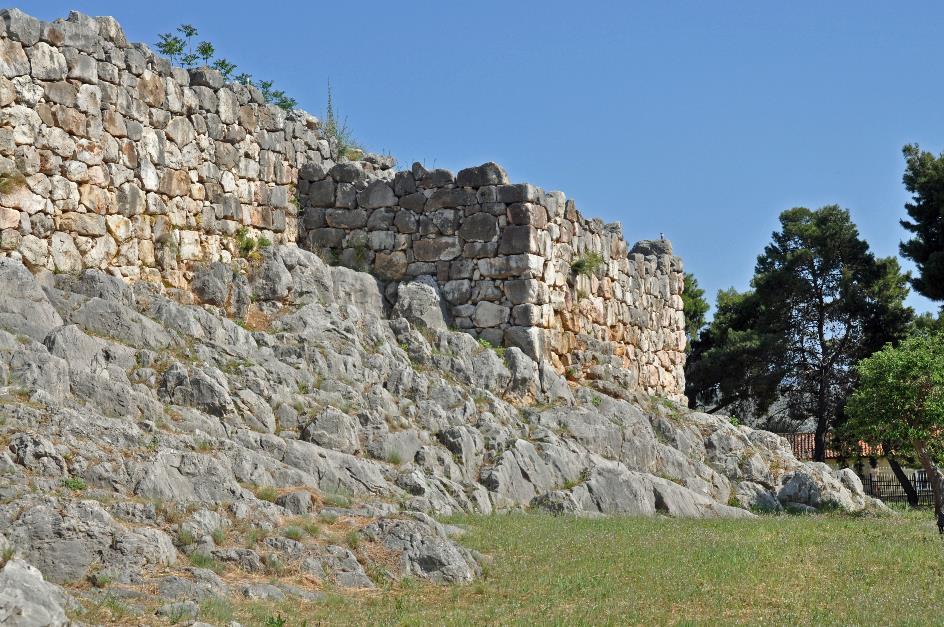
Between 1400 and 1200 BCE, Tiryns was one of the most important centres of the Mycenaean world. Since the city was not located on a hill, its fortifications were if anything even more impressive than those of Mycenae
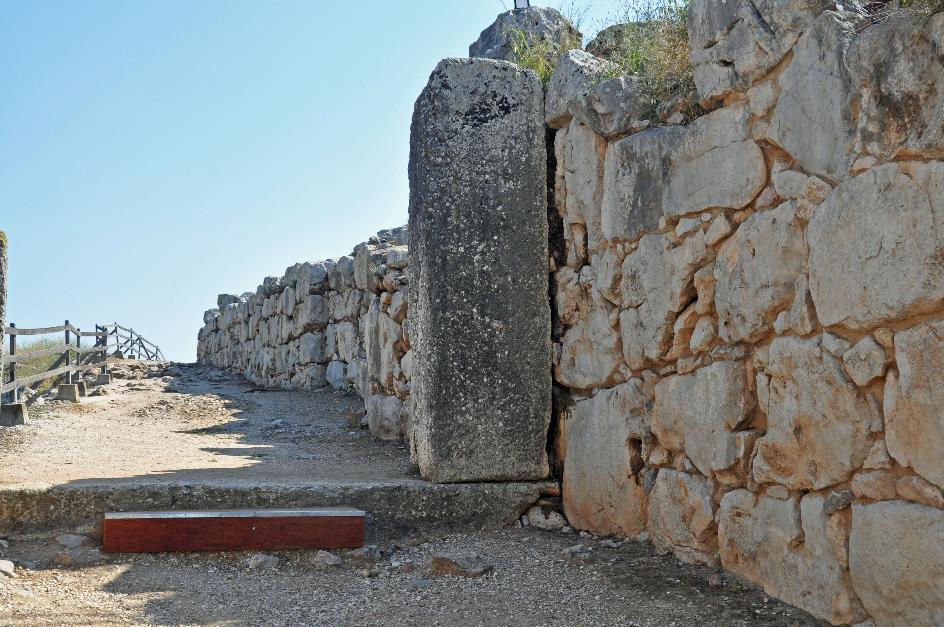
Not without reason did Homer give the city the epithet “well-walled”. Here too, enormous stones were stacked without mortar. The wall reached up to 18 metres in height and was five to eleven metres thick. The heaviest stone is estimated to weigh 14 tonnes
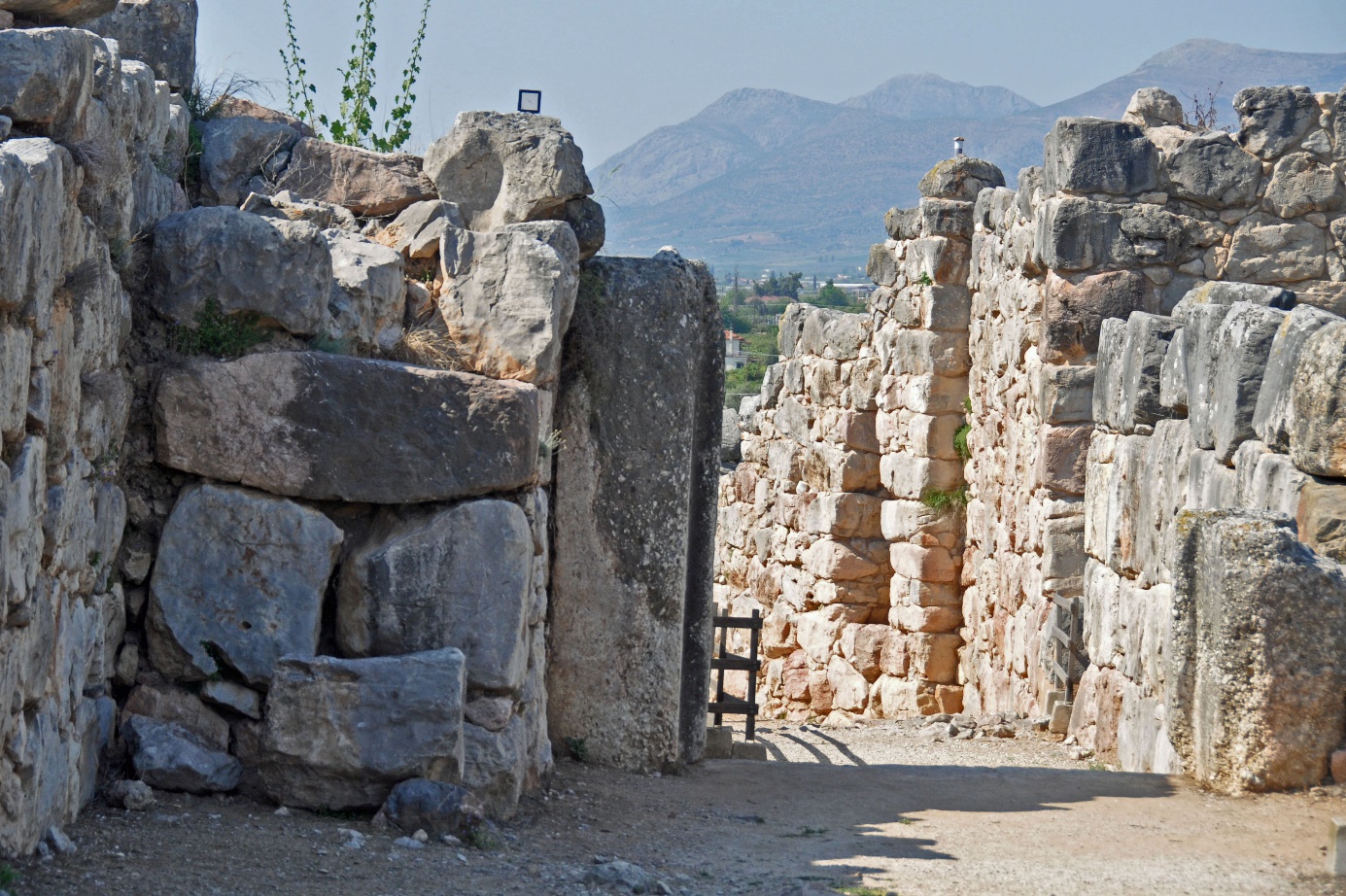
Gate of the citadel (interior)
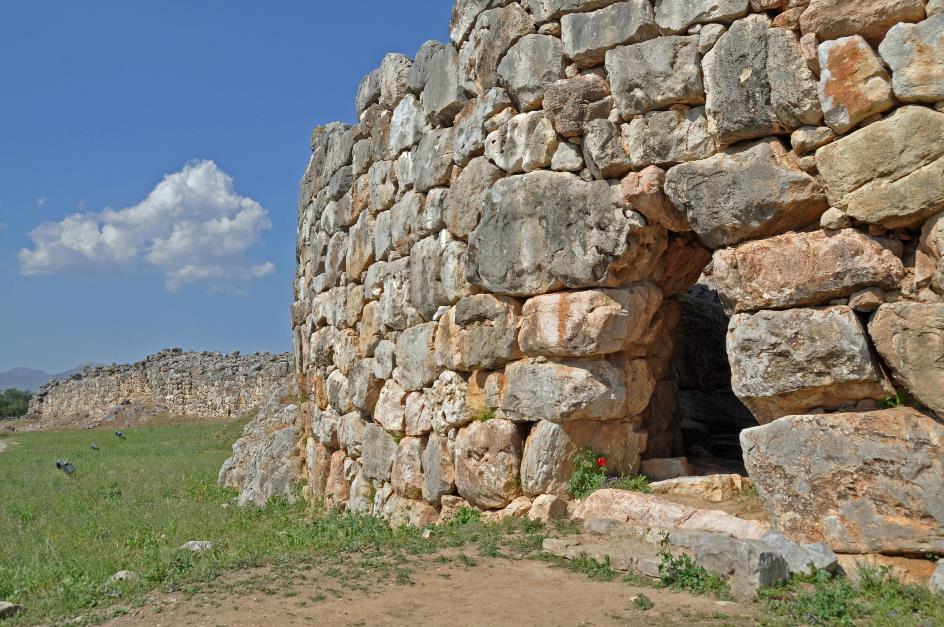
Exit of the postern gate, the secondary gate that could be used as an escape route
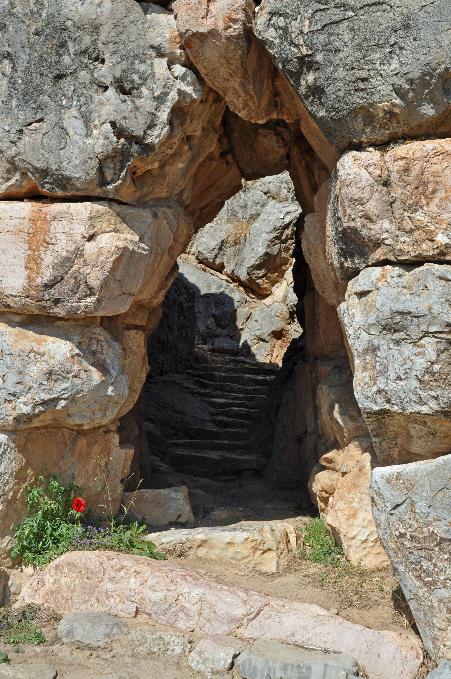
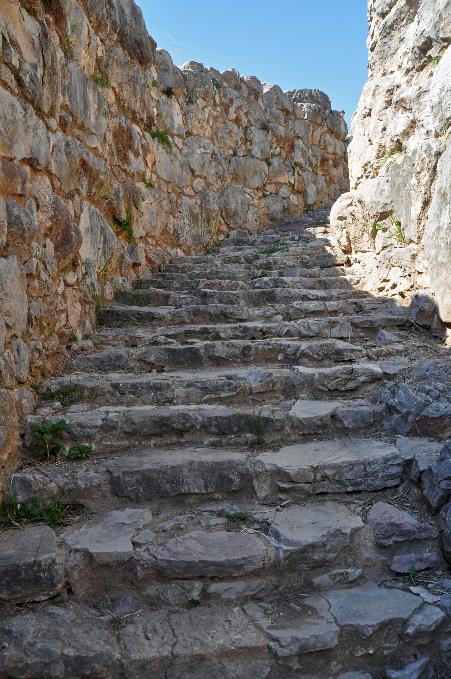
The length of the postern gives an impression of the thickness of the fortress wall |
|
Inside, a staircase leads to the postern gate |
Navplion
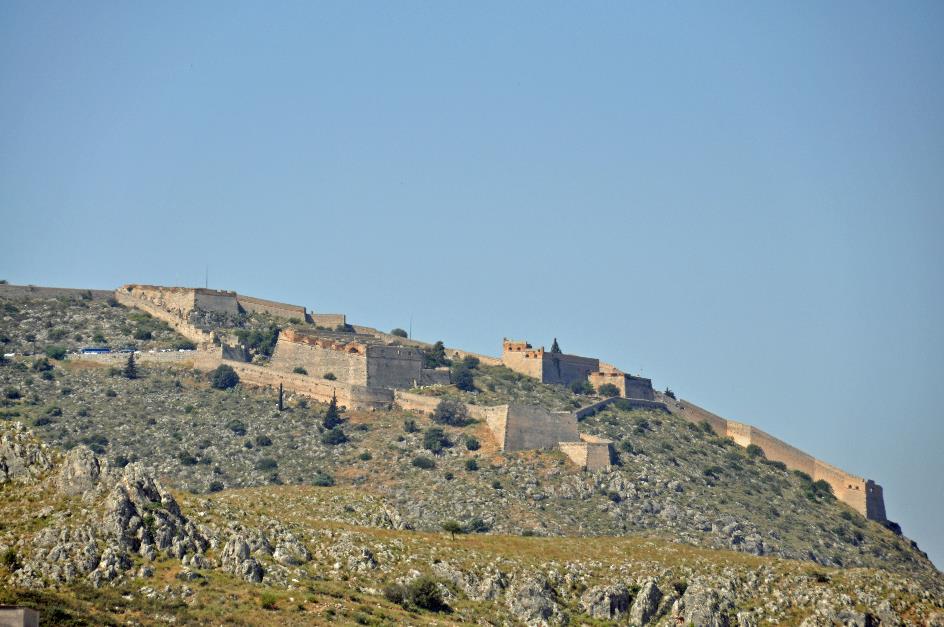
The coastal city of Navplion is dominated by the imposing Palamidi fortress. The Venetians needed only four years to build it, starting in 1711
Above the entrance gate, the Lion of Saint Mark recalls Venetian involvement |
|
|
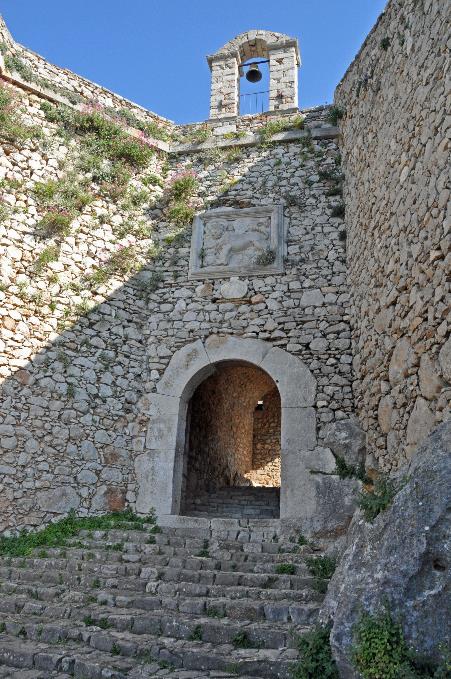
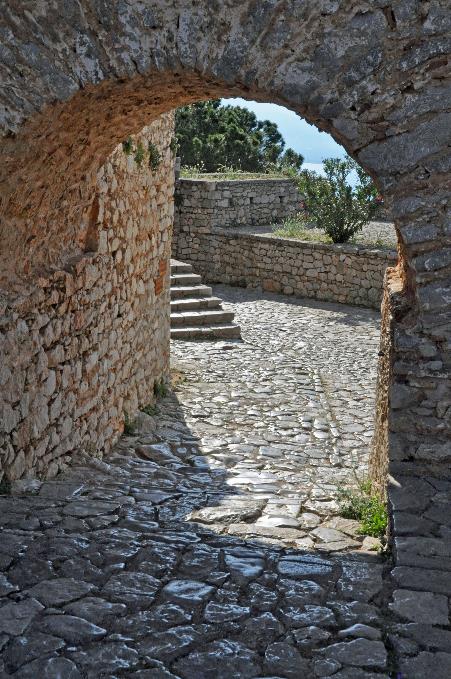
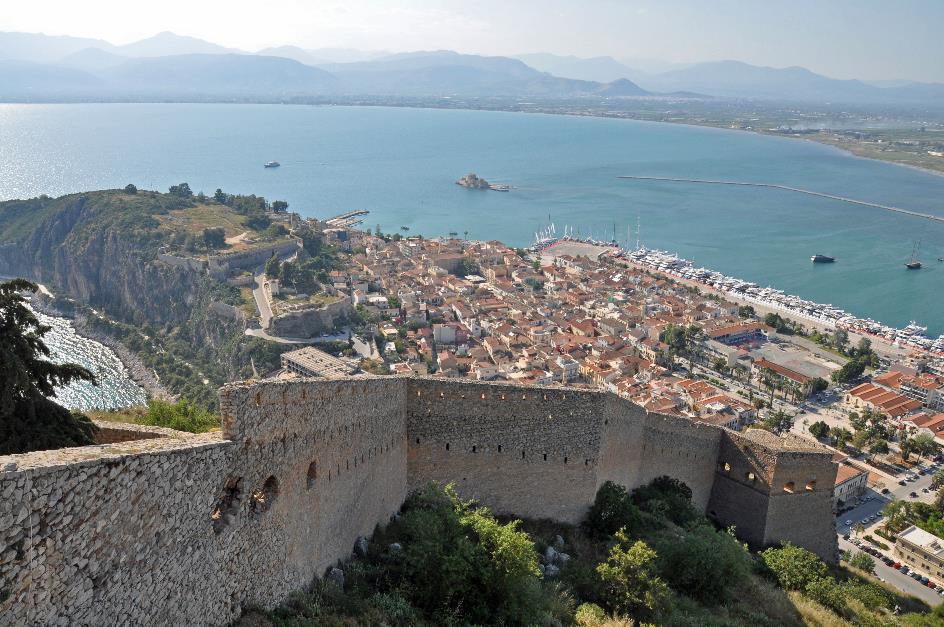
Palamidi dominates the Argolic Gulf
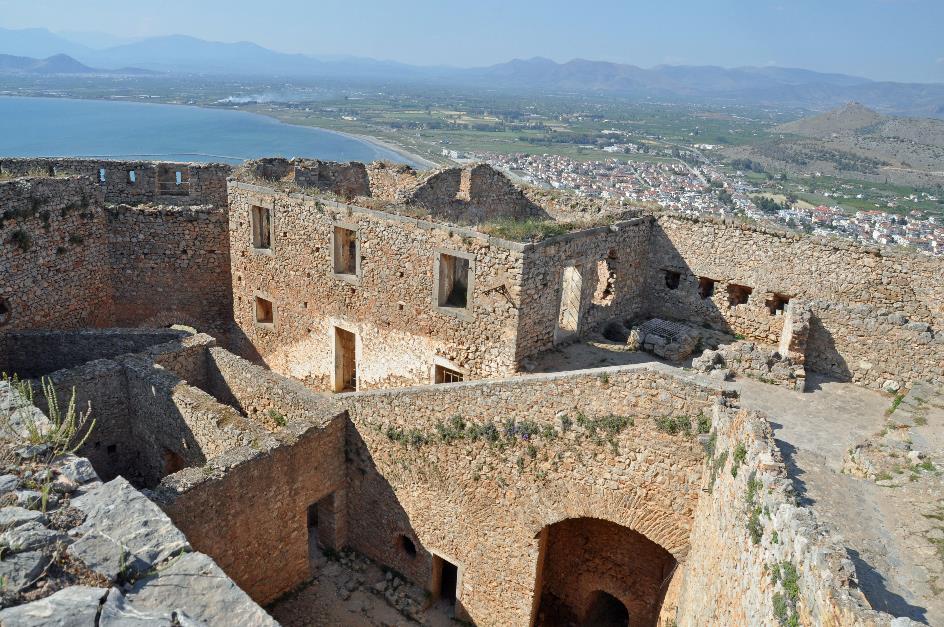
The fortress wall has eight bastions, of which the Bastion of Miltiades is the largest
Bastion of Miltiades – Casemates |
|
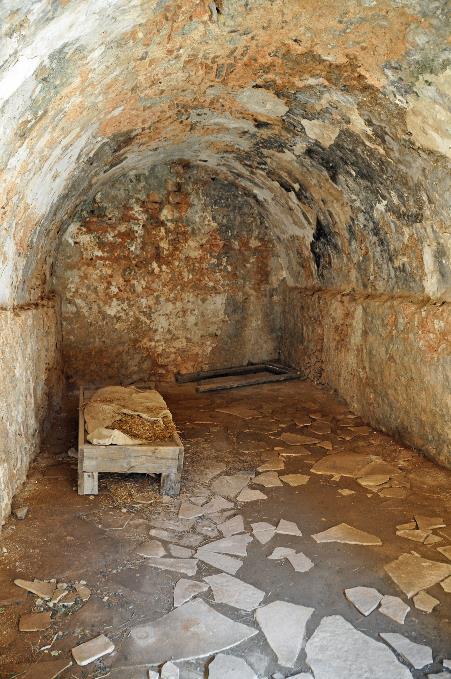
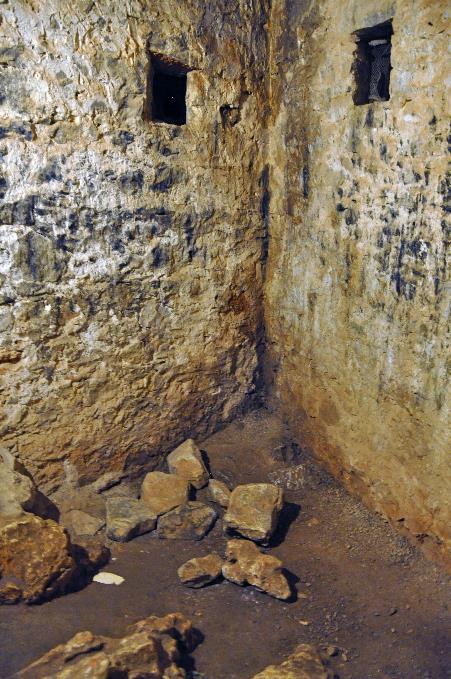
Prison cell in which Theodoros Kolokotronis, the hero of the Greek Revolution, was held for several years |
Epidaurus
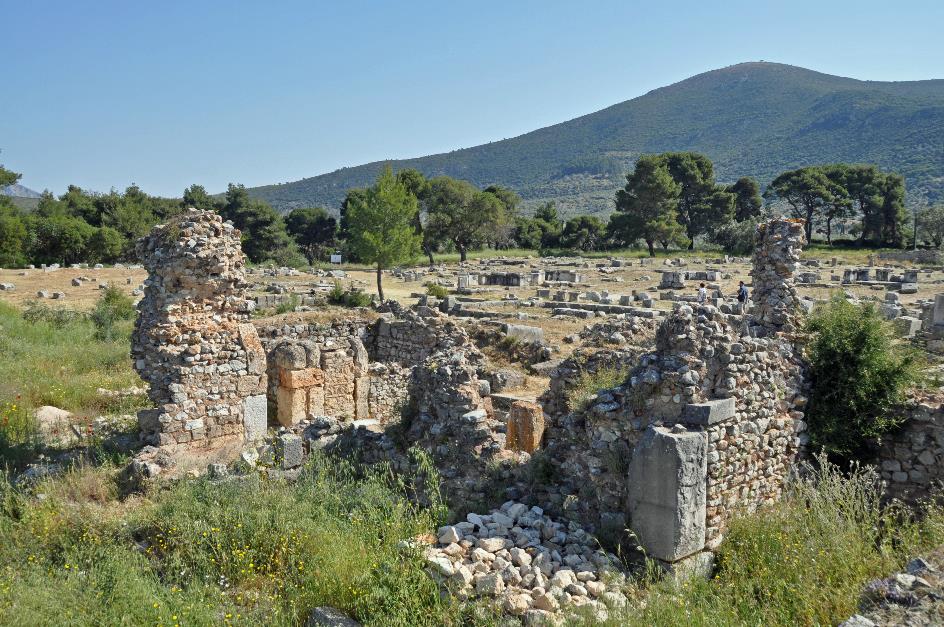
Ancient Epidaurus owed its fame to the Asclepieion, the sanctuary of Asclepius, the demigod of medicine. Asclepius was a skilled physician whose reputation reached as far as Rome. According to legend, he was even able to bring the dead back to life. He is usually depicted with the Rod of Asclepius, a serpent coiled around a staff, which is still regarded today as a symbol of the medical profession
|
|
|
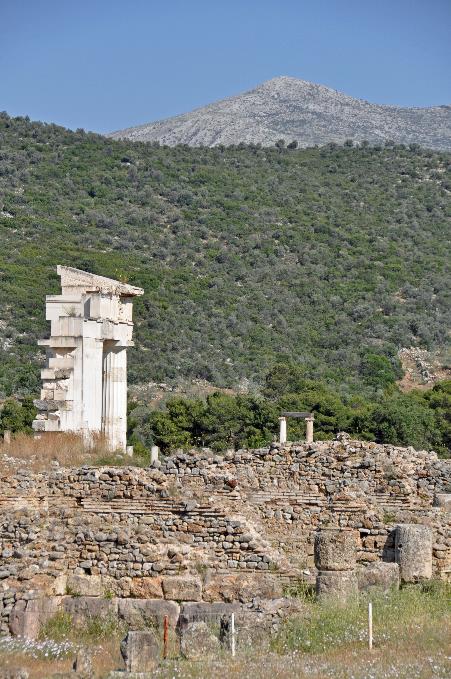
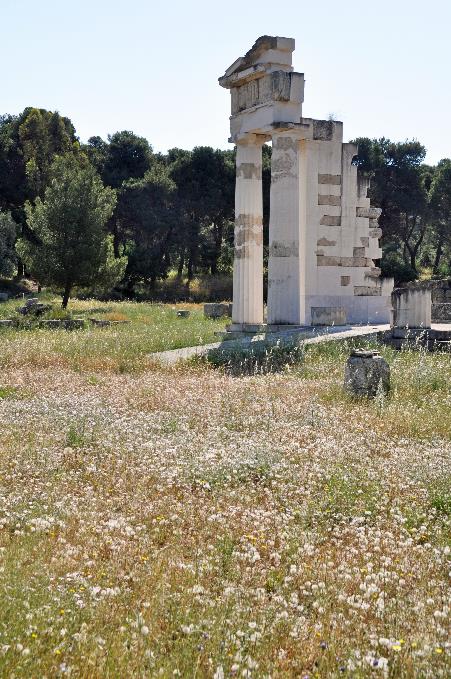
Within the sanctuary stood several public buildings. In effect, it functioned as both a hospital and a sanatorium, possibly one of the earliest in the world. One of these public buildings was the Temple of Asclepius
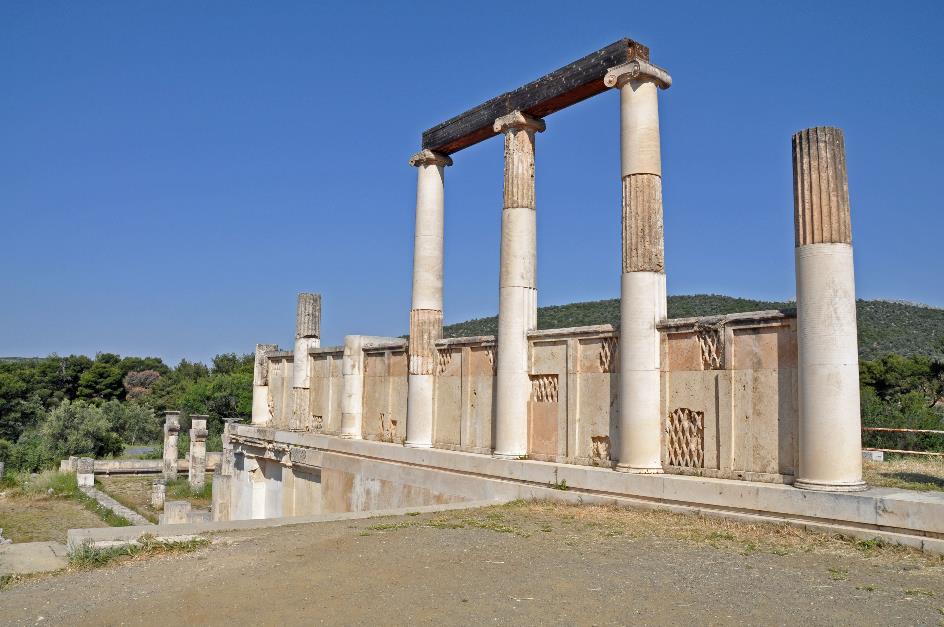
In the basement of this building was the abaton, a sacred space where patients slept on the flayed skins of sacrificial animals. In their dreams, they were visited by Asclepius, who provided guidance for their healing. The priests would then devise an appropriate treatment
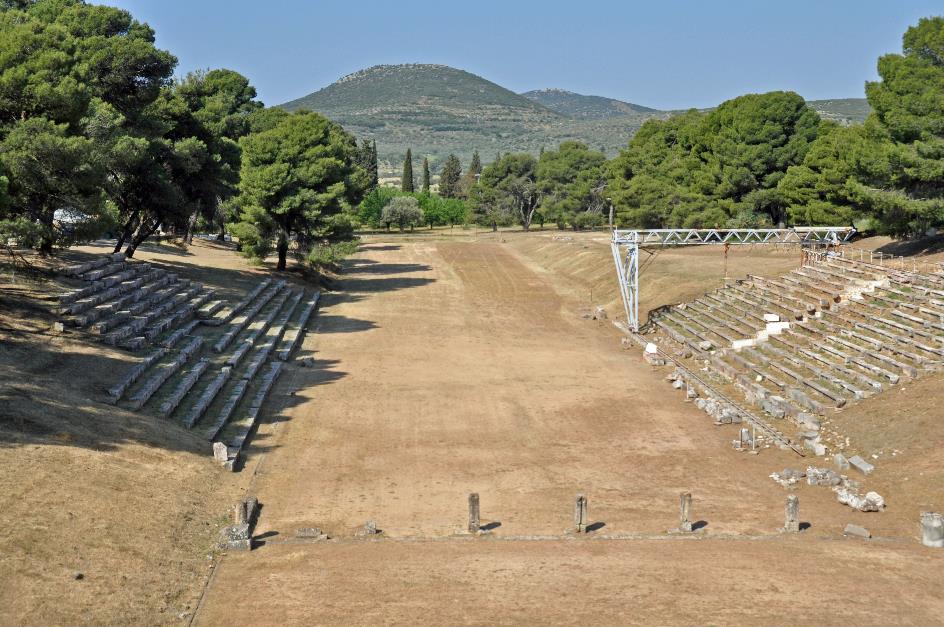
This treatment included not only exercise, baths, and a regulated diet, but also intellectual and cultural entertainment. Hence the presence of facilities such as a stadium and a theatre
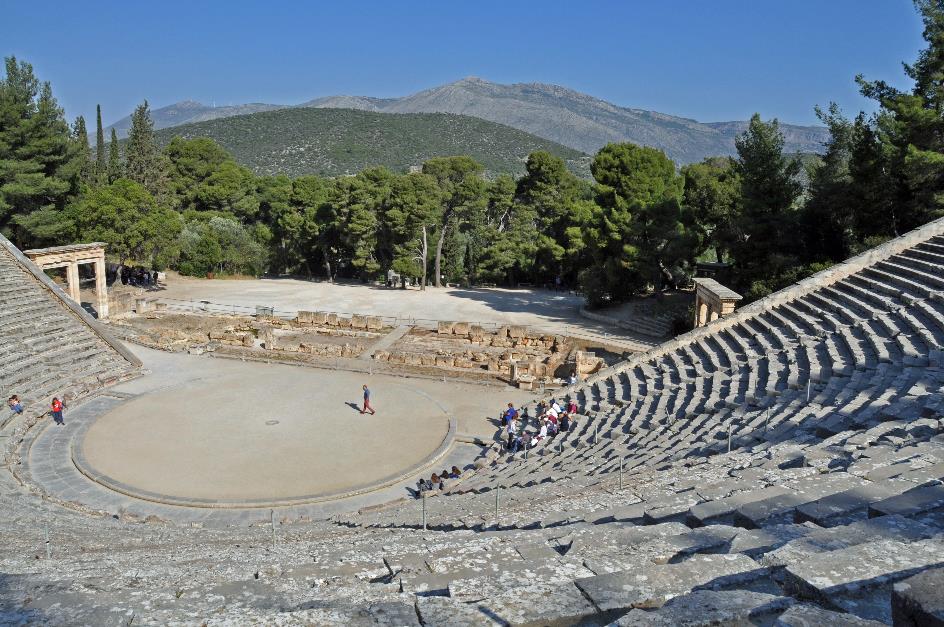
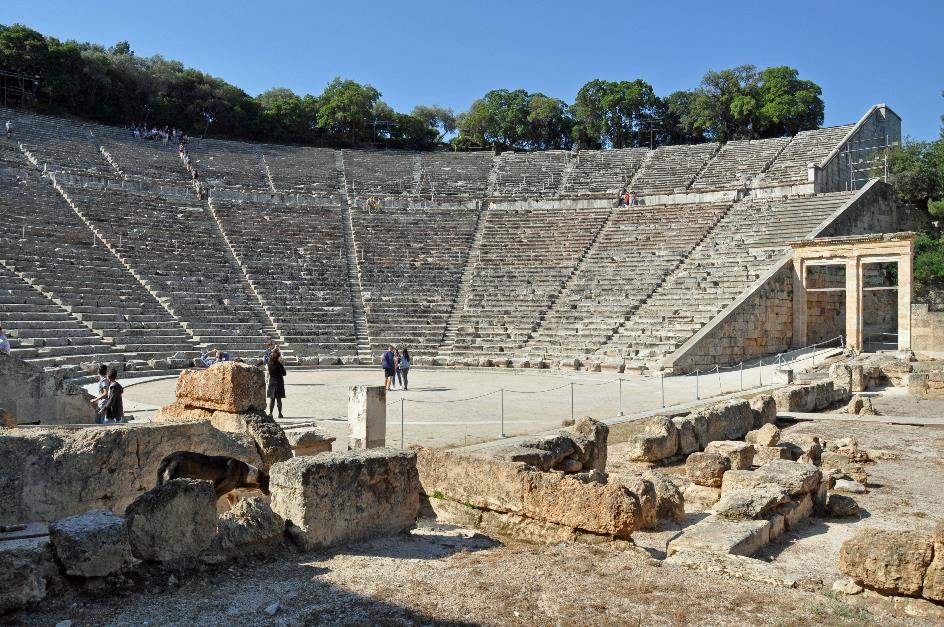
Today, Epidaurus is renowned above all for its magnificent theatre. Built around 340–300 BCE, it is the best-preserved theatre of ancient Greece. During the summer months, ancient tragedies and comedies are performed there as part of the Epidaurus Festival
|
|
|
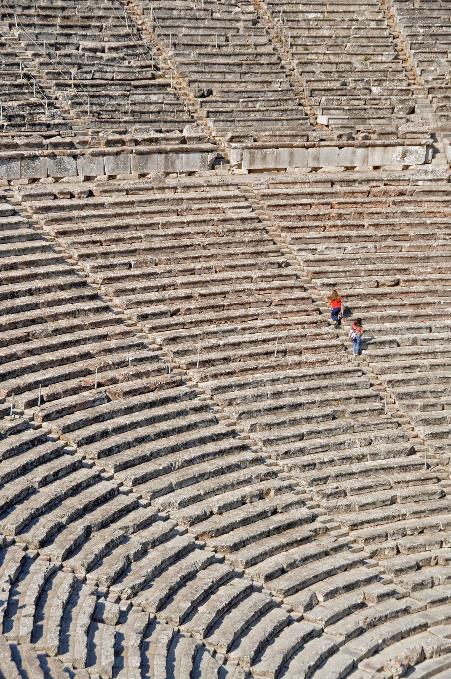
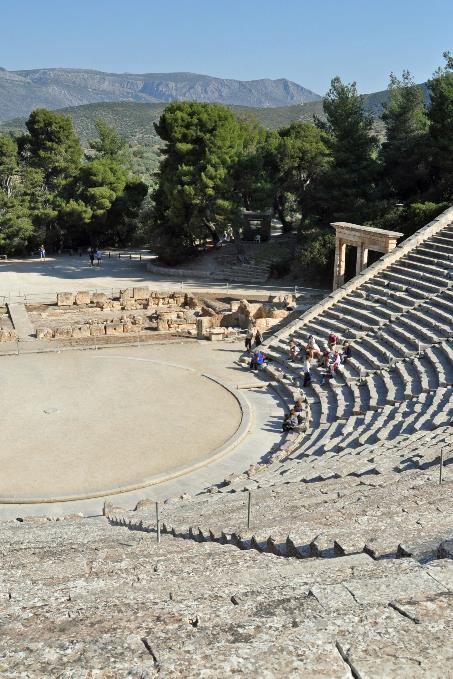
The theatre could accommodate 14,000 spectators. The highest seats are located 23 metres above the stage
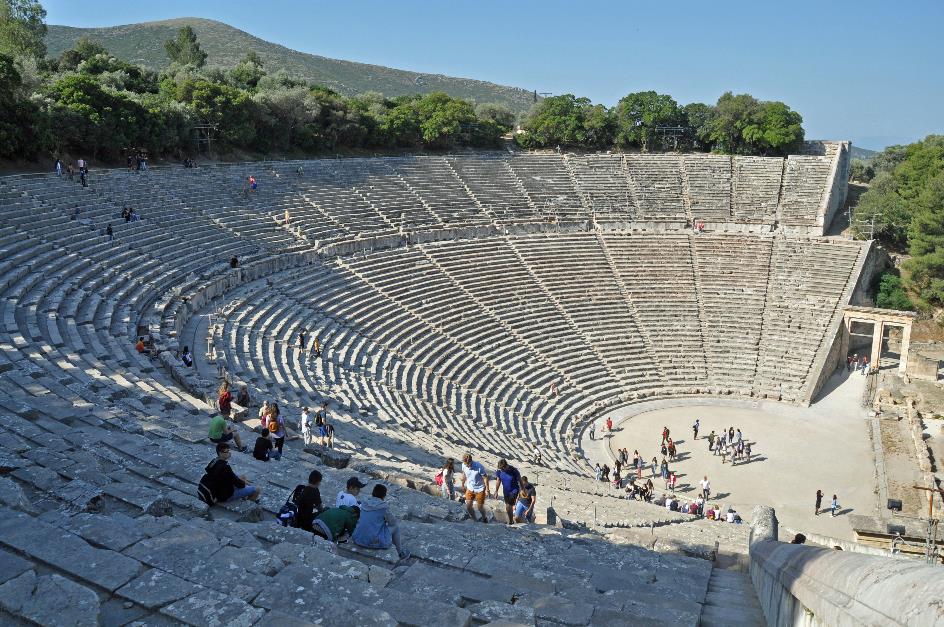
Despite its enormous size, the theatre has excellent acoustics. It is often claimed that even faint sounds such as sighs and whispers from the stage can be heard in the highest rows. That is somewhat exaggerated, but the voices of professional actors are indeed clearly audible throughout the theatre
Since 1988, both the theatre and the Temple of Asclepius have been included on the UNESCO World Heritage List
Jaak Palmans
© 2026 | Version 2026-06-11 14:00
