Sounion – Athens
Greece – Attica | Anno 2018
Cape Sounion
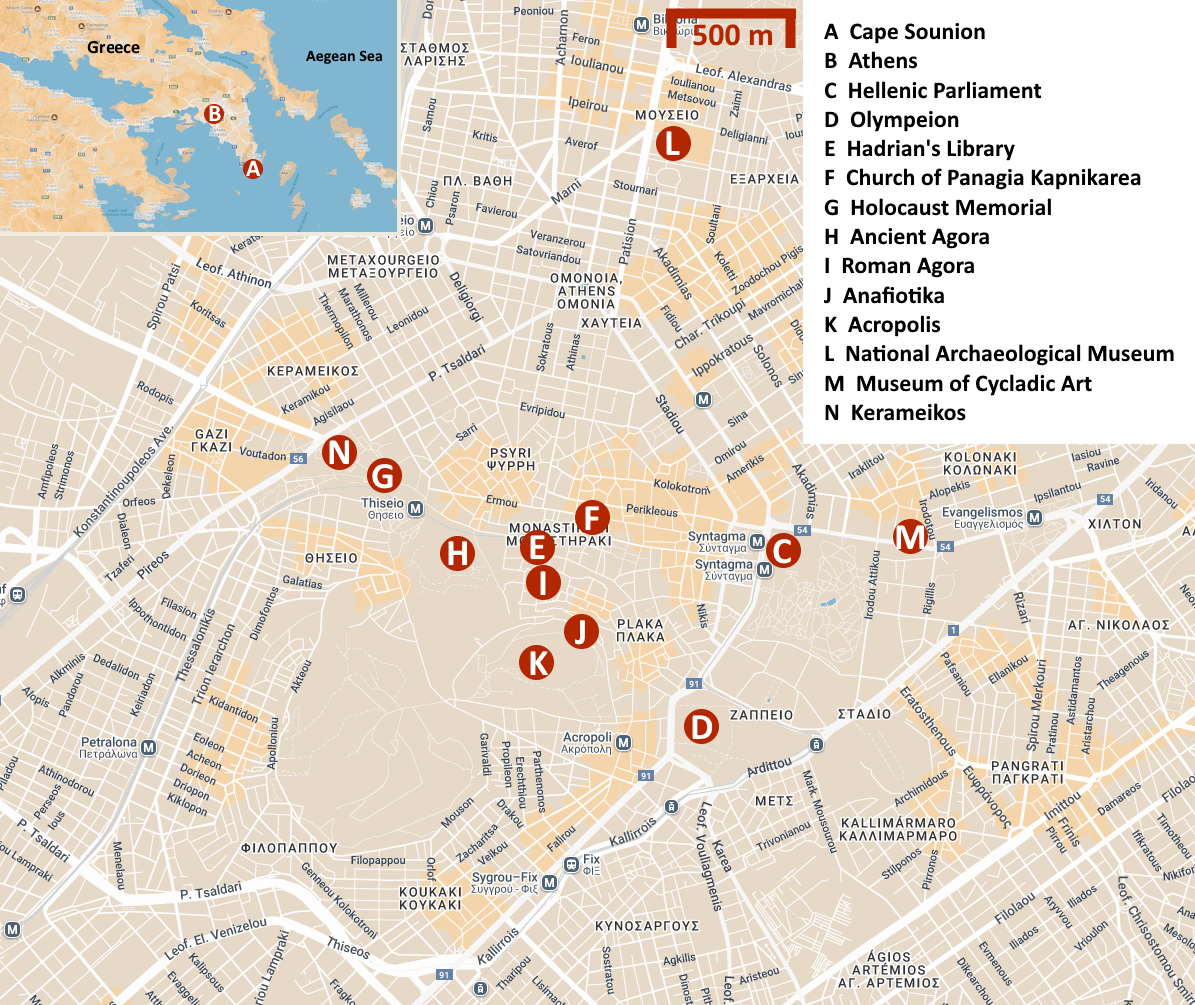
Cape Sounion
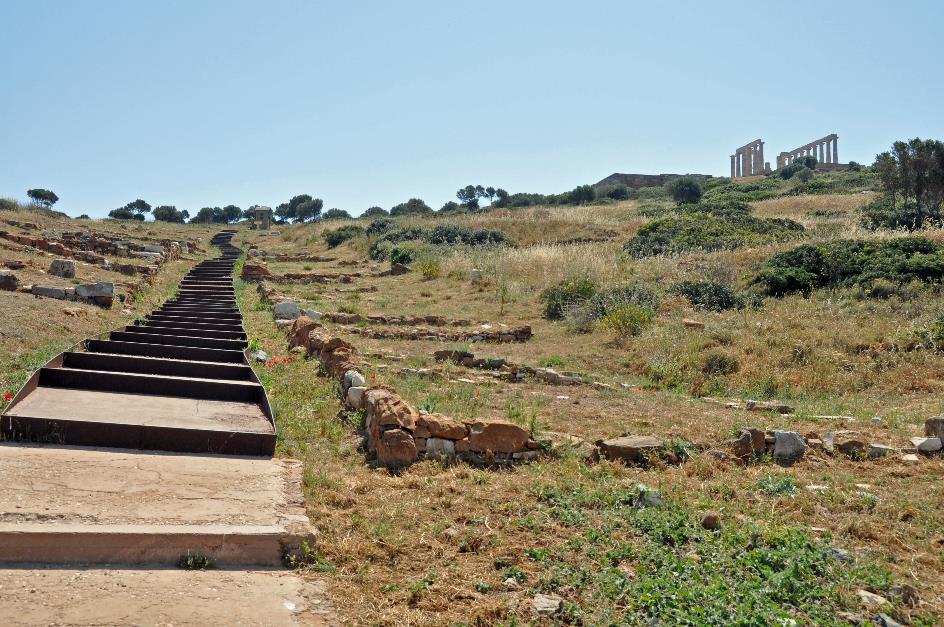
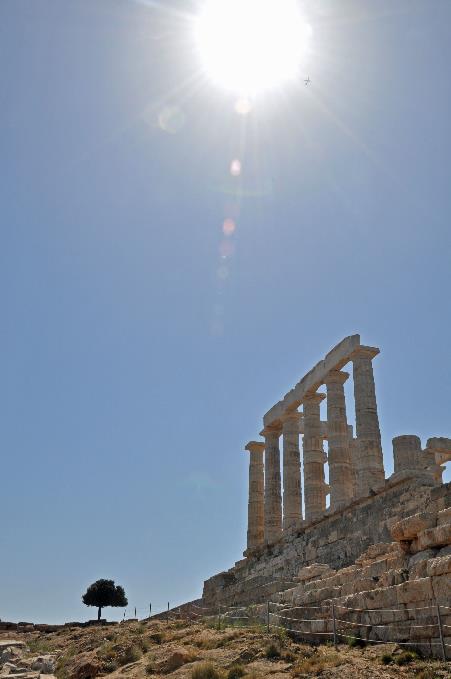
At Cape Sounion, around seventy kilometres south-east of Athens, a temple dedicated to Poseidon was erected in 444 BCE
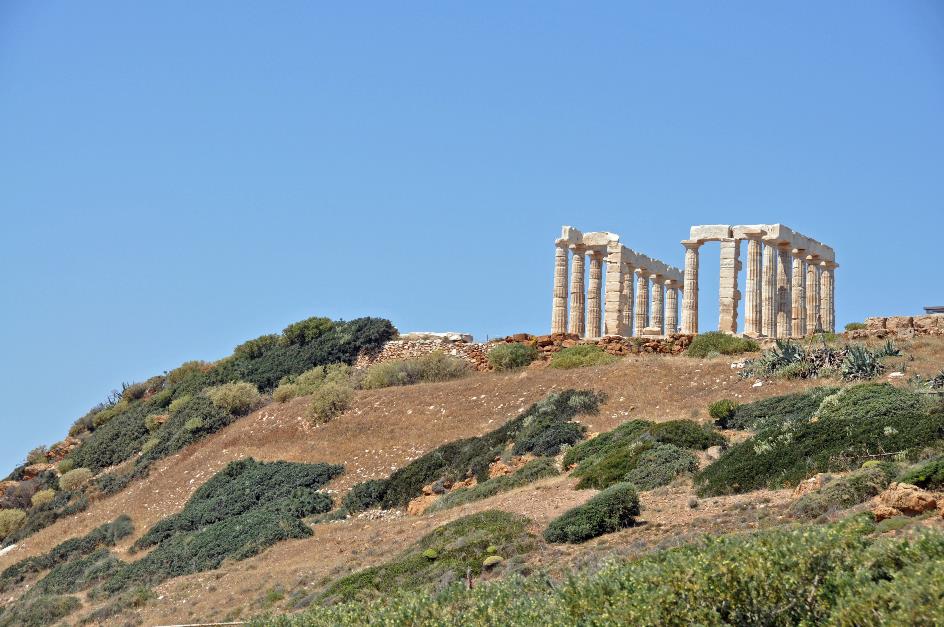
The white marble building was a contemporary of the Athenian Parthenon and could be seen from far out at sea
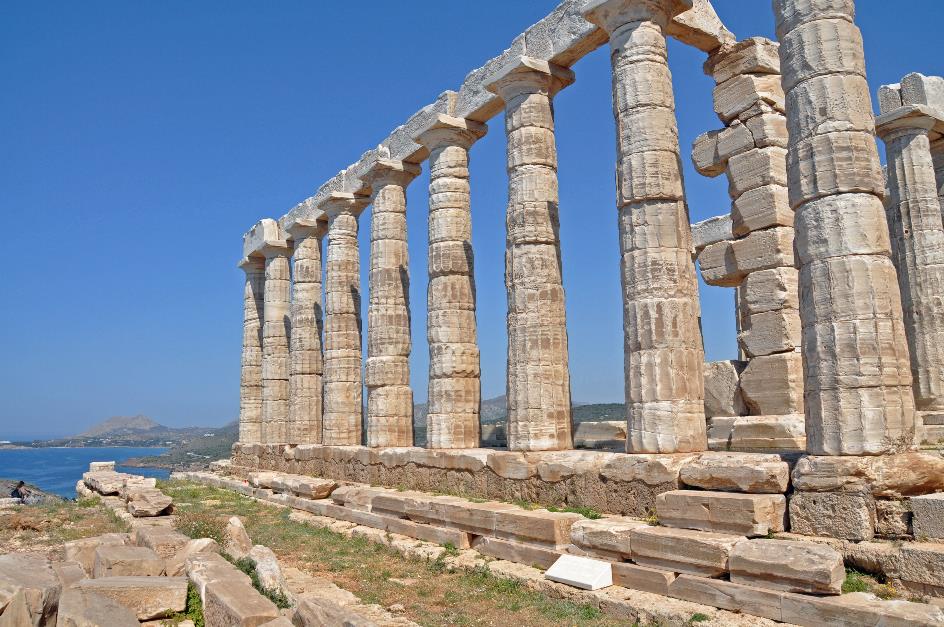
A more beautiful location for a temple to the Greek god of the sea is scarcely imaginable
|
|
|
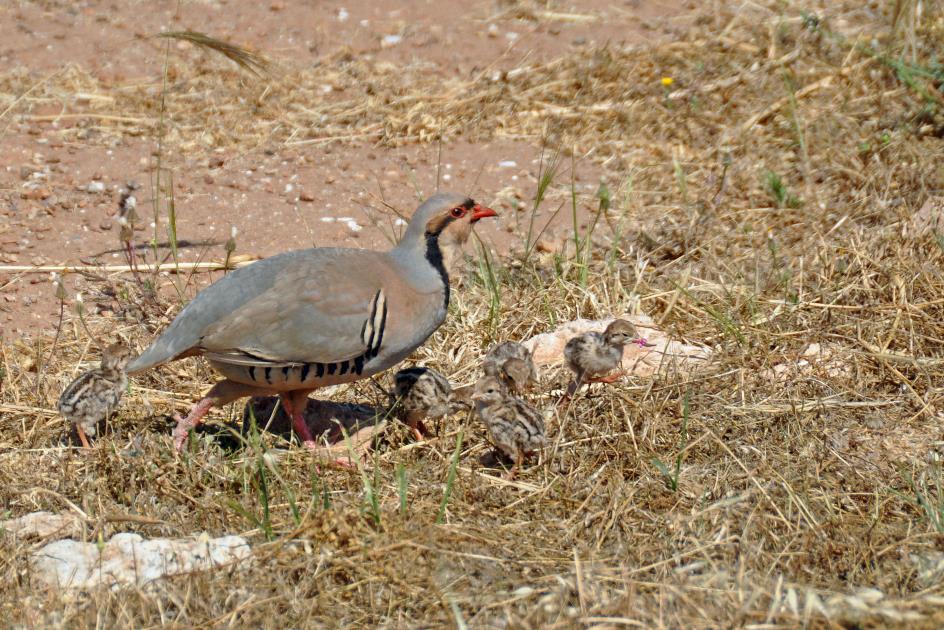
Rock partridge with chicks. The species is native to southern Europe

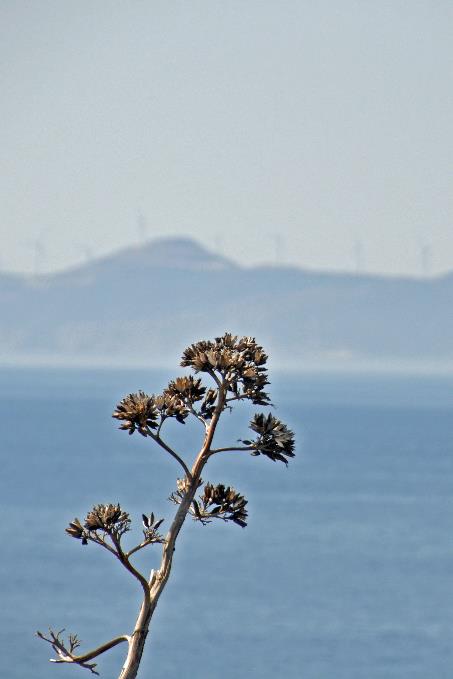
The Myrtoan Sea, with the island of Patroklos visible in the distance.
Athens
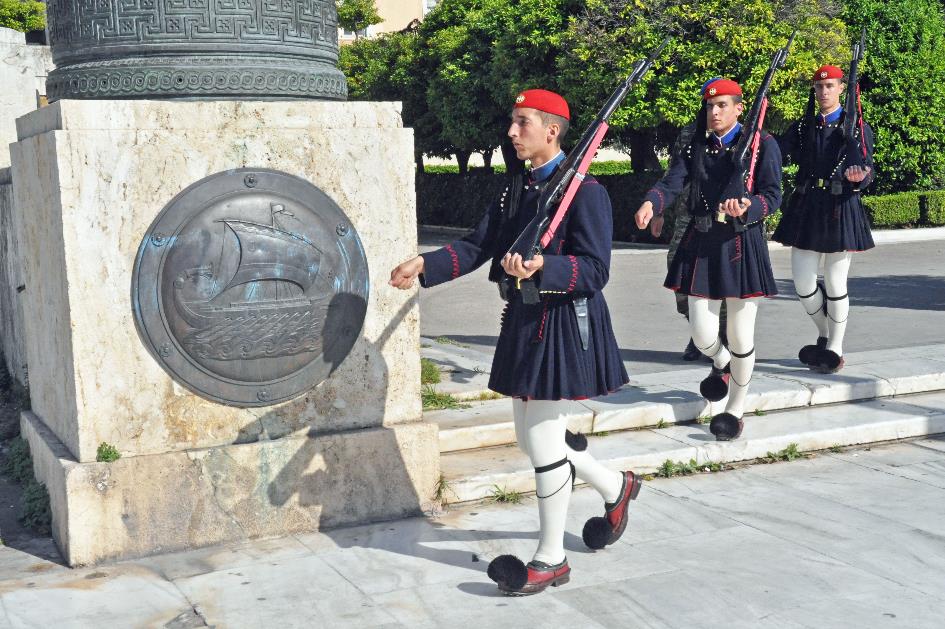
Evzones stand guard outside the Greek Parliament building
|
|
|
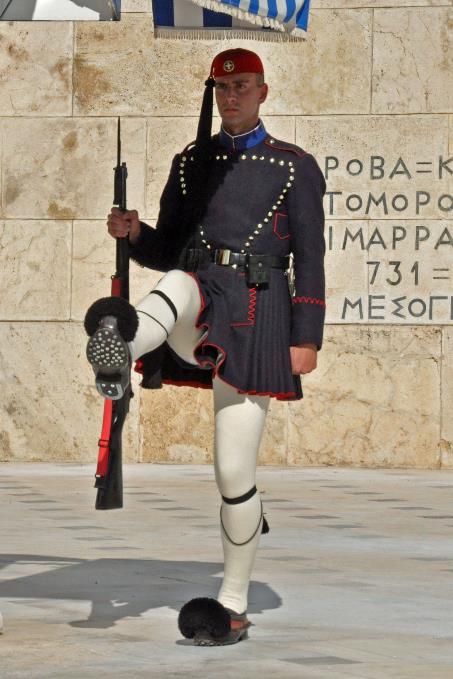
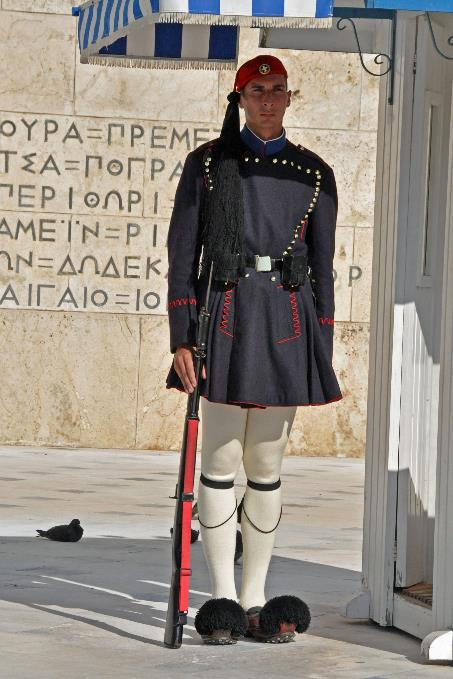
Their traditional uniform, including the pom-poms, is based on the dress of the Klephts, the freedom fighters who fought for Greek independence from the late eighteenth century onwards

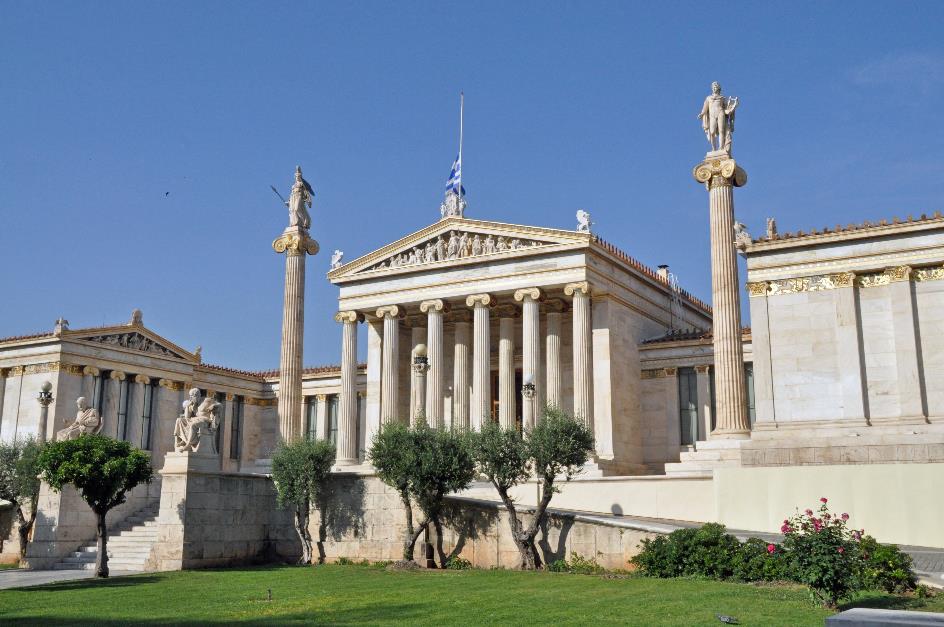
Academy of Athens, an institution dedicated to supporting scientific research
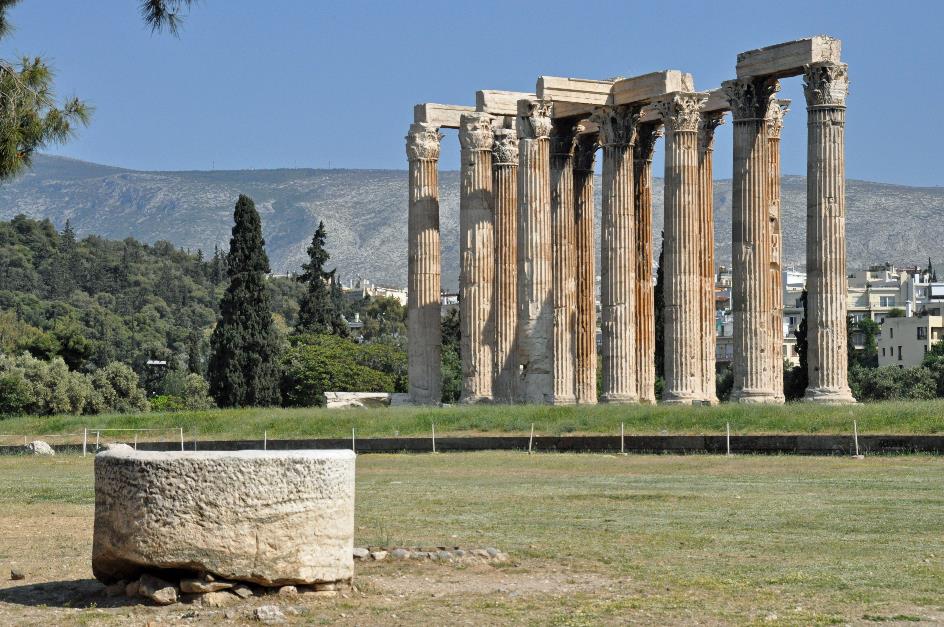
The Olympieion, dedicated to Zeus, the supreme god, was the largest temple in Greece during the Hellenistic period. Construction began in the fifth century BCE but was not completed until… 125 CE, more than six hundred years later. Only 15 of its original 104 columns remain standing

Hadrian's Library was built in 132 CE and is believed to have had three storeys
The wooden shelves lining the walls could reportedly accommodate around 20,000 scrolls |
|
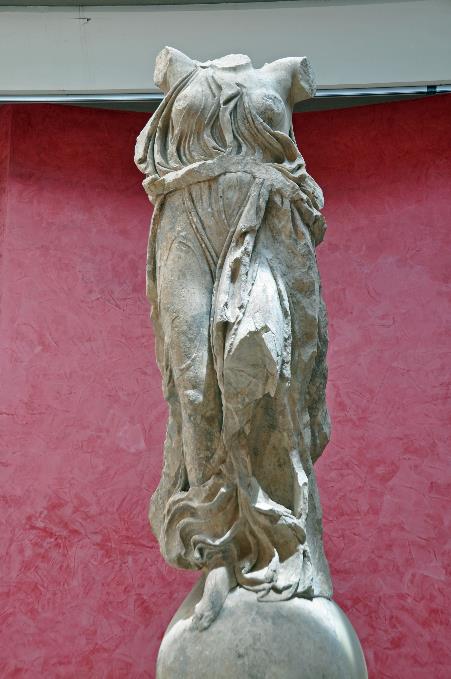
A statue of Victoria Romana commemorated one of the victories of the Roman army |
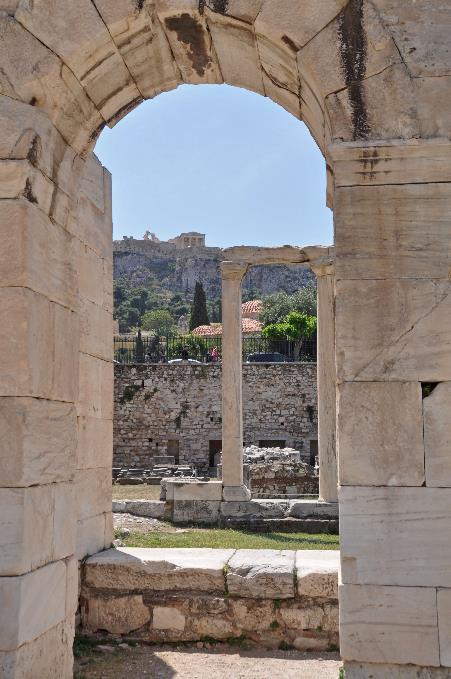

The limestone hill of Lycabettus rises to 277 metres, surpassing the Acropolis hill by around 120 metres
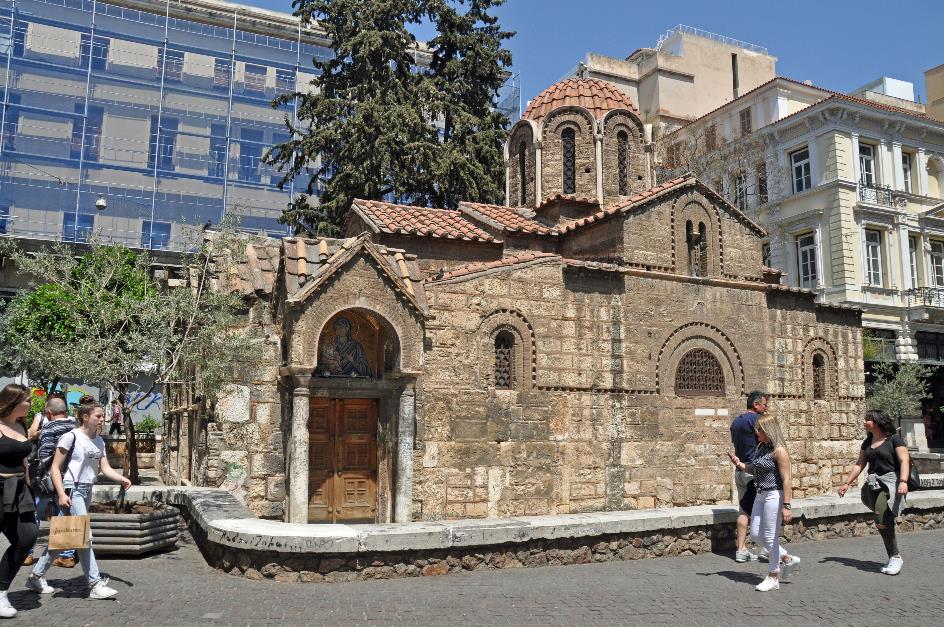
The Church of Panagia Kapnikarea on the busy Ermou Street is one of the oldest churches in Athens. Around 1050, it was built on the ruins of an ancient Greek temple dedicated to a goddess
The Greek Orthodox church is dedicated to the Presentation of the Blessed Virgin Mary |
|
A depiction of Christ Pantocrator adorns the dome |

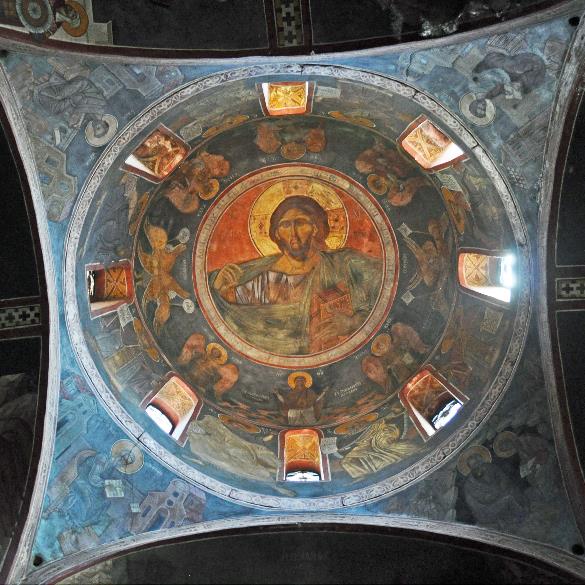
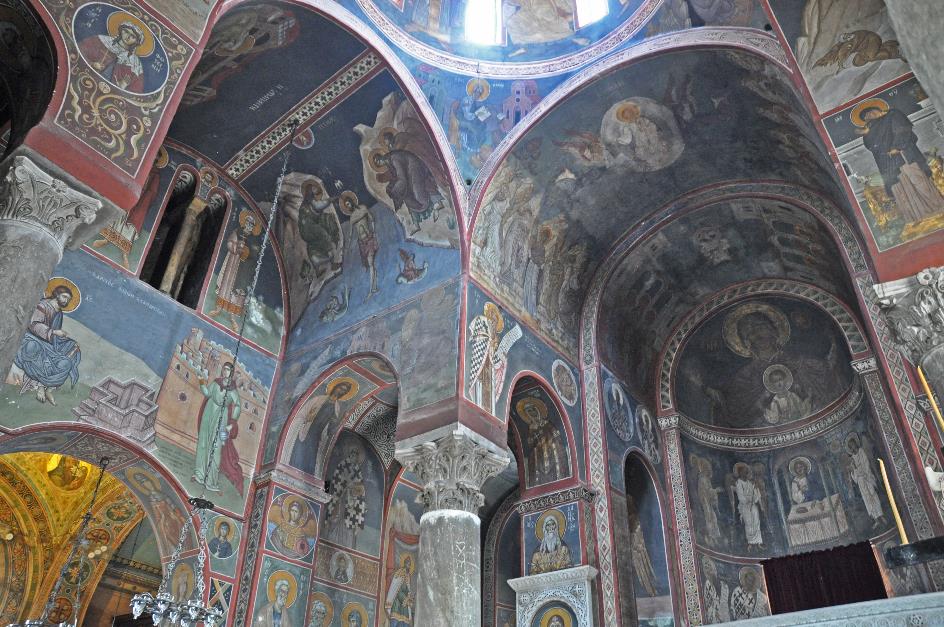
The original Byzantine frescoes have not survived. The present paintings date from the first half of the twentieth century
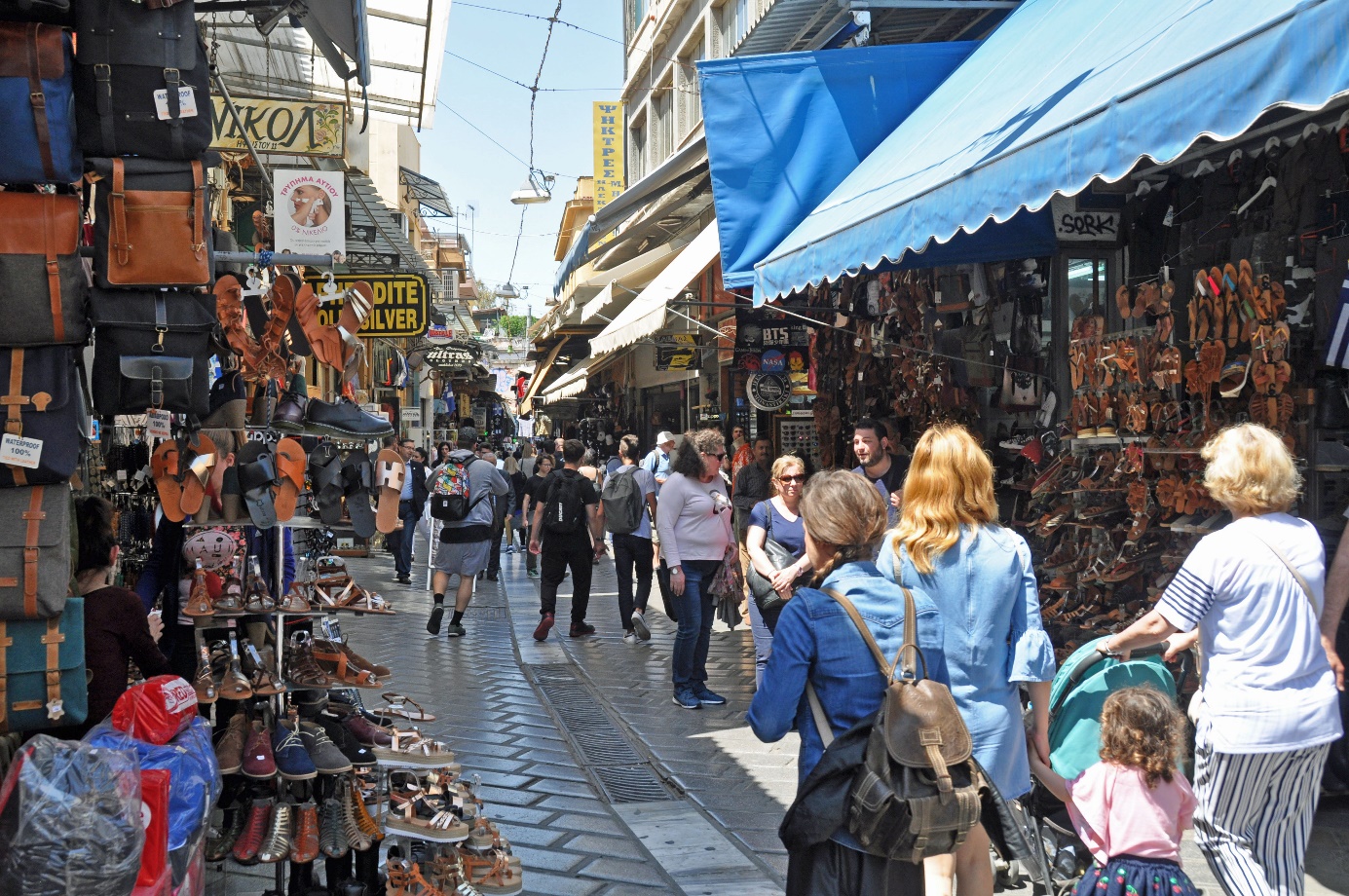
Ifestou Street, a popular shopping street
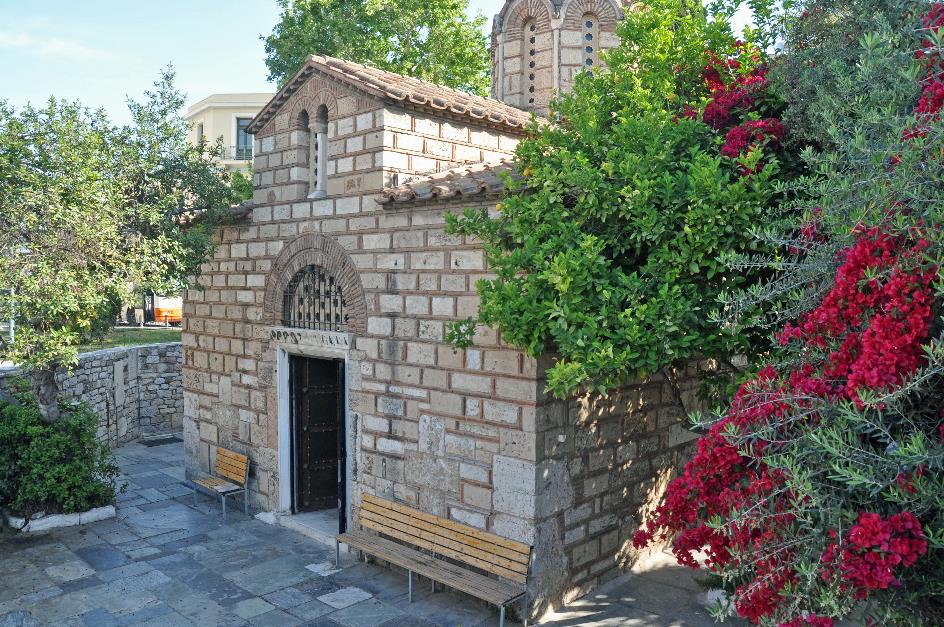
The Church of Agioi Asomatoi dates from the eleventh or twelfth century
|
|
|
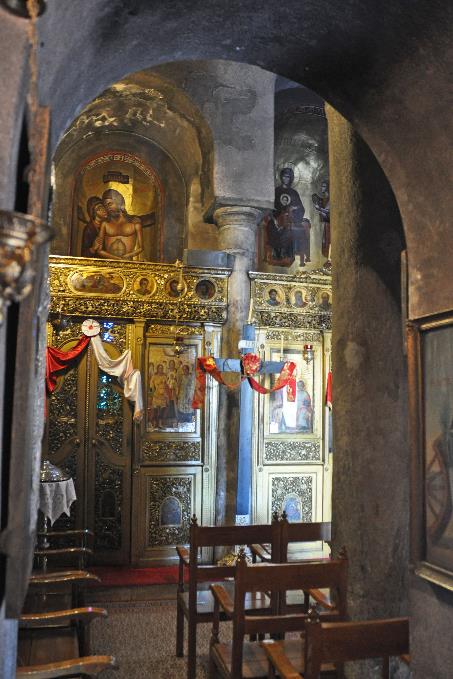
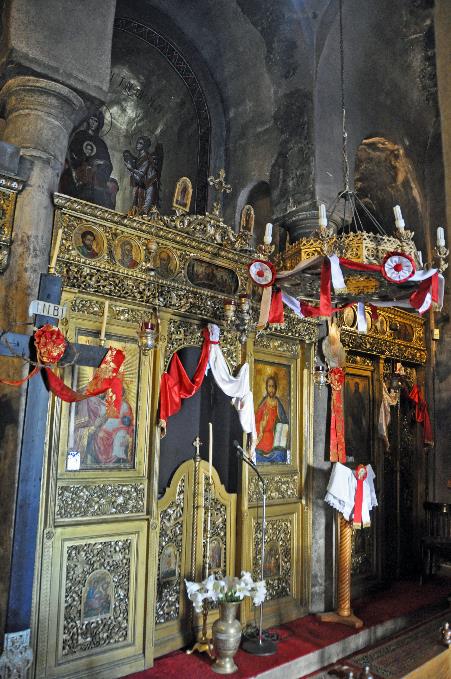
The Orthodox church still serves as a parish church today
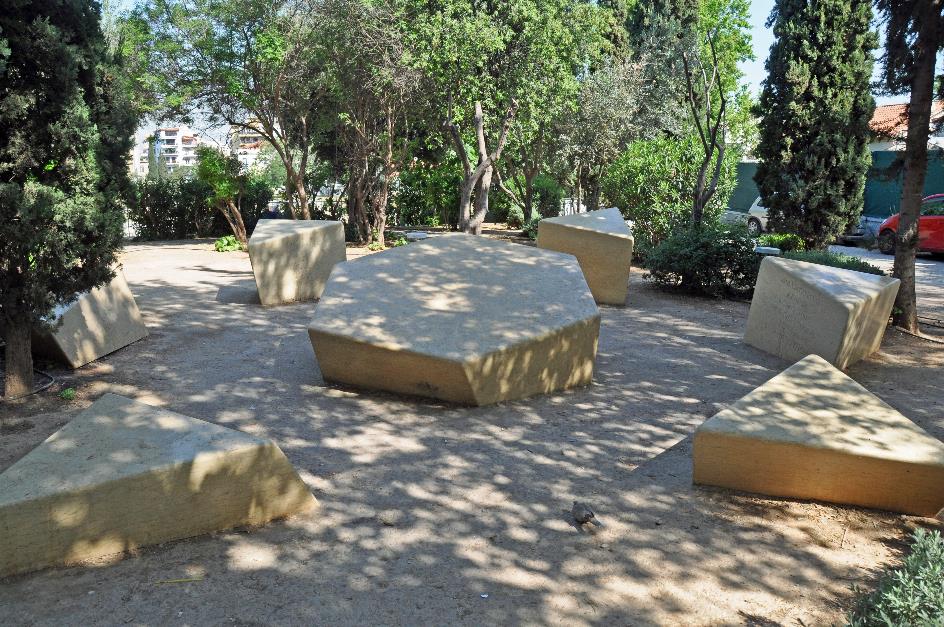
The marble Holocaust Memorial by DeAnna Maganias (2010) honours the tens of thousands of Greek Jews who were arrested, tortured and executed during the Second World War. The monument takes the form of a fragmented Star of David, symbolically reflecting the fate of the victims
Ancient Agora
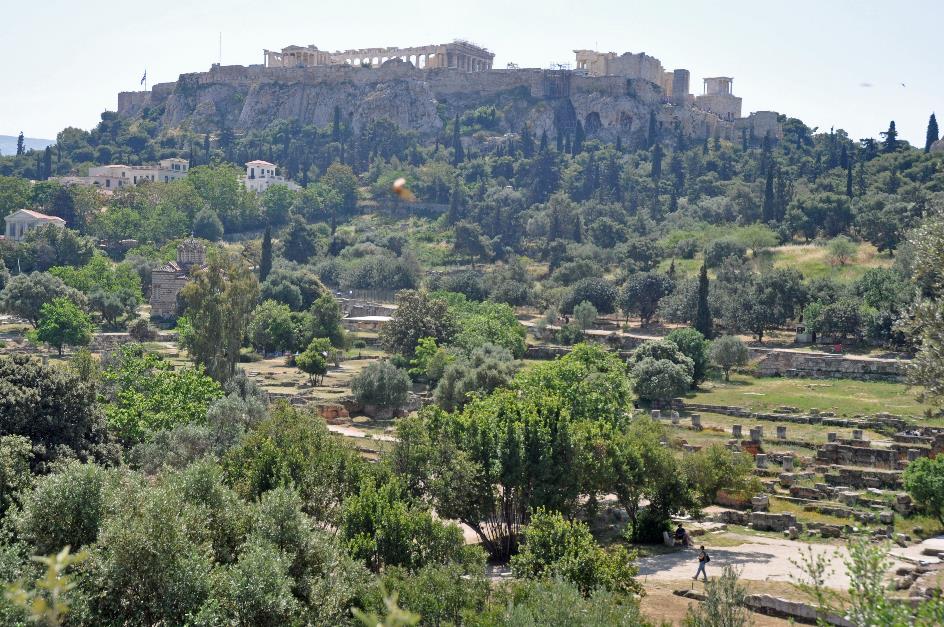
The Classical Agora of Athens was laid out in the sixth century BCE but was destroyed by the Persians in 480 BCE. It was soon rebuilt in all its splendour
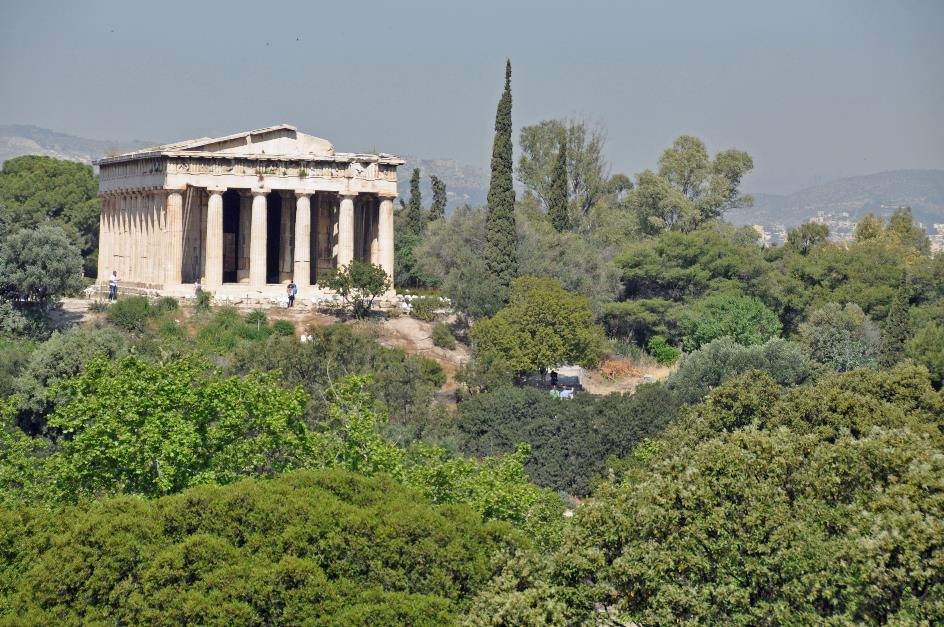
The most striking building is the Temple of Hephaestus, one of the best-preserved ancient Greek temples
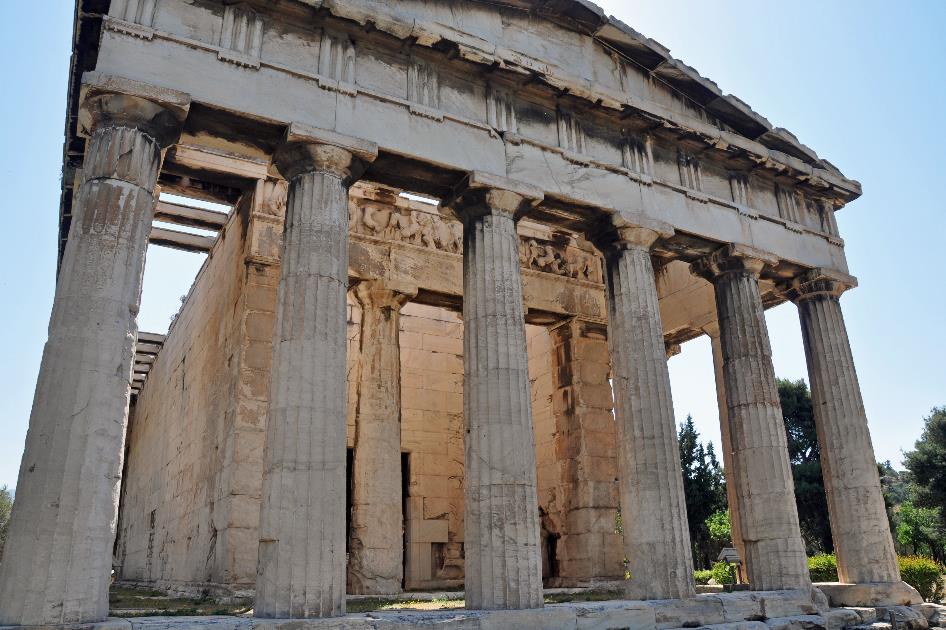
Hephaestus was, among other things, the god of craftsmen, blacksmiths, metalworking, fire and volcanoes. Numerous pottery workshops and metalworking establishments were located around the temple
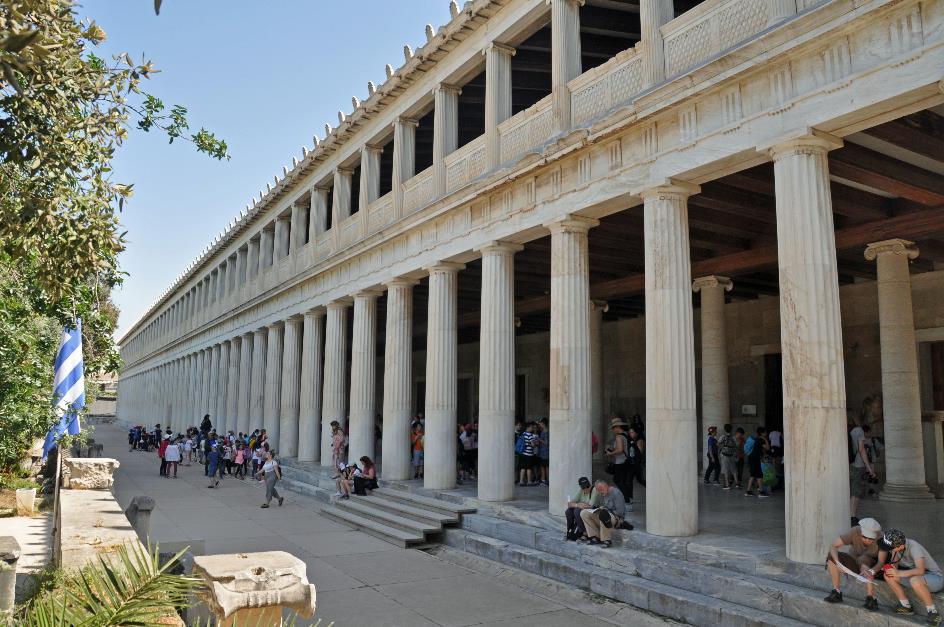
The Stoa of Attalos was destroyed in 267 CE and was not meticulously reconstructed until the 1950s. At 115 metres in length and with two storeys, it was the largest building in the Classical Agora

The 21 rooms on each of the two storeys were most likely used as shops. This makes the Stoa of Attalos perhaps the oldest covered shopping arcade in the world
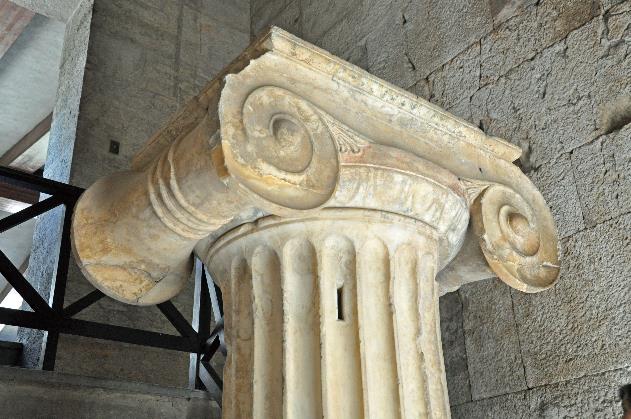
Ionic capital in the Stoa of Attalos |
|
Stoa of the Giants |

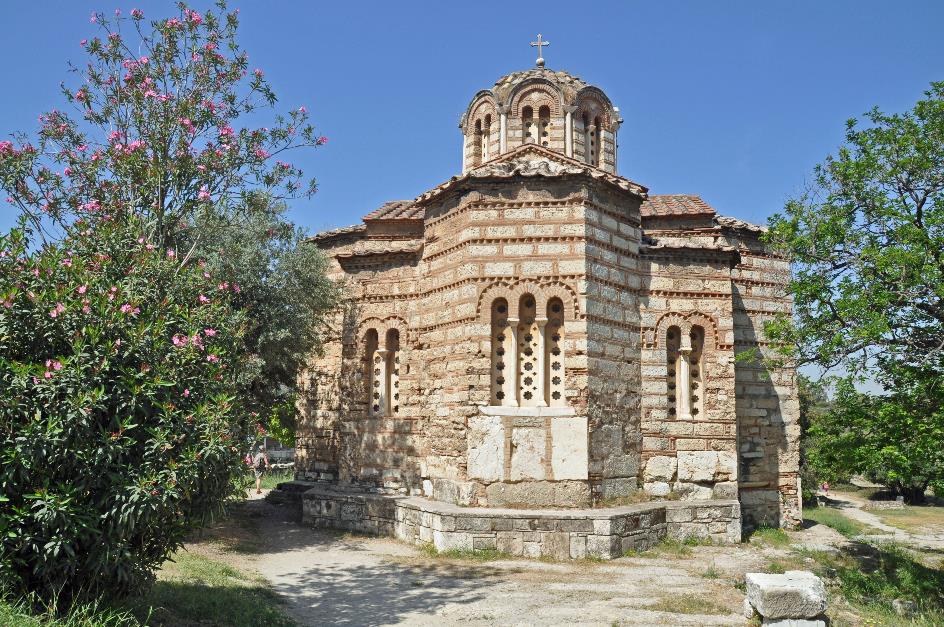
The Byzantine Church of the Holy Apostles (c. 1000 CE) does not really belong within the Classical Agora. Owing to its historical significance, it was preserved and later restored
|
|
|

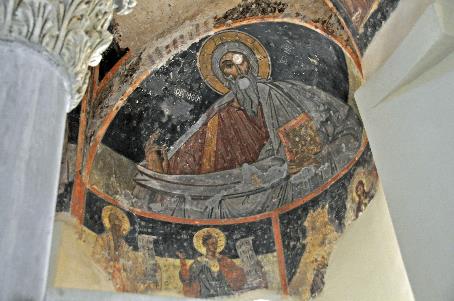
The frescoes in the church (including, on the left, a depiction of Christ Pantocrator in the dome) date from the seventeenth century
Roman Agora

The Gate of Athena Archegetis provided access to the Roman Agora. It was built around 15 BCE on the orders of Emperor Augustus
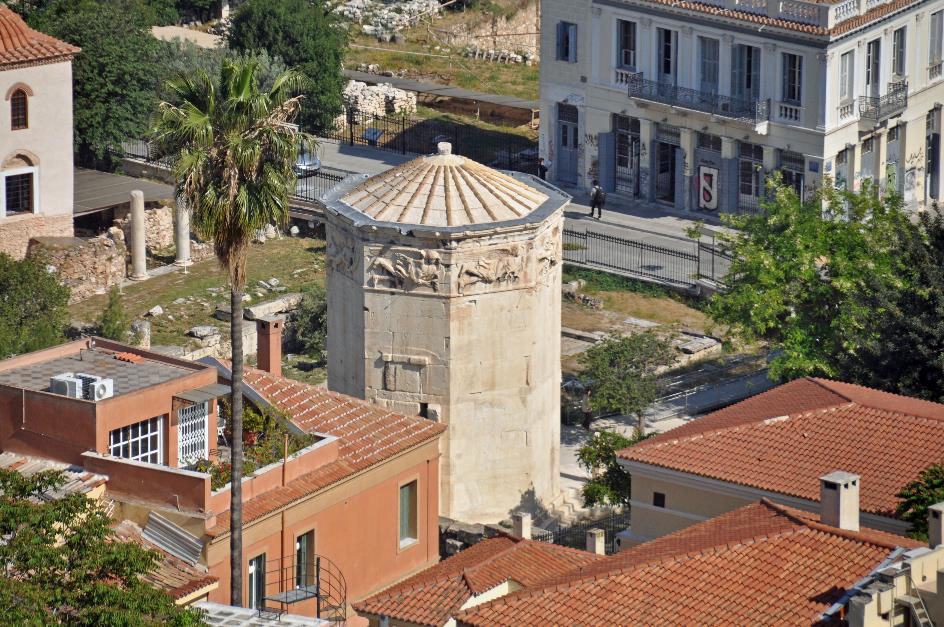
The most striking structure in the Roman Agora is the almost perfectly preserved Horologion of Andronicus of Cyrrhus, more commonly known as the Tower of the Winds
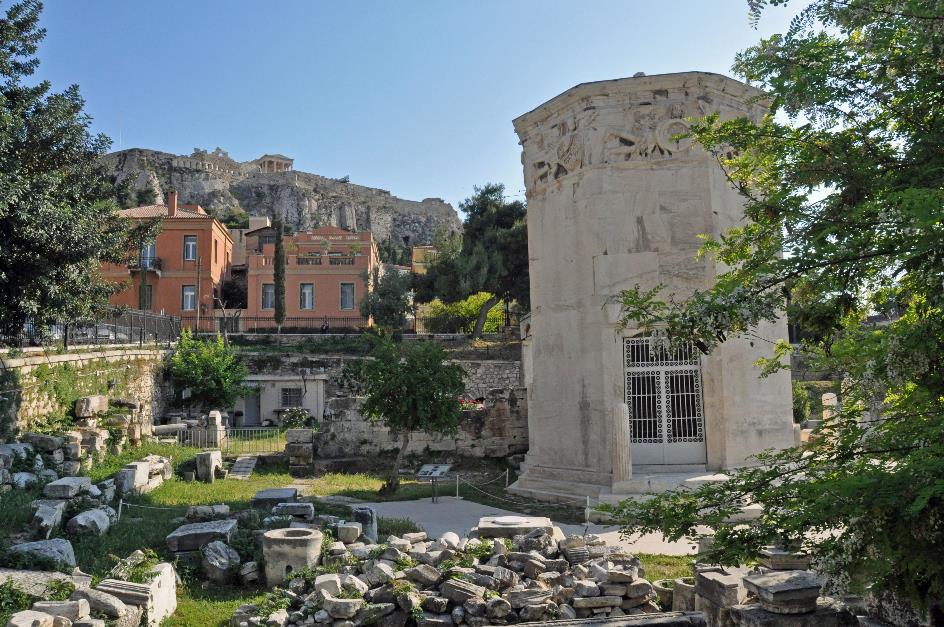
The octagonal building housed, among other things, a water-powered clock, several sundials and a large weather vane
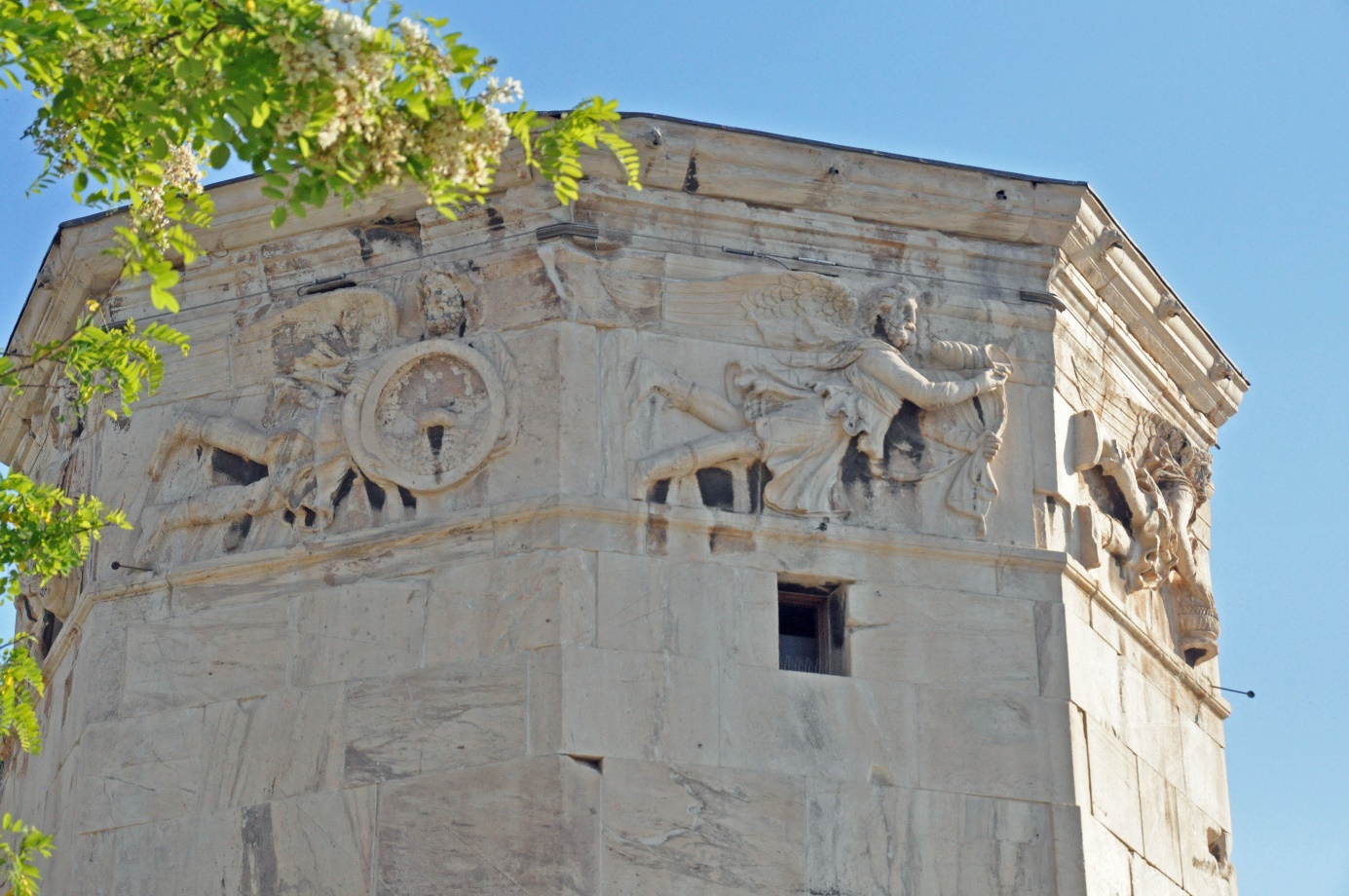
At the top, the eight points of the compass are personified by the wind gods. Here, Boreas, the north wind, is depicted wearing a heavy cloak
Plaka
|
|
|
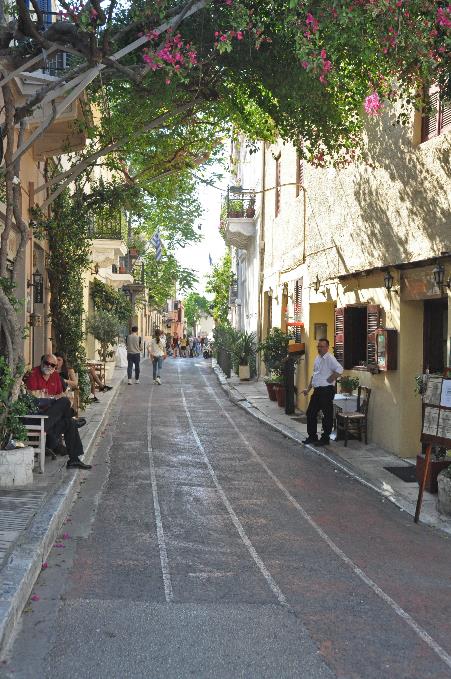
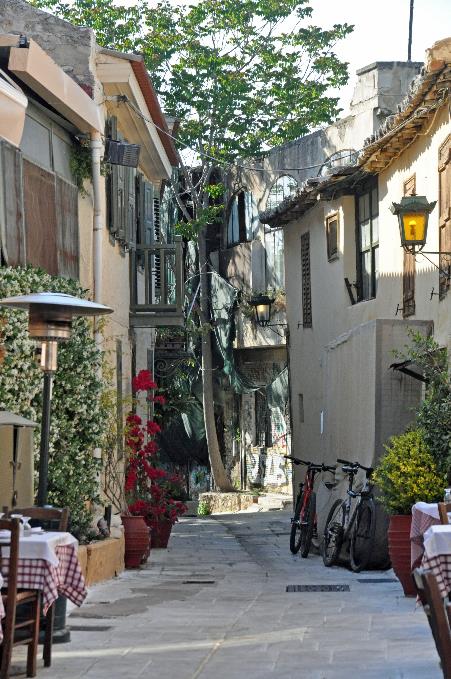
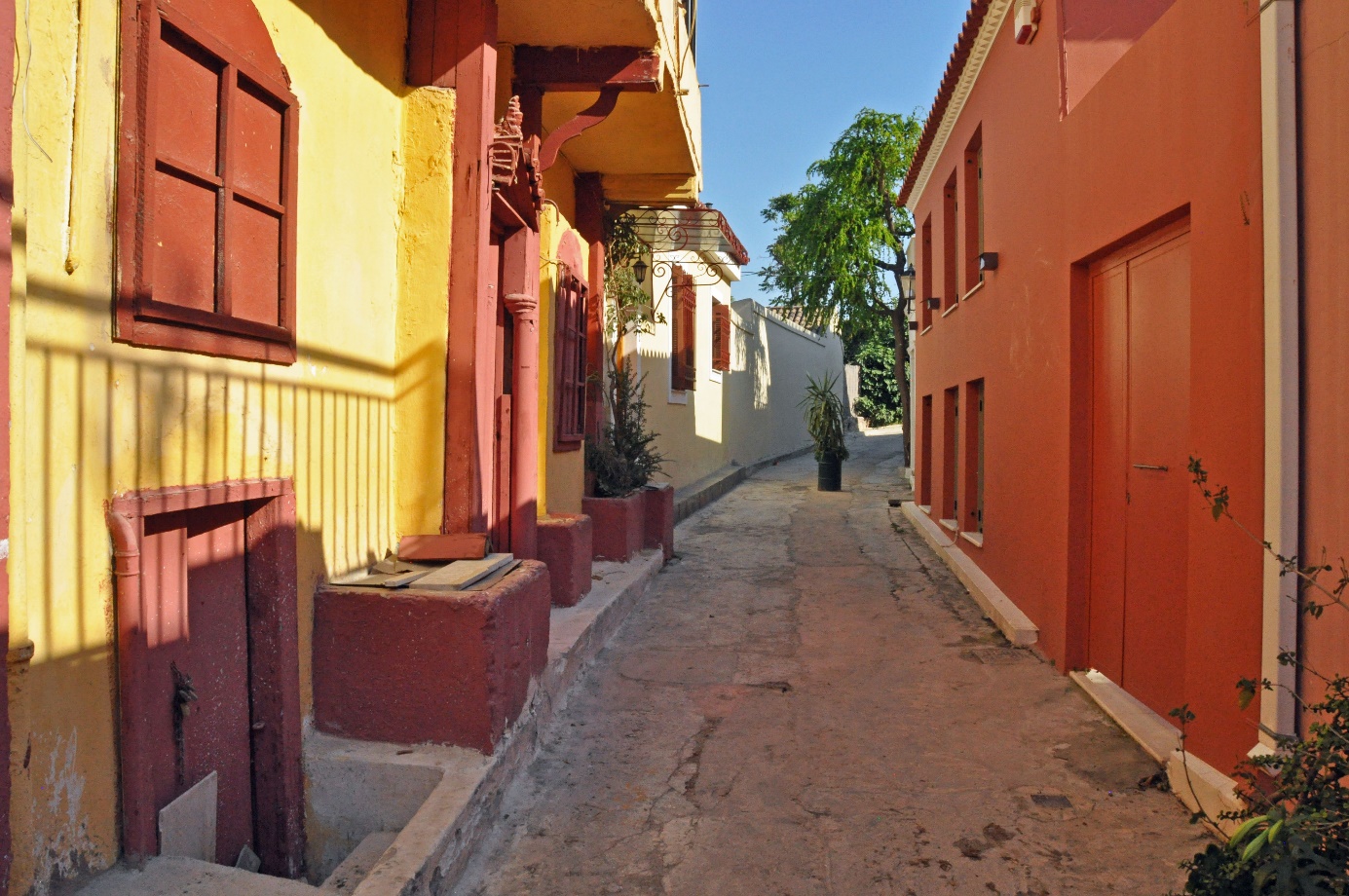
Plaka, a historic district of Athens on the slopes of the Acropolis
|
|
|
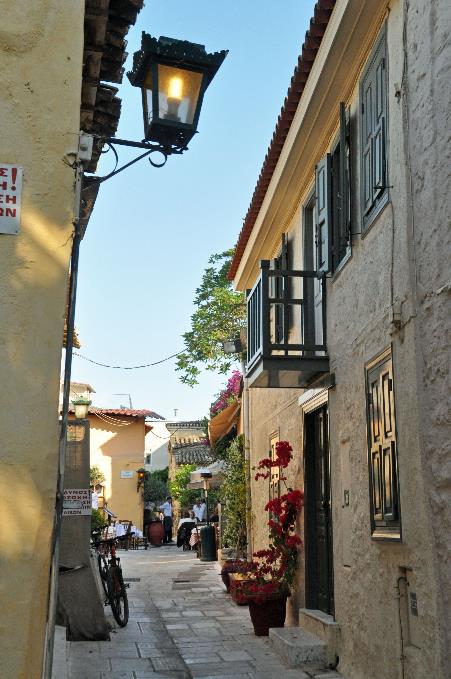
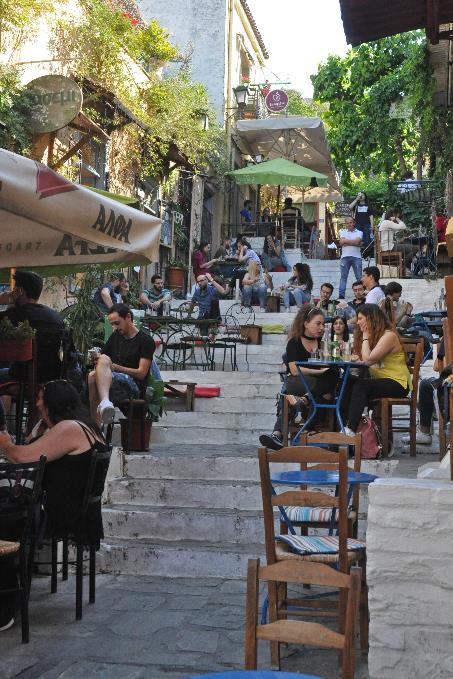
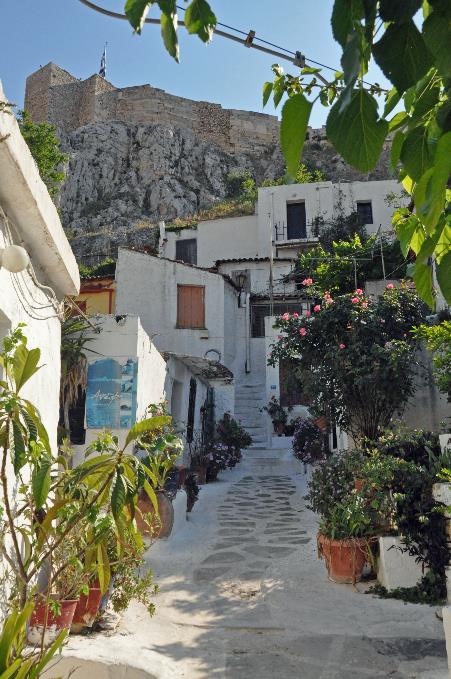
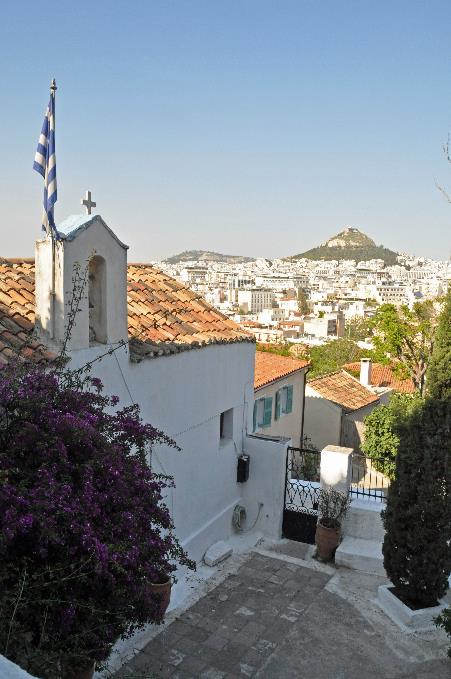
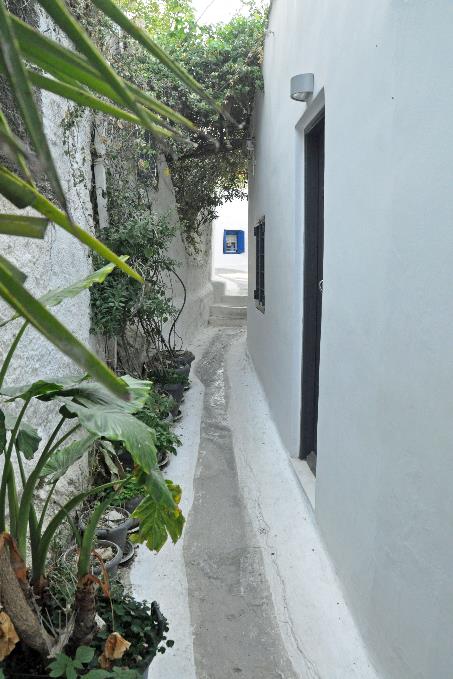
Anafiotika
Anafiotika, a hidden gem at the foot of the Acropolis |
|
In the distance, Lycabettus Hill |
|
|
|

Acropolis
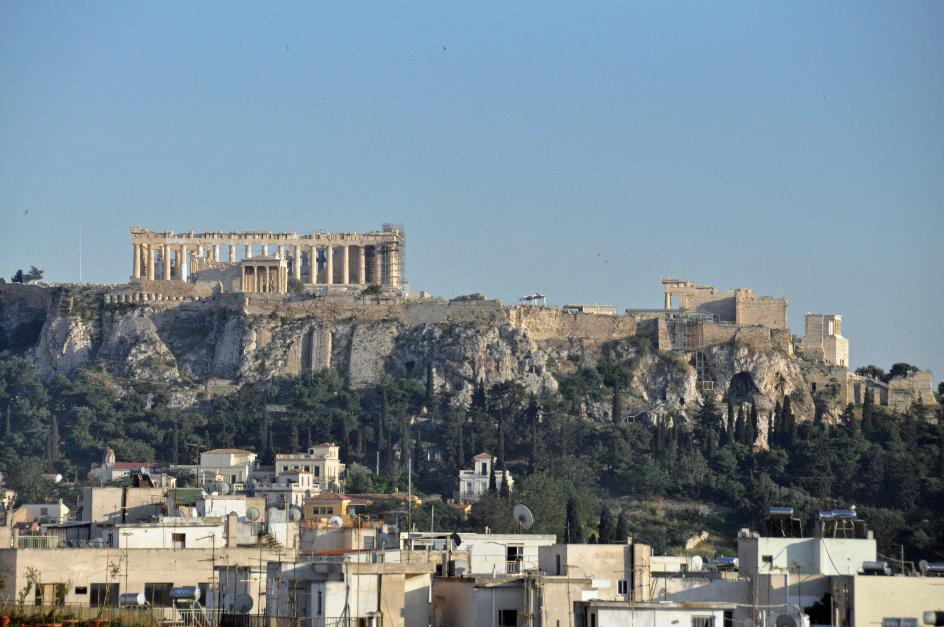
Originally, the Acropolis served as the citadel of ancient Athens. Following its destruction by the Persians in 480 BCE, the site was transformed into a complex of magnificent sanctuaries

The Propylaea formed the monumental entrance to the Acropolis
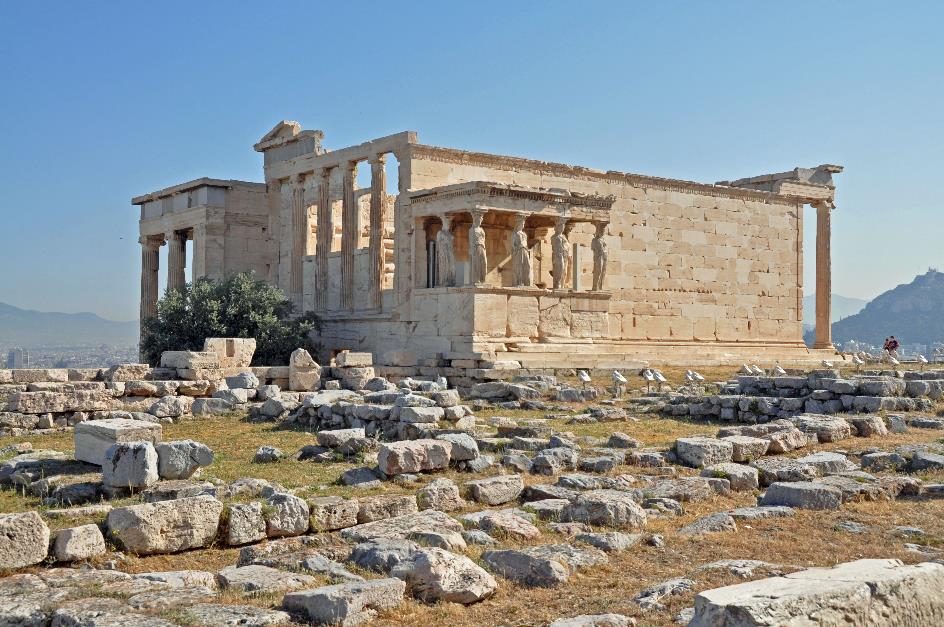
The Erechtheion was dedicated to the gods Athena and Poseidon. Construction did not begin until 421 BCE. The asymmetrical building was ingeniously designed to accommodate the uneven terrain
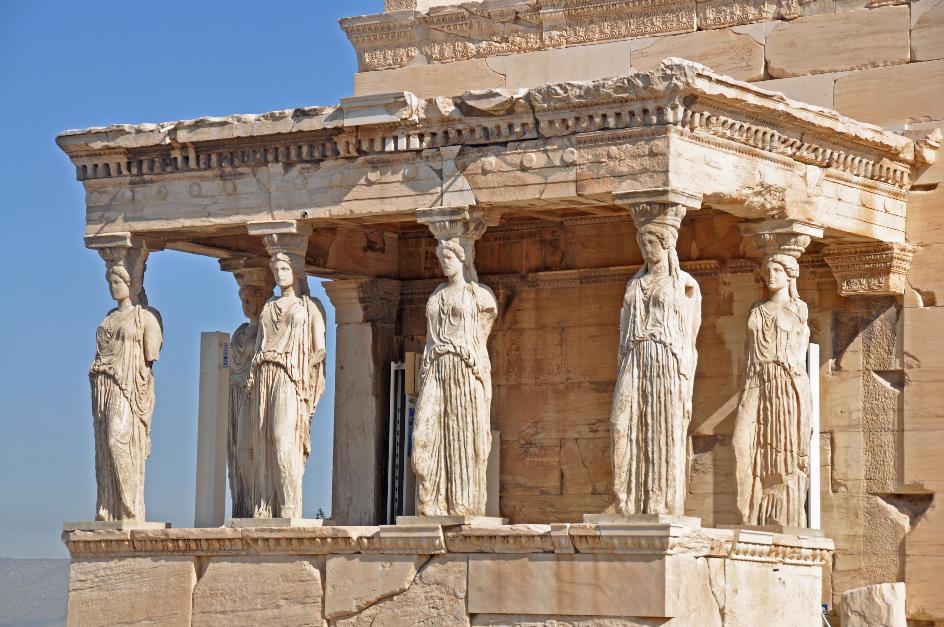
The Erechtheion owes its fame to its southern portico, where the six columns take the form of larger-than-life female figures – the world-famous Caryatids, so called because they were modelled on the women of Karyes in Laconia
|
|
|
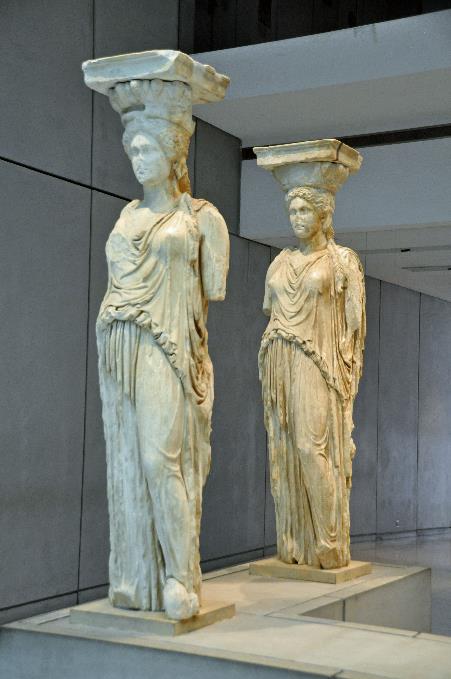
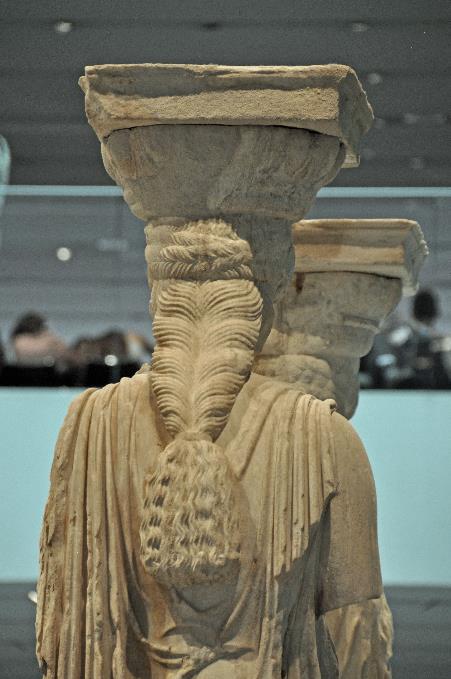
The original Caryatids have been transferred to the Acropolis Museum

The centrepiece of the Acropolis is, of course, the Parthenon, completed in 438 BCE and dedicated to Athena Parthenos, the patron goddess of the city. The temple housed her 13-metre-high statue of gold and ivory, created by the renowned sculptor Phidias
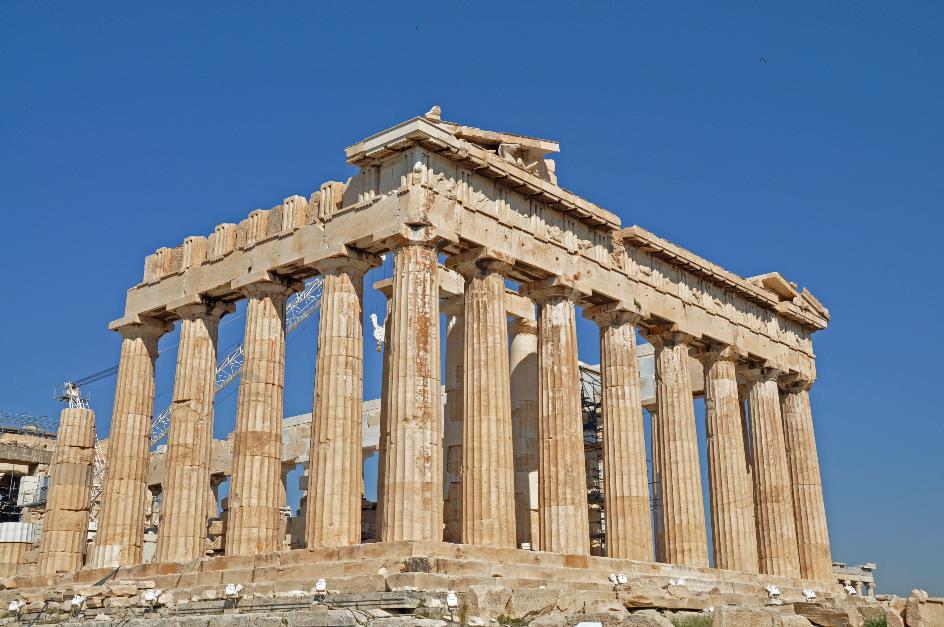
The Parthenon is the largest Doric temple in Greece and the only one built entirely of marble (with the exception of its wooden roof). Its construction took fifteen years
|
|
|
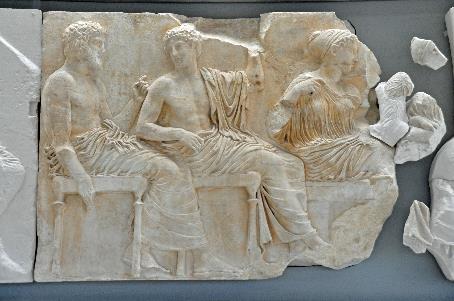

The friezes of the Parthenon depict scenes from the Panathenaic Procession

The Odeon of Herodes Atticus (161 CE), on the southern slope of the Acropolis, can accommodate five thousand spectators. It is still used for concerts and for performances of theatre, opera and ballet

In a natural cave on the southern slope there is an Orthodox Christian chapel dedicated to Panagia Spiliotissa (Our Lady of the Cave). The cave’s secluded location made the chapel ideal for worship during times of persecution or instability
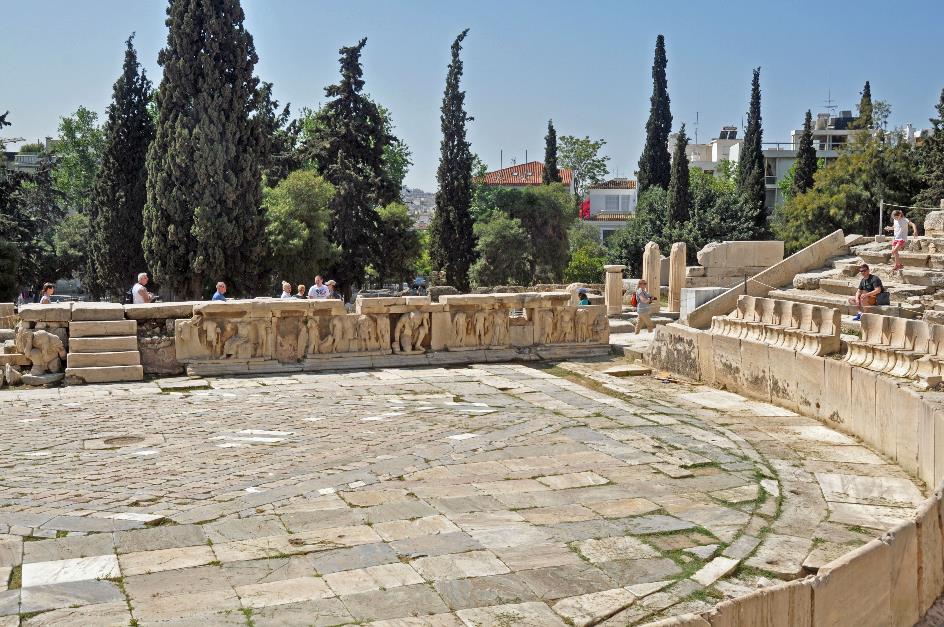
The Theatre of Dionysus is the oldest theatre in Europe and the birthplace of ancient tragedy. In Roman times, a stone balustrade was added to protect spectators from the violence in the arena
|
|
|
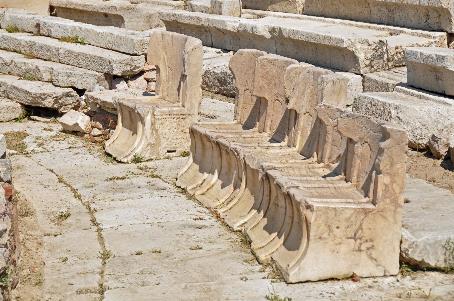
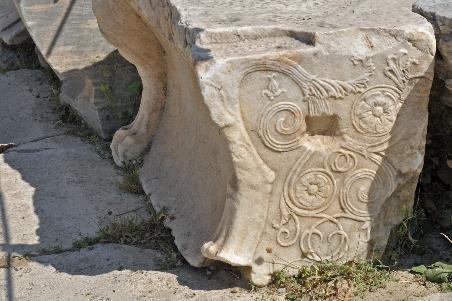
In the past, 67 rows of marble seating accommodated around 17,000 spectators.
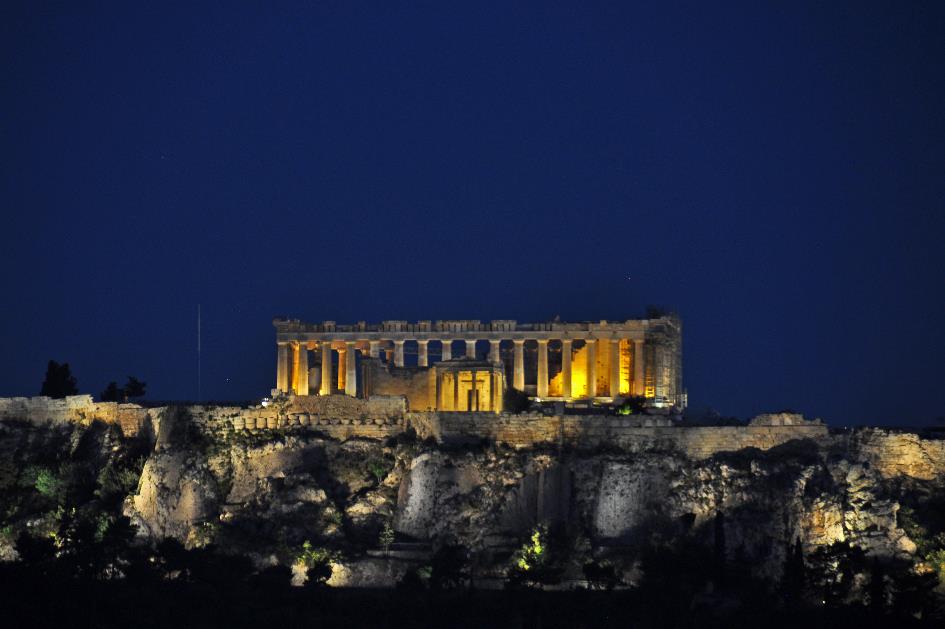
Acropolis – Parthenon
National Archeological Museum
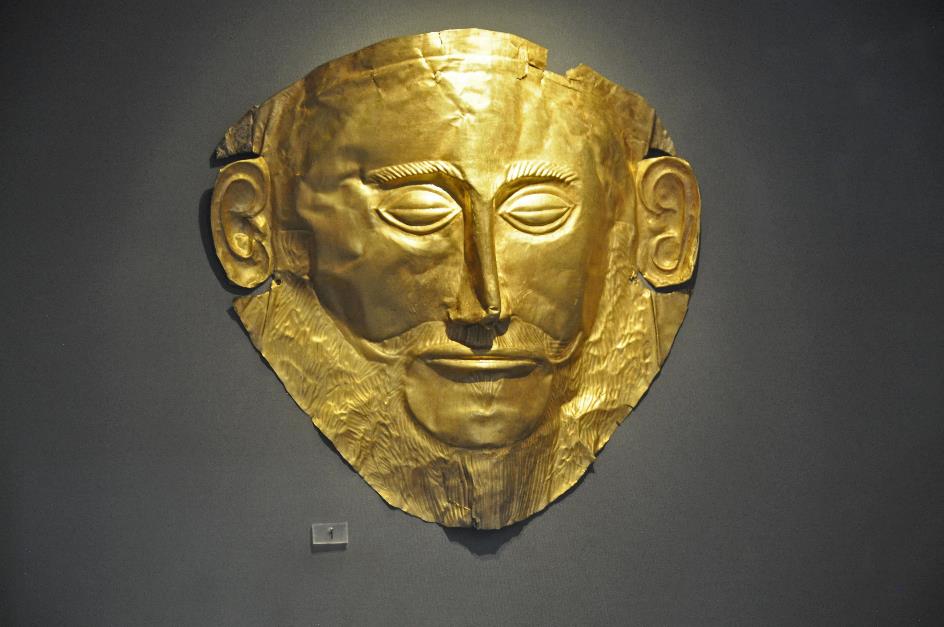
The highlight of the National Archaeological Museum is the so-called golden death mask of Agamemnon. When Heinrich Schliemann excavated the mask at Mycenae in 1876, he was firmly convinced that it belonged to Agamemnon, the Mycenaean king known from the Iliad. However, research has shown that the mask dates from around 1600 BCE, some 400 years before the siege of Troy
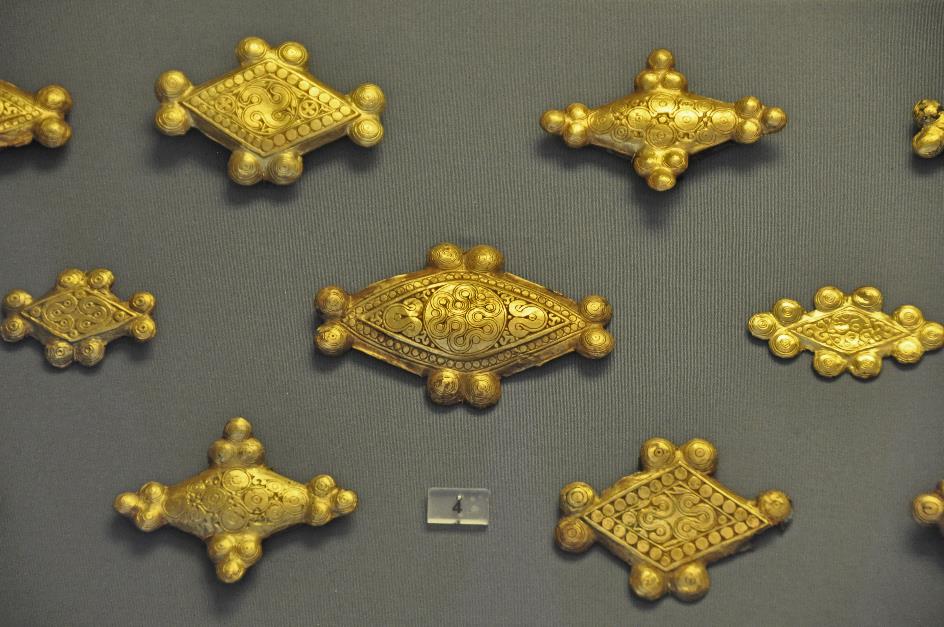
Mycenaean jewellery from the sixteenth century BCE
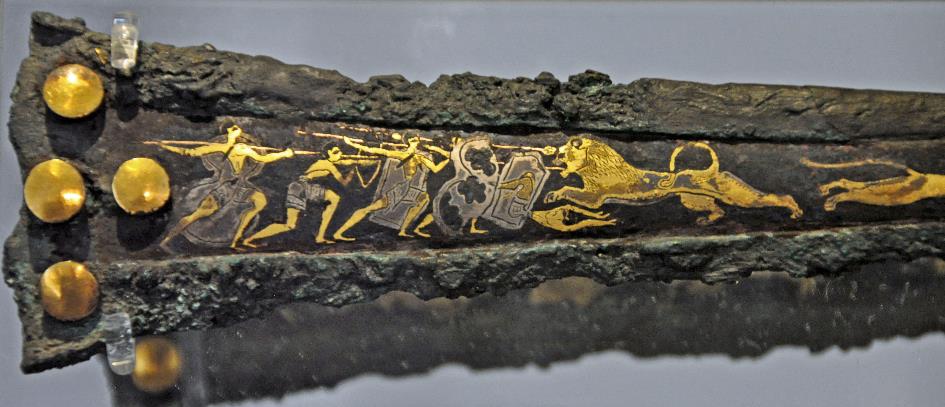
Bronze dagger from Mycenae (16th century BCE), decorated with silver and gold inlay depicting a lion hunt

Golden diadem, Mycenae, 16th century BCE
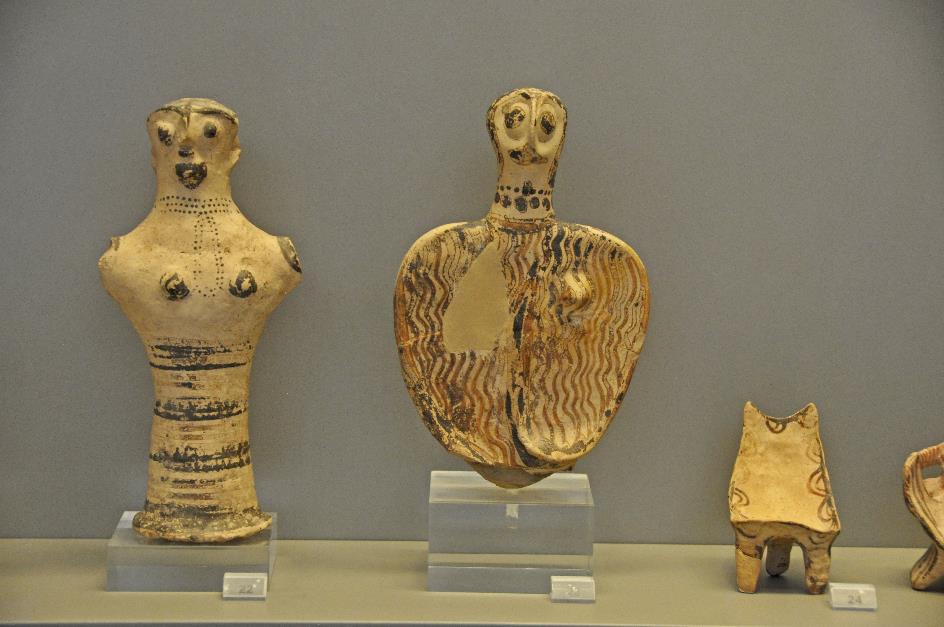
Female figurines, grave goods from Mycenae
Bronze statue of Zeus or Poseidon (460 BCE), discovered in a Roman shipwreck near Cape Artemision |
|
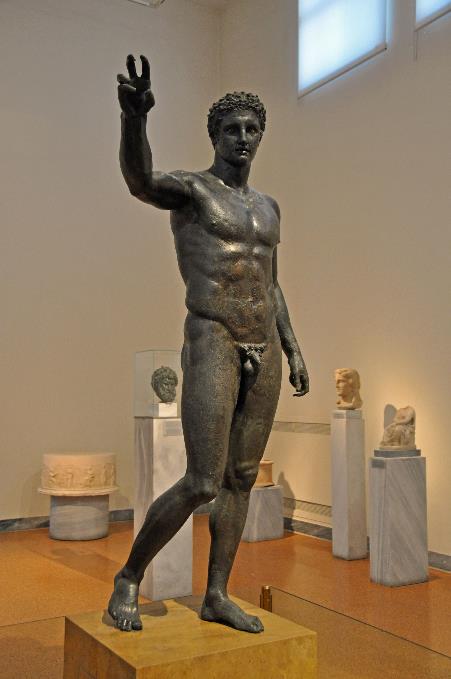
Bronze statue of an ephebe, recovered from a shipwreck (70 – 60 BCE) off the island of Antikythera. Ephebes were young men who had reached the age of 18 and were required to perform military service |

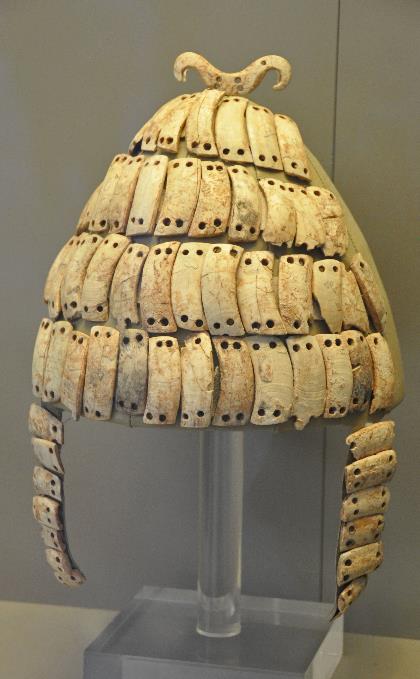
For centuries it was believed that Homer’s description in the Iliad of a helmet made from boar tusks was a myth. This changed when archaeologists discovered remains of such helmets at Mycenae (c. 1400 BCE) |
|
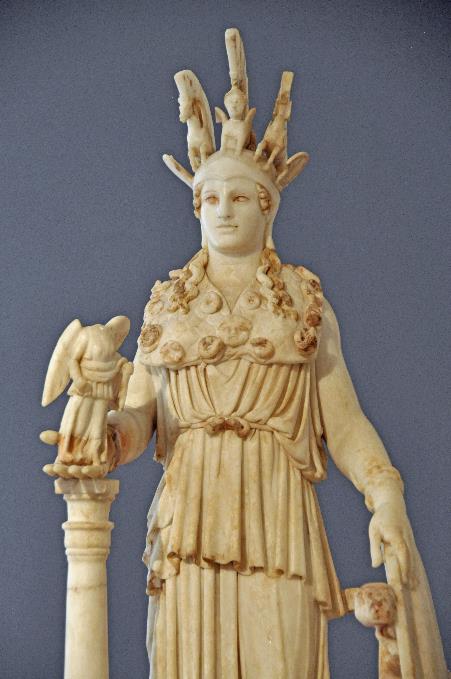
The Varvakeion Athena (1.05 m high, 200 – 250 CE) gives us an idea of what the monumental gold and ivory statue of Athena Parthenos must have looked like |
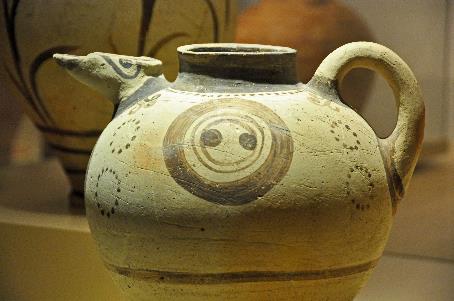
Minoan pottery with a dolphin motif (2100 BCE) |
|
|

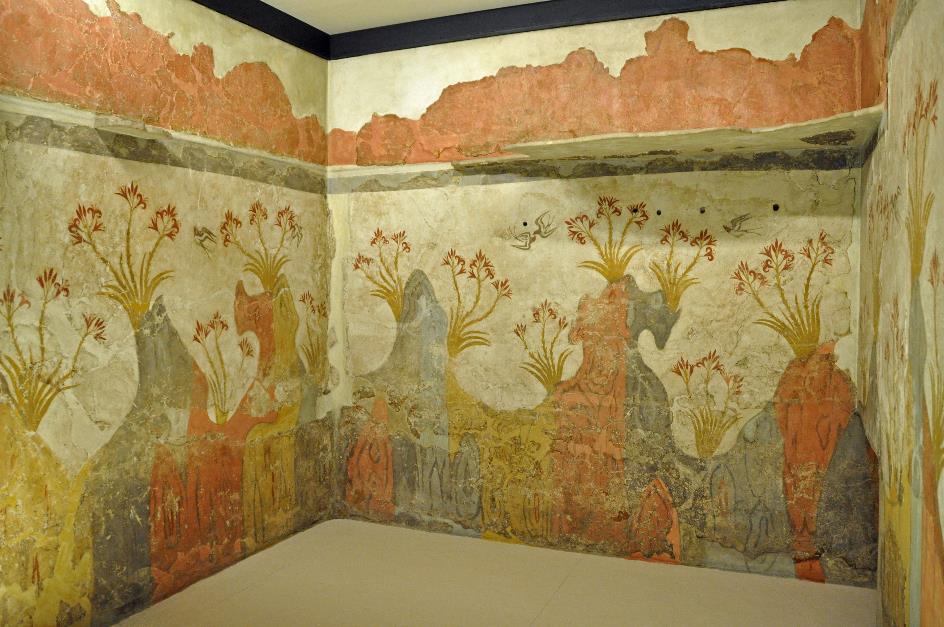
Like Pompeii, the settlement of Akrotiri on the island of Thera (modern-day Santorini) was buried under several metres of pumice and volcanic ash following a volcanic eruption. As a result, the vivid frescoes on its walls have been remarkably well preserved. This includes the Spring Fresco (c. 1600 – 1500 BCE), depicting lilies growing among colourful volcanic rocks and swallows flying between the flowers
Museum of Cycladic Art
Museum of Cycladic Art. Cypriot idol (3900 – 3000 BCE) |
|
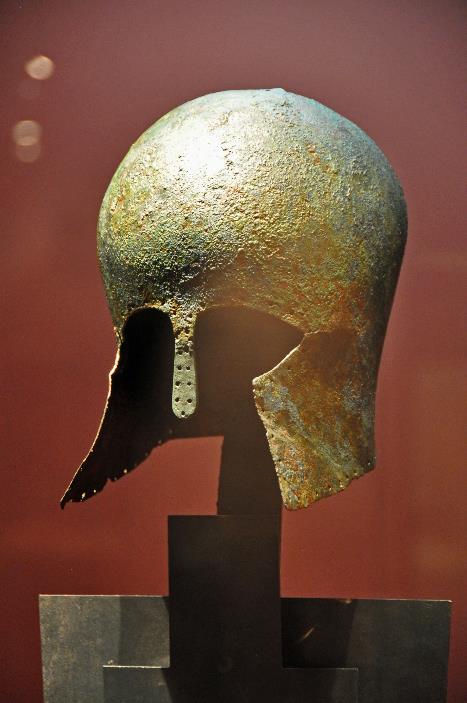
Ancient Greek war helmet (Corinthian type) |
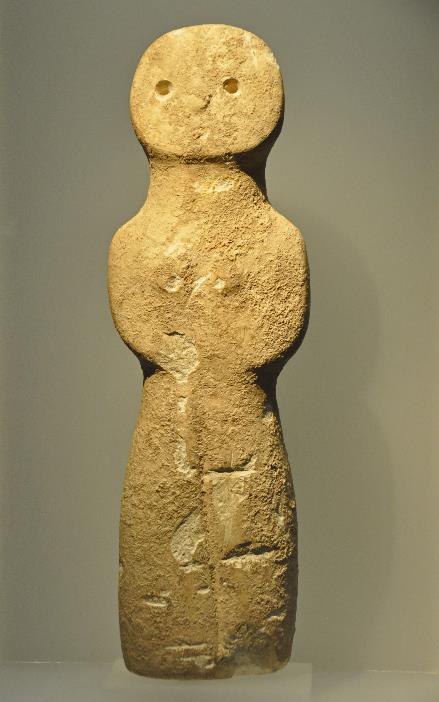
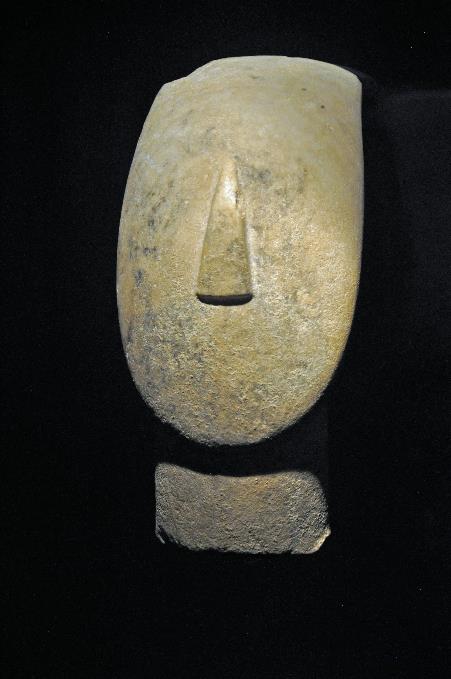
Cycladic idol, a highly stylised, symmetrical representation (2nd millennium BCE) |
|
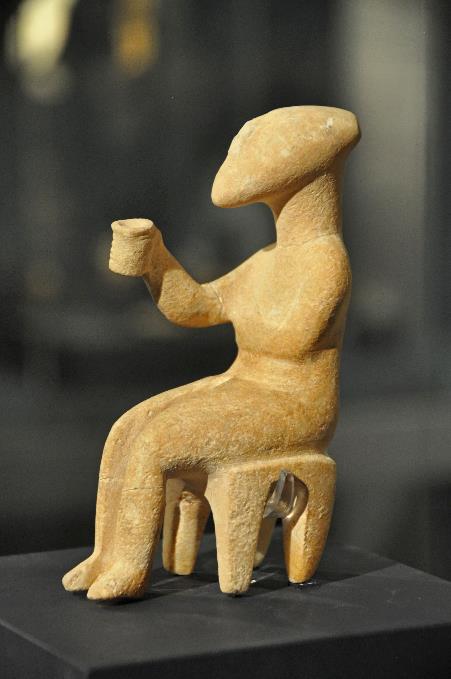
The Cupbearer, an iconic sculpture of Cycladic art (2800–2300 BCE) |
|
|
|
|
|
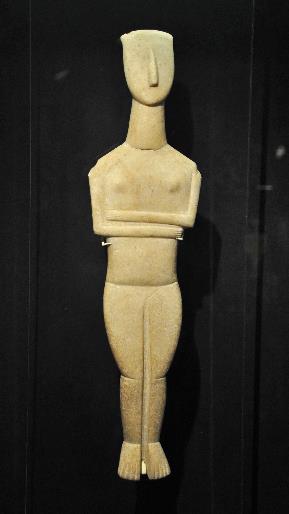
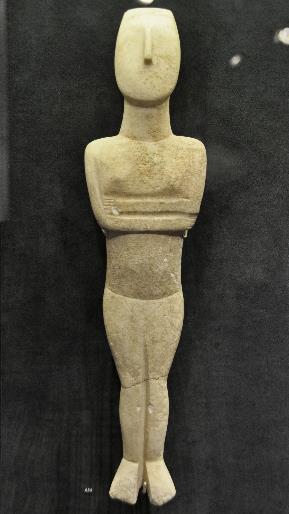
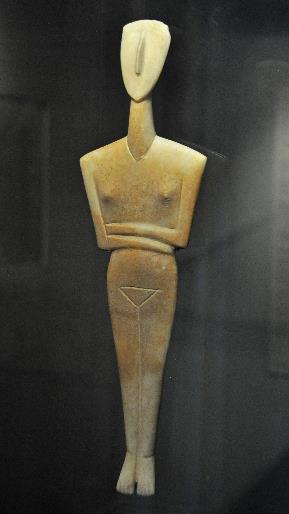
Around 2700 BCE, Cycladic sculptors developed a new type of female figurine in which the woman folds her arms over her stomach, with the left arm resting on the right. With their simple, austere lines, Cycladic artists have exerted influence that extends into the 20th and 21st centuries
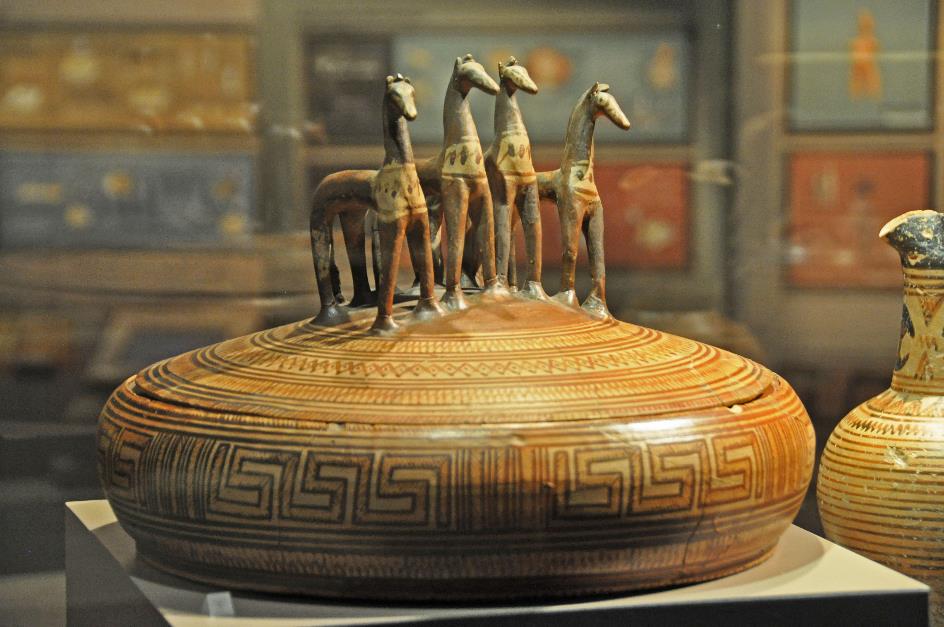
A pyxis (a container used to store cosmetics, trinkets or jewellery) with a lid decorated with four horses (Kerameikos, 735 BCE)
Kerameikos
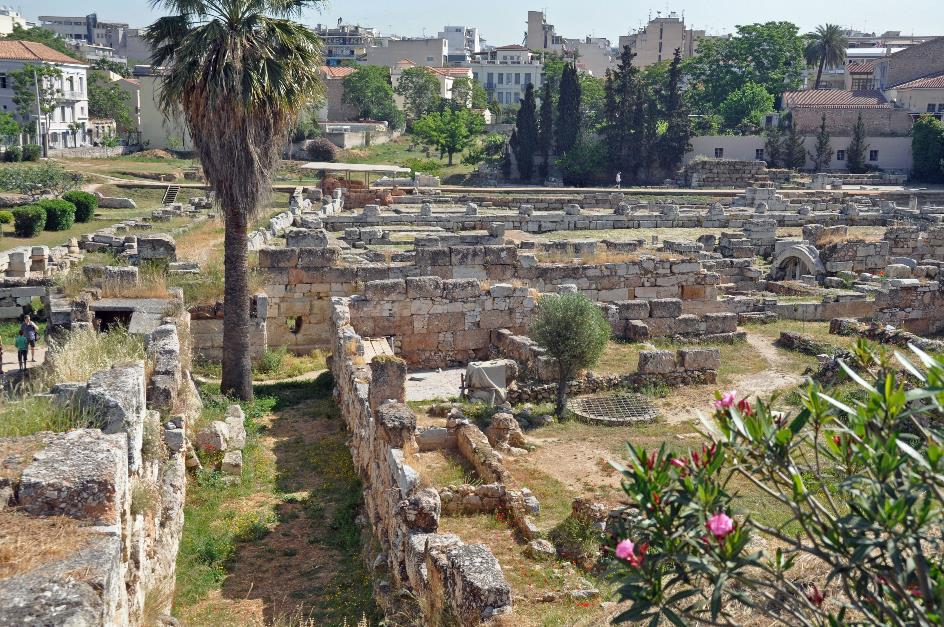
For more than two millennia, Kerameikos was an important centre of pottery production. We derive the word “ceramics” from this district of Athens. The Sacred Way ran straight through it (centre of the image, from left to right)
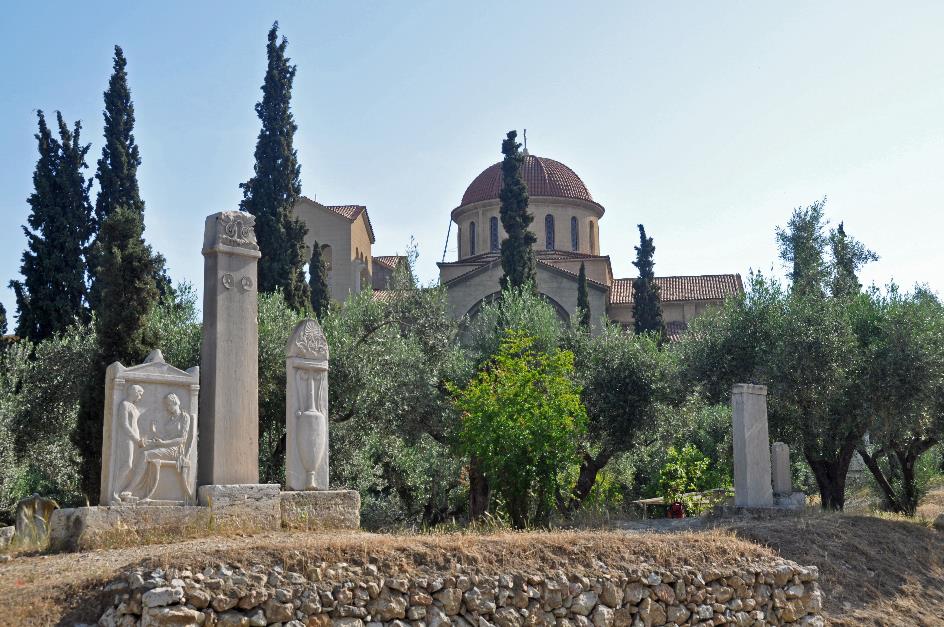
Kerameikos was also the largest cemetery in Athens. The stele of Hegeso (far left) is regarded as one of the finest Attic grave stelae
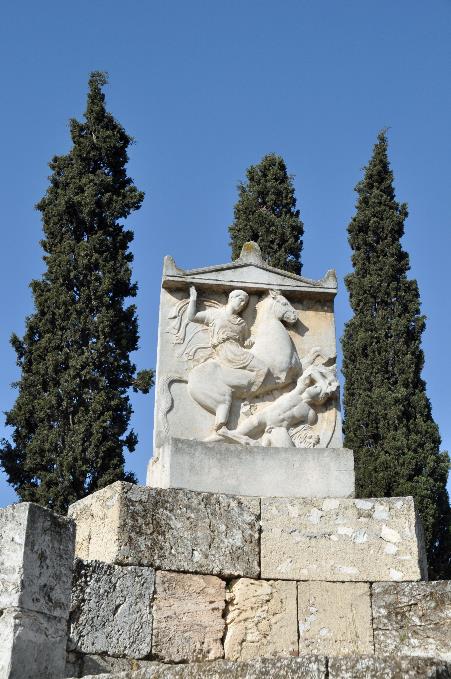
The Athenian Dexileos was killed at the age of 20 during the Corinthian War (394 BCE). On his grave stele he is shown on horseback attacking a Spartan enemy |
|
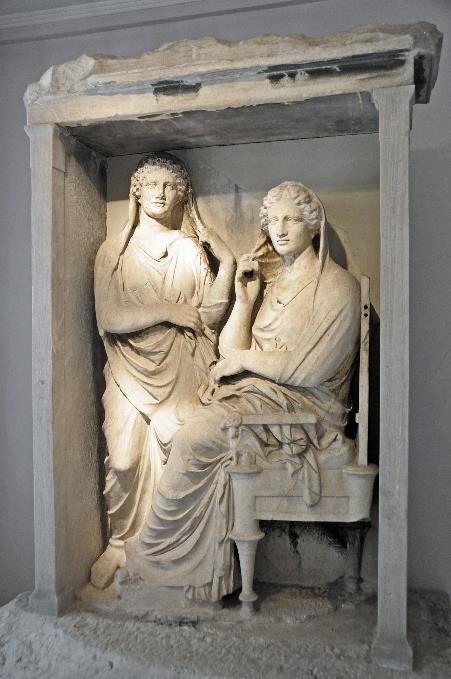
The grave stele of Demetria and Pamphile (320 BCE) is one of the last decorated funerary monuments from Kerameikos. After this, a ban on decorated graves came into effect |
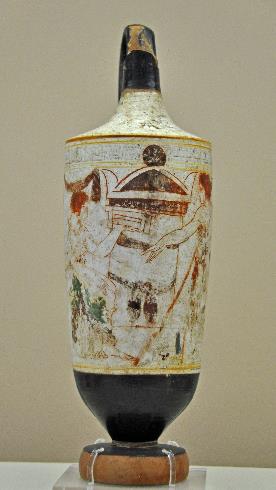
Lekythos (oil flask) with figures on a white background (420 BCE) |
|
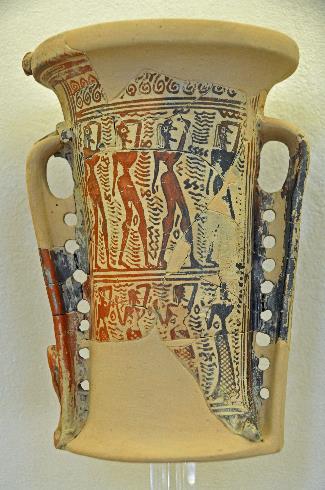
Loutrophoros (a vessel used to carry bath water) depicting mourning figures |
|
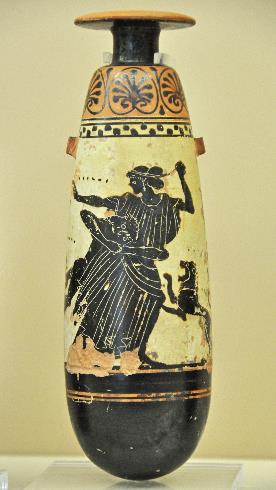
Alabastron (without a foot), used for storing perfumes or massage oils |
Jaak Palmans
© 2026 | Version 2026-06-11 14:00
